If you drink coffee regularly at home, start by choosing a machine based on the drink you make most often. Capsules and soft coffee pads make it easy to prepare one cup at a time, while a portafilter or grinder is a better fit if you’re looking for espresso. A filter coffee machine is ideal for serving several cups. If you’re considering a grinder, think about the space it takes up, how noisy it is and the maintenance involved: UFC-Que Choisir describes grinders as larger and noisier than capsule or filter coffee machines.
Which system is right for you?
Espresso and milk-based drink lovers
If you mainly make short coffees, compare a portafilter, which involves more hands-on preparation, with a grinder, which automates more of the process. For a cappuccino or latte, check whether the model you’re considering has a milk function: this isn’t determined by the type of system alone.
Households that want a quick cup
Capsules and soft coffee pads let you make a single serving with very little handling of the coffee. Before choosing, check which format the machine accepts and what you’ll need to do to maintain it.
Households that serve several cups
If you mainly make filter coffee for several people, check the usable capacity and the type of carafe. Melitta’s range includes both glass and thermal carafes.
What sets the machines apart?
Start with the drink you usually make, then compare each system based on the preparation involved, the number of cups and the consumables you’ll need.
| What matters to you |
What to check |
Who it matters to |
| Drinks and settings |
Check which types of coffee the machine makes and, for milk-based drinks, whether it has a milk system and what maintenance it needs. |
If I mainly drink espresso and sometimes want to make a milk-based drink, I want to choose the level of control without assuming every machine offers it. Around 31% of consumers would put this need for choice and control over drinks first. |
| Everyday ease |
Check which capsule or coffee pad format the machine accepts and what you’ll need to do after each brew. |
In the morning, I’d rather make a single serving without measuring out the coffee myself, while knowing what I’ll need to empty and clean. For around 25% of consumers, this would be their main concern. |
| Several cups |
Compare the usable capacity and the type of carafe. |
When I’m serving coffee to several people, I want to make enough in one go rather than prepare individual servings one after another. This ability to serve a group would come ahead of other criteria for around 19% of consumers. |
| Consumables and waste |
Find out which formats you’ll need and, for capsules, check the sorting or collection guidance that applies in your area. |
If I want to avoid relying on ready-to-use portions, I need to be happy to measure and clean up in other ways. If I use capsules, collection options are also a factor in my choice. Around 25% of consumers would prioritise managing consumables and waste. |
What should you look out for?
-
Assuming a grinder won’t take up much space
According to UFC-Que Choisir, an automatic machine with a grinder takes up more space and makes more noise than a capsule or filter coffee machine. You’ll also need to be able to reach the parts you need to fill and empty.
Measure your worktop, then check the machine’s dimensions and how much room you’ll need to open its lids, remove the water tank and empty the coffee grounds container.
-
Thinking automatic preparation means no maintenance
Philips recommends descaling SENSEO machines regularly. De’Longhi says that how often you need to descale an espresso machine with a grinder depends, among other things, on the hardness of your water.
Check the instructions for your model to find out how to descale it, wash removable parts and, if applicable, clean the milk system.
These steps take time and may require descaling products.
-
Choosing capsules without planning how to recycle them
The recycling process described by ADEME involves taking eligible capsules to a suitable collection point. Being able to drop them off is therefore an important part of using the system day to day.
Check the guidance for the material your capsules are made from, as well as the collection options available in your local area or provided by the brand.
Brands to consider by system
Nespresso
A brand to look at if you’re considering a capsule machine and care about collecting used capsules.
- Nespresso France says it has more than 2,000 collection points across France.
- Check whether there’s a collection point you can use nearby, and make sure the machine accepts your preferred capsule format.
Philips SENSEO
A range to consider for making individual servings with soft coffee pads.
- The manufacturer provides descaling instructions for its SENSEO machines.
- Check which coffee pads are compatible and follow the maintenance instructions for your model.
De’Longhi
A brand to compare if you want espresso made from coffee beans, with automation and features that vary from model to model.
- The range includes grinders and, on some models, features for making milk-based drinks.
- De’Longhi says that descaling frequency depends, among other things, on water hardness. Check the milk function on the model you’re considering too.
Melitta
A brand worth exploring, particularly for filter coffee machines designed to make different quantities of coffee.
- Melitta offers models with glass or thermal carafes, as well as filter coffee machines with an integrated grinder.
- A filter coffee machine on its own won’t meet your needs if espresso or milk-based drinks are your priority.
Machines for different needs
These Joybuy models cover the five systems discussed here: soft coffee pads, bean grinders, portafilters, capsules and filter coffee. Compare them based on the drinks you usually make and the space you can set aside for your machine.
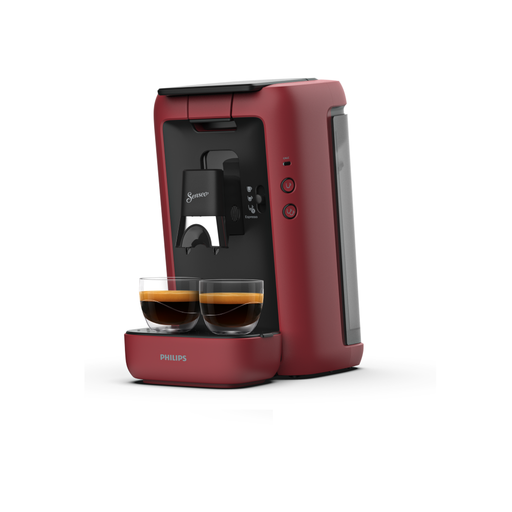 Image unavailable
Philips SENSEO Maestro CSA260/91 in intense red
Worth considering if you want to make individual servings with SENSEO coffee pads. Check that this format suits the pads you plan to use, and read the descaling instructions for the model.
View on Joybuy
 Image unavailable
Philips Series 2200 EP2230/10 LatteGo in glossy black
This grinder model is designed for households looking to automate espresso preparation, with the option of making milk-based drinks using LatteGo. Before choosing a spot for it, check its dimensions, access to removable parts and the maintenance involved.
View on Joybuy
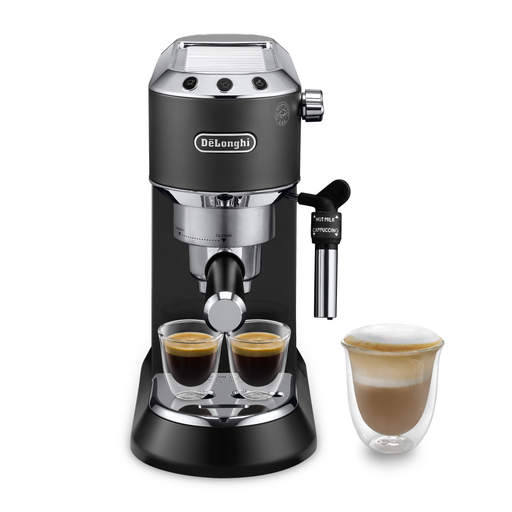 Image unavailable
De’Longhi Dedica Style EC685.BK in black
This portafilter machine is a good fit if you’re happy to take a more hands-on approach to making espresso. The steam wand needs to be operated and cleaned manually. Check the tank capacity before buying, as information for this model varies on this point.
View on Joybuy
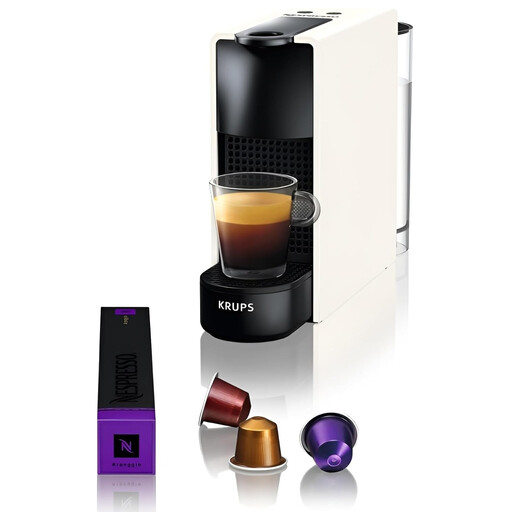 Image unavailable
KRUPS Nespresso Essenza Mini in white, 0.6 L
This capsule machine is designed for anyone who prioritises single servings of espresso or lungo. It uses the Nespresso Original system, so check the format of the capsules you want and find a collection option that works for you.
View on Joybuy
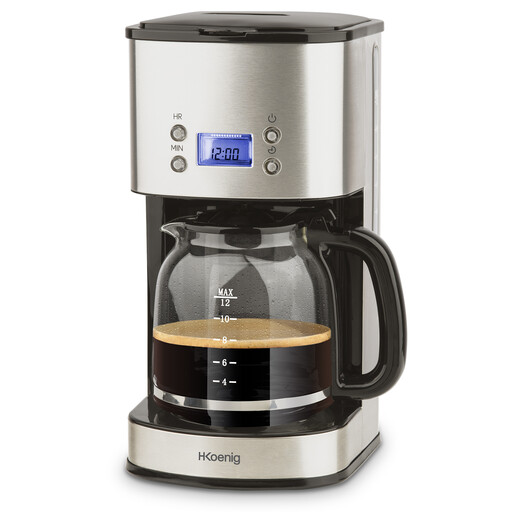 Image unavailable
H.Koenig MG30 programmable filter coffee machine in silver
Worth considering if your household mainly makes several cups of filter coffee rather than individual espressos. The model name indicates that it’s programmable; check that the capacity, carafe and space required suit the way you serve coffee.
View on Joybuy
Frequently asked questions
Is a grinder suitable for a small kitchen?
It can be, as long as there’s enough room for the machine and access to its compartments. However, UFC-Que Choisir says an automatic grinder is larger and noisier than a capsule or filter coffee machine. Check the model’s dimensions, and make sure you can open the water tank and bean hopper.
Do you need to descale a coffee pad or grinder machine?
Yes, descaling is part of the maintenance to plan for. Philips recommends regular descaling for its SENSEO machines. De’Longhi says that for its espresso machines with grinders, the frequency depends, among other things, on water hardness. Follow the instructions for your chosen model.
What should you do with used capsules in France?
Follow the guidance for the material your capsules are made from and the collection options available near you. ADEME describes the treatment of capsules returned to a dedicated collection point; check your local guidance and the options offered by the brand.
Who should you contact if a machine bought from a trader is faulty?
Contact the trader and keep your proof of purchase. In France, the Ministry of the Economy explains that the legal guarantee of conformity applies to both new and second-hand goods. It is separate from a retailer’s returns policy for change of mind.


