For those who want coffee without having to measure it out
If you’d rather not fill and tamp a portafilter, capsules and pods fit the bill. Just check which format the machine takes: portions aren’t interchangeable between different systems.


If you make coffee at home regularly, choose capsules or pods to keep things simple, a portafilter if you want to take a hands-on approach, or a grinder if you prefer using whole beans and are happy to maintain the machine. Your choice also depends on the type of coffee you enjoy, which consumables you’re prepared to manage and how much time you’re willing to spend cleaning.
If you’d rather not fill and tamp a portafilter, capsules and pods fit the bill. Just check which format the machine takes: portions aren’t interchangeable between different systems.
A portafilter lets you fill and tamp the ground coffee yourself, then knock out the used grounds afterwards. De’Longhi’s descriptions of its manual machines make clear that these steps are part of how they work. It’s best to think of them as part of your routine, rather than something you do now and then.
A bean-to-cup machine is a good fit if choosing your beans matters to you and you’re happy to clean and descale the machine as instructed. UFC-Que Choisir highlights the importance of factoring in maintenance when choosing this type of machine.
To choose between capsules, pods, a portafilter and a grinder, start with the coffee you make most often. Then think about the steps and maintenance you’re happy to take on every day.
| Criteria | What to check | Who is it for? |
|---|---|---|
| Making coffee without measuring it out | Check the exact capsule or pod format the machine takes, and how much space it needs. | I want to make coffee with minimal handling, without filling or tamping a portafilter. Around 30% of consumers are said to prioritise this convenience. |
| Long coffees without fiddly settings | Check the drink sizes available and whether the model can make one or two cups at a time. | At home, I mostly make long coffees and prefer a simple button press to manual settings. This is said to be the top priority for around 20% of consumers. |
| Hands-on preparation | Check how the machine uses ground coffee, how to clean the portafilter and, if it matters to you, whether the model is compatible with ESE pods. | I want to fill and tamp the coffee myself, even if that means a few extra steps after every cup. Around 20% of consumers are said to prioritise this level of control. |
| Whole beans and maintenance | Check which parts need cleaning and what descaling the instructions recommend. | For the coffee I make regularly, I want to choose my own beans rather than use individual portions, and I’m happy to maintain a grinder. Around 30% of consumers are said to have this as a priority. |
These criteria don’t make the four types of machine interchangeable. A machine that uses individual portions cuts down on preparation, but you’ll need to use a compatible format. A portafilter involves more hands-on work for every cup, while a grinder makes coffee from whole beans but adds maintenance to your routine.
A capsule that fits one machine won’t necessarily fit another. UFC-Que Choisir says most brands accept only one type of capsule.
Check the exact system specified for the machine and make sure you’re happy with the matching capsules before choosing it.
Recycling capsules and reducing packaging are two separate issues. ADEME recommends avoiding individually wrapped products or single-serve portions where possible.
If you’d rather limit individual portions, look at machines that use ground coffee or whole beans. If you choose capsules, follow the recycling instructions for their material.
A portafilter needs to be emptied and cleaned, and a grinder also needs regular maintenance. These jobs matter if you use your machine frequently, even if you’re happy with the preparation itself.
Check the instructions for the model you’re considering to see which parts are easy to access and what cleaning and descaling involve.
Allow time for these tasks in your routine.
The brand makes machines designed for specific capsule systems.
The SENSEO range includes machines for households interested in making coffee with pods.
The brand offers both manual portafilter machines and automatic machines with grinders.
These models show the four coffee-making methods covered here: soft pods, whole beans with a grinder, Vertuo capsules and semi-automatic portafilter brewing. Compare how each machine works and what maintenance it needs with your routine before choosing a model.
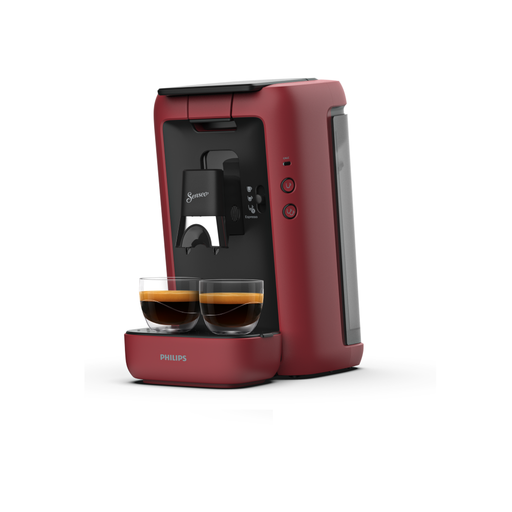 Image unavailable
Worth considering if you want a simple way to make one or two coffees using pre-measured portions. Check which pod format is compatible: some product descriptions also use the word ‘capsule’. Check the instructions for descaling, too.
 Image unavailable
Worth a look if you want to use whole beans and make milk-based drinks, too. The AquaClean filter is listed as not included. Check the instructions to see what maintenance is needed with or without this filter.
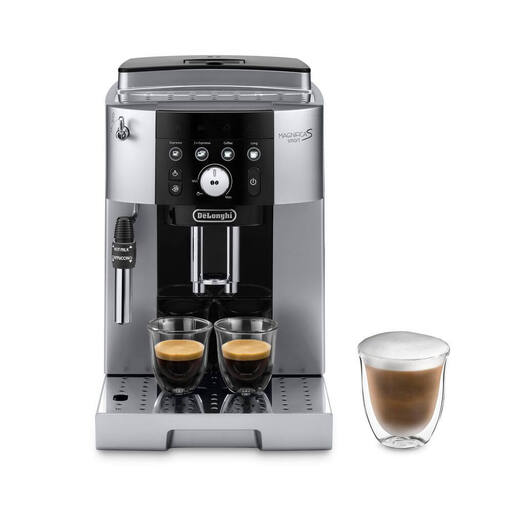 Image unavailable
This automatic machine with a grinder is designed for people who want to make coffee regularly from whole beans. For milk-based drinks, the steam wand is operated manually and needs cleaning after use. Check the instructions for other maintenance, too.
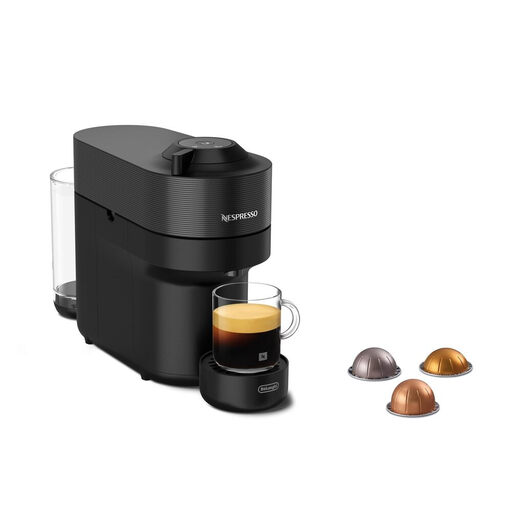 Image unavailable
Worth considering if you prefer making coffee with Vertuo capsules rather than measuring it out yourself. Think about its stated 0.6 L tank capacity in relation to the size and number of coffees you make before needing to refill it.
 Image unavailable
Worth considering if you’re happy to take a more hands-on approach to making coffee from grounds. It’s listed as compatible with ESE pods. Check which accessories are included and what the instructions say before relying on this feature.
Yes, but only if the model is compatible with the specific format. De’Longhi says some portafilter machines can use ESE pods. Check the instructions and accessories for the model you’re considering rather than assuming all portafilter machines are compatible.
For aluminium or plastic capsules, ADEME says to use the recycling bin, bag or container for paper and packaging. Check the product’s recycling label and your local council’s guidance to find out what to do in your area.
In France, the legal guarantee of conformity applies to new, second-hand and refurbished goods sold by a trader to a consumer, according to the Ministry of the Economy. Contact the seller and keep a copy of the product description and your proof of purchase to explain the difference you’ve found.