What to look for
Start by choosing the coffee format you are happy to use every day, then check the preparation time, maintenance requirements and the space available in your kitchen.
| Priority |
What to check |
Your needs |
| Long-term cost |
Compare the price of coffee in the format you will actually use, along with maintenance consumables and any water-filter cartridges. According to UFC-Que Choisir, the cost per cup from a bean-to-cup machine can be two to three times lower than that of a pod espresso machine. |
I make enough coffees for ongoing costs to matter just as much as the price of the machine. |
| Time and preparation steps |
Check the compatible format, whether you can make one or two cups, and the steps involved. A portafilter requires you to fill, tamp and lock in the ground coffee; a capsule or coffee pod involves fewer steps. |
In the morning, I want either to start a coffee quickly or take the time to adjust the preparation myself. |
| Waste and recycling |
Check the material used for the consumable and your local authority’s guidance. ADEME states that aluminium or plastic capsules go into the packaging recycling stream; a paper coffee pod is not automatically suitable for home composting. |
I want to avoid single-use packaging or know exactly how to sort it after each coffee. |
| Noise, space and maintenance |
Measure the available space, including access to the water tank and containers. UFC-Que Choisir states that a bean-to-cup machine is noisier and bulkier than a capsule system; also check the required rinsing and descaling procedures. |
The machine needs to remain practical in an open-plan kitchen, especially if coffees are made early or late. |
Joybuy machines for this need
This selection mainly features espresso machines with built-in grinders for regular home use, along with a soft-pod machine for a simpler routine.
 Image unavailable
Philips EP2230/10 Series 2200 LatteGo
For a household that regularly prepares coffee from beans and is happy with a straightforward maintenance routine.
1.8 L tank, 275 g bean hopper, 12 grind settings and the ability to prepare two cups. The brewing unit is removable and the LatteGo system can be dismantled; check the grinder’s noise level if the machine will be used in an open-plan kitchen. The AquaClean filter is listed as compatible but is not included.
Joybuy
 Image unavailable
De'Longhi Magnifica S ECAM22.140.B
An option for preparing several espressos with an integrated grinder and a two-cup function.
1.8 L tank, adjustable grinder, ground-coffee option, steam wand and descaling programme. The steam wand must be cleaned after use; check the dimensions, noise level and filter replacement requirements for your setup.
Joybuy
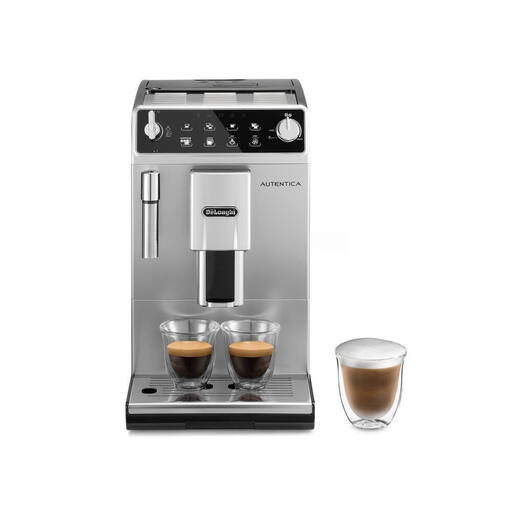 Image unavailable
De'Longhi Autentica ETAM29.510.SB
For a small household switching between coffee beans and ground coffee, with a choice of one or two cups.
1.4 L tank, 200 g bean hopper, 13 grind levels, six recipes and a coffee-grounds container rated for 14 cups. The steam wand requires immediate cleaning; check whether the tank capacity suits your daily routine.
Joybuy
 Image unavailable
HiBREW H7A espresso machine with grinder
A machine designed for households making a succession of espresso and milk-based drinks while wanting to adjust the preparation.
Dual boiler, two pumps, conical grinder with 30 levels, 250 g bean hopper and 2.8 L tank. Its stated dimensions are 331 × 332 × 347 mm; check the space required, noise level and the full cleaning routine.
Joybuy
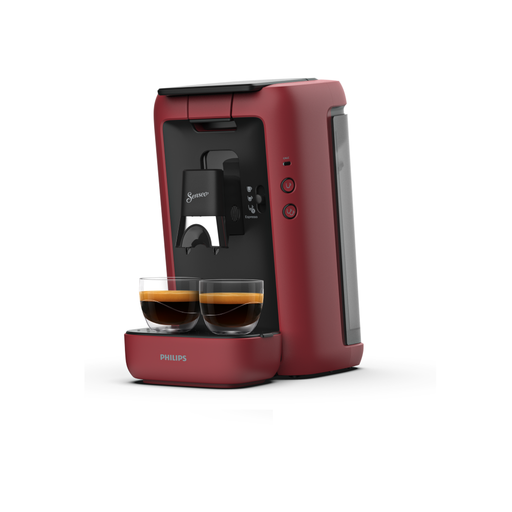 Image unavailable
Philips Senseo CSA260/91 Maestro
A soft-pod alternative for households that prioritise speed and simple steps.
Stated preparation time is under 45 seconds for one cup and under 75 seconds for two cups, with a 1.2 L tank and three recipes. Removable parts are dishwasher-safe; check the cost of the pods and local recycling arrangements for frequent use.
Joybuy
Frequently asked questions
How much coffee consumption makes a bean-to-cup machine worthwhile?
There is no universal threshold, as the result depends on the purchase price, the price of the beans and how long you use the machine. UFC-Que Choisir nevertheless estimates that a bean-to-cup machine has a cost per cup two to three times lower than that of a pod espresso machine. This difference becomes more significant when a household makes coffee frequently.
Are all capsules and coffee pods recyclable or compostable in France?
No. ADEME states that aluminium or plastic capsules should be placed in the packaging recycling stream. For plant-based capsules or paper pods, distinguish between home composting, industrial composting and the schemes available locally: some paper pods cannot go in a garden compost bin.
What maintenance does a machine with a grinder require?
Rinse the coffee-grounds and drip trays regularly, along with the brewing unit or infuser when specified by the model, then descale according to the machine’s instructions. UFC-Que Choisir commonly recommends descaling every two to three months, depending on water hardness and frequency of use; the model’s manual remains the reference for your appliance.
Are water-filter cartridges compulsory?
No, they are not compulsory for every machine. Check whether the manufacturer recommends or requires them for your model, along with their replacement frequency and cost, before including this expense in your running budget.
What legal protection applies to a coffee machine bought from a professional seller in France?
The statutory guarantee of conformity applies to new, second-hand and refurbished goods sold by a professional to a private individual. The Directorate-General for Competition Policy, Consumer Affairs and Fraud Control states that the period for requesting its application is two years; for a new product, the consumer does not have to prove that the defect existed on the date of sale during this period.


