A household that cares about its choice of coffee
Makes espresso often and prefers buying whole beans rather than relying on a pod format. A bean-to-cup machine does, however, need regular maintenance.


If your household makes coffee often, start by thinking about the drinks you serve and the steps everyone is happy to take each day. Pods make individual coffees easy, a bean-to-cup machine automates the process using whole beans, a portafilter gives you more control, and a filter coffee machine is ideal for making coffee to share. Before settling on a model, consider how many cups you’ll make in a row, how much cleaning it needs, how much space it takes up and what type of coffee it uses.
Makes espresso often and prefers buying whole beans rather than relying on a pod format. A bean-to-cup machine does, however, need regular maintenance.
Wants to make individual coffees for several people with minimal effort, without having to adjust the settings for every cup. Choosing a pod machine means finding a compatible format you can keep using.
Often makes cappuccinos or wants more control over extraction and milk froth. Milk functions, cleaning and the ability to make drinks one after another matter more than the list of drinks alone.
If your household mainly wants individual espressos, compare pods, bean-to-cup machines and portafilter machines based on how hands-on you want to be. If you mainly make several cups of filter coffee to share, compare filter coffee machines instead.
Worth considering: for making individual coffees quickly, with minimal effort.
Be prepared for: using a compatible format and disposing of used pods.
Worth considering: for frequent espressos, made automatically from whole beans.
Be prepared for: more space, noise and maintenance than with a pod machine, depending on the model, according to Que Choisir.
Worth considering: if someone in your household wants to get hands-on with making espresso or steaming milk.
Be prepared for: more steps than with an automatic machine; the available settings and heating options depend on the model.
Worth considering: when several people mainly want to share a pot of filter coffee.
Be prepared for: this style of coffee won’t suit you if you mainly want to serve espresso or cappuccinos.
| What matters | What to check | What consumers say |
|---|---|---|
| Coffee format | Check whether the machine uses whole beans, ground coffee or pods, and which formats are compatible. | When I make espresso every day, I want to choose the coffee my household will use regularly; around 30% of consumers make this a priority. |
| Drinks and daily steps | Compare the drinks you’ll actually serve with the controls, milk system and cleaning steps required after use. | If everyone wants to make their own drink easily, I’d prefer functions the whole household can use; ease of use and a range of drinks come first for around 30% of consumers. |
| Making several cups in a row | Look at the useful capacities and, if you’ll be making several espressos in a row, the results of tests involving consecutive cups. | When several people are waiting for coffee, I want to avoid frequent pauses; around 20% of consumers prioritise this serving pace. |
| Maintenance and lifespan | Check the cleaning steps, options for collecting used pods, and the model’s parts and after-sales service information. | I want to be able to maintain my machine and deal with used consumables as part of my routine; around 20% of consumers put these considerations first. |
A pod machine requires a compatible format, while a bean-to-cup machine means buying whole beans and carrying out regular maintenance. Your choice should suit your household’s everyday habits.
Decide which coffee you want to use each day, then check the formats accepted and the maintenance products needed for the model you’re considering.
Parts that come into contact with milk need to be cleaned, even when the machine offers automatic functions.
If you often make milk-based drinks, check the manual for the steps required after each drink and the cleaning cycles available.
Remember to allow time for rinsing and regular maintenance, too.
ADEME says that pods put in household rubbish are sent for disposal, including incineration or landfill.
Before choosing a pod machine, check the sorting guidance that applies to you and whether there’s a compatible collection scheme you can use.
Repair options depend in part on the model and which parts are accessible. Don’t assume they’ll be the same for every machine.
Ask the retailer about parts availability for the model you’ve chosen, as well as how to order them and how its after-sales service works.
A pod machine brand to consider if your household prefers individual coffees.
Automatic bean-to-cup machines to consider for making coffee from whole beans and, depending on the model, milk-based drinks.
Portafilter and hybrid machines to consider if someone in your household wants more control over espresso-making or steaming milk.
A brand to explore if your household is deciding between a bean-to-cup espresso machine and a filter coffee machine.
These models are designed for making espresso at home: automatic machines with a grinder and a portafilter machine with an integrated grinder. To choose between them, consider which preparation and maintenance steps will suit your household.
 Image unavailable
Worth considering if your household wants an espresso machine with a grinder and the LatteGo option for milk-based drinks.
Check the manual for the milk system’s maintenance steps and, if several people will use it in a row, look for results covering consecutive drinks.
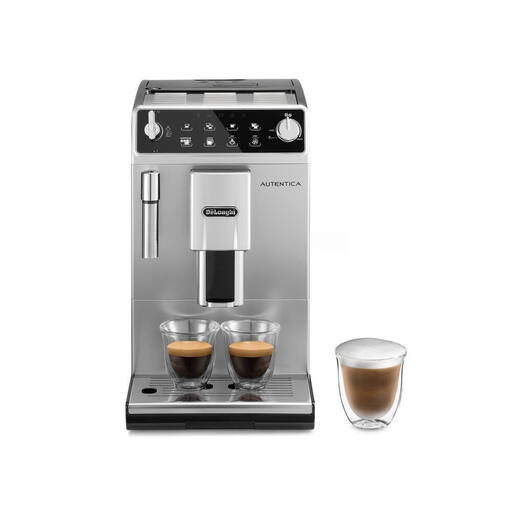 Image unavailable
Worth considering for making espresso regularly with an automatic machine with a grinder.
If your household also makes milk-based drinks, check what’s required to use and clean the steam wand. Check the parts and after-sales service terms for the model on sale.
 Image unavailable
Worth considering for an everyday espresso routine with an automatic machine with a grinder.
If milk-based drinks are important to you, check how the steam wand works and how to clean it on the ECAM22.140.B. Don’t assume it has the same features as another Magnifica S model.
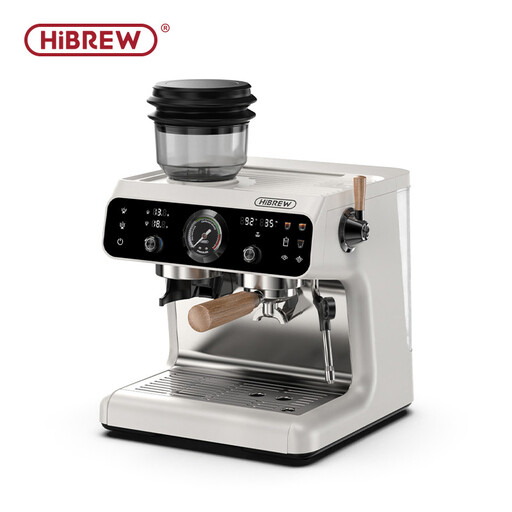 Image unavailable
Worth considering if someone in your household wants to get hands-on with a portafilter machine rather than rely on a fully automatic one.
The model name indicates 30 grind settings. Before choosing it for several people, check the maintenance steps and whether its serving pace will suit your routine.
 Image unavailable
Worth considering if your household wants to make espresso and milk-based drinks with an automatic machine.
The product name lists six types of coffee. Check which drinks you’ll actually use, as well as the useful capacities and the milk system’s cleaning steps.
Choose a milk system with preparation and cleaning steps that suit how often you’ll use it. Compare the steam wand, carafe or frother on the model you’re considering, then check the manual to see what needs cleaning after each use.
No. ADEME says they’re sent for disposal, including incineration or landfill. If you choose pods, check the sorting guidance and find out whether there’s a compatible collection point near you.
Find out about the specific model before you buy. Ask the retailer what information is available on parts, how to order them and what after-sales service is offered. Don’t assume the same options apply to every machine.