Buying priorities
Start with the type of coffee and drinks your household actually wants to prepare, then check the available space, maintenance routine and cost of consumables.
| Priority |
What to check |
Your needs |
| Speed and simplicity |
Check the heat-up time, controls, water tank and whether you can prepare one or two cups. For coffee pads, check the functions advertised for the exact model. |
I want a cup without weighing, grinding or tamping the coffee. In an OpinionWay survey conducted on 18 and 19 June 2025 among 1,042 French adults, 27% of respondents associated espresso with people in a hurry; this data describes the image of espresso, not a machine-buying criterion. |
| Cost of use |
Compare the price of compatible pods or coffee pads, your household’s weekly consumption and any filters or maintenance products required. UFC-Que Choisir states that the cost per cup of a grinder can be two to three times lower than that of pad-based espresso, depending on the usage conditions described in its guide. |
I want to avoid an affordable machine leading to recurring costs that do not suit our consumption, or investing in a grinder unless we use it often enough. |
| Maintenance and limescale |
Check access to the coffee-grounds container, drip tray and brewing unit, as well as the descaling cycles. If you prepare milk drinks, also check how the steam wand or milk system needs to be cleaned. |
Rinsing, descaling and accessory maintenance need to be realistic for everyday use. UFC-Que Choisir explains that limescale can affect the circuits, nozzles, temperature and pressure. |
| Choice of coffee and drinks |
Check the pod or coffee-pad format, consumable availability, whether you can use beans or ground coffee, and which recipes are actually offered. For milk drinks, check the type of system and the cleaning it requires. |
I want to prepare the coffees and drinks our household enjoys, without being limited by a consumable or recipe that does not suit us. |
Options available on Joybuy
These Joybuy options include a soft coffee-pad machine and several automatic bean-to-cup machines for households that regularly prepare coffee at home.
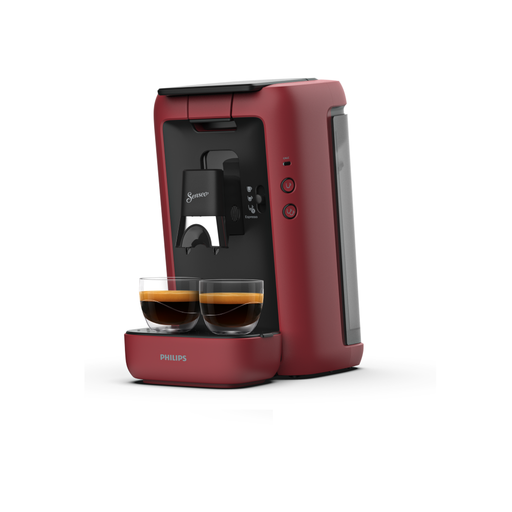 Image unavailable
Philips Senseo CSA260/91 Maestro, intense red
For a household that wants coffee pads and quick one- or two-cup preparation without a grinder or tamping.
- 1.2 L water tank and advertised preparation time of under 45 seconds for one cup.
- One- and two-cup pad holders, three recipes and Memo function.
- Uses SENSEO pads: check their availability, varieties and cost.
- The product information states that descaling is required according to the indicator, with an interval of three months specified.
View on Joybuy
 Image unavailable
Philips EP2230/10 Series 2200 LatteGo, glossy black
For a household that wants to choose its beans and prepare espresso, coffee or cappuccino at home.
- Ceramic grinder with 12 settings, 275 g bean container and 1.8 L water tank.
- Strength and volume settings, two-cup function and LatteGo system with a 0.26 L carafe.
- Removable brewing unit and parts stated to be dishwasher-safe.
- The AquaClean filter is listed as compatible but not included: check the suitable consumables.
View on Joybuy
 Image unavailable
HiBREW H16 automatic espresso machine with grinder
For households that want to vary their recipes with automated preparation and customisable settings.
- 4.3-inch touchscreen, conical grinder with 15 settings and 1.5 L water tank.
- Six advertised drinks and memorisation of coffee and milk volumes.
- Advertised dual heating system for extracting and frothing at the same time.
- Check the instructions for details of milk-system maintenance and removable parts.
View on Joybuy
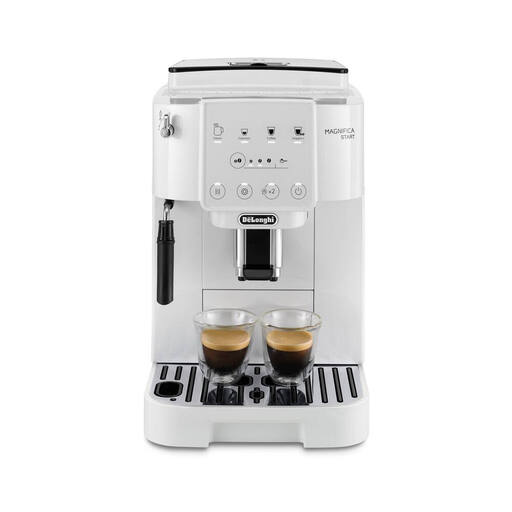 Image unavailable
De’Longhi Magnifica Start ECAM220.21.WW, white
For regular coffee drinkers who want beans, one-touch recipes and a steam wand for milk.
- 1.8 L water tank, 250 g bean container and 13 grind settings.
- Espresso, Coffee and Doppio+ recipes, with two coffees prepared simultaneously.
- Steam wand with adjustable intensity and descaling programme.
- Check that the three one-touch recipes match the drinks your household wants.
View on Joybuy
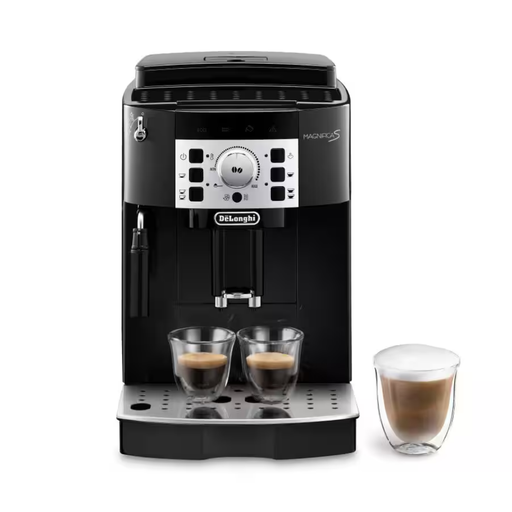 Image unavailable
De’Longhi Magnifica S ECAM22.140.B, black
For a household that wants to switch between beans and ground coffee, with two-cup preparation or milk drinks made using the steam wand.
- Integrated grinder, 1.8 L water tank and dedicated opening for pre-ground coffee.
- One- or two-cup preparation and steam wand for heating or frothing milk.
- Descaling programme with alerts and removable drip tray stated to be dishwasher-safe.
- Check the actual footprint, as well as the consumables and instructions associated with the water filter.
View on Joybuy
Frequently asked questions
Is a pod machine necessarily cheaper than a grinder?
Not necessarily over time. UFC-Que Choisir states that pods can increase spending over the years, while the cost per cup of a grinder can be two to three times lower than that of pad-based espresso, depending on the usage conditions described in the guide. Compare the machine price, the price of compatible coffee and your consumption volume.
How often should you descale an espresso machine?
First follow the manufacturer’s alert and instructions, as the frequency depends on water hardness and usage. UFC-Que Choisir indicates an average descaling interval of every two to three months and explains that limescale can affect the nozzles, temperature and pressure.
What else needs cleaning on an automatic grinder?
Rinse the coffee-grounds and drip containers regularly. Depending on the model, also clean the brewing chamber or brewing unit in accordance with the instructions. If you use a steam wand or milk function, rinse it after every use.
How should coffee pods be disposed of in France?
ADEME states that aluminium or plastic pods should be placed in the recycling stream for paper and packaging, following local collection instructions.
What should you do with an electric coffee machine at the end of its life?
A coffee machine is covered by France’s waste electrical and electronic equipment recycling scheme. The Ministry for Ecological Transition distinguishes between « 1 pour 0 » take-back, with no purchase required, and « 1 pour 1 » take-back when buying equipment of the same type, subject to the conditions applicable at the retailer.


