If you make several coffees a day, start by choosing a format that suits the drinks you want and the steps you’re happy to repeat. A bean-to-cup machine lets you choose your beans and can automate some drinks, but it needs space and regular maintenance. Capsules or coffee pods keep things simple, a portafilter gives you more hands-on control, and a filter coffee machine is ideal for making longer coffee to share.
Which option suits your household?
Households that like a variety of coffees
If you often make several coffees and switch between espresso, longer coffees and milk-based drinks, check the recipes available on the specific model. An automatic bean-to-cup machine could suit you if you want to choose your own beans and are happy to make room for it on your worktop and keep it maintained. Que Choisir notes that the options vary between machines.
Households that prefer a simple routine
If you want to make a cup with minimal effort, a capsule or pod machine is worth considering. Check which format it accepts, what drinks it offers and how to dispose of the used capsules or pods. Philips, for example, offers SENSEO models designed to make one or two cups.
Households short on space or time for cleaning
If your kitchen is small, or you make coffee early in the morning, measure the available space and check the cleaning requirements before choosing a bean-to-cup machine. Que Choisir says these machines are generally bulkier and noisier than capsule machines or filter coffee makers.
What should you look for?
For a household that makes several coffees every day, choose the format before you choose the model: it determines which drinks you can make and some of the steps in your daily routine.
Bean-to-cup machine
Worth considering: if you want to choose your beans and regularly make drinks that the model can prepare automatically.
Things to bear in mind: it needs more space, makes noise while grinding and requires regular cleaning. Que Choisir highlights these considerations compared with capsule and filter machines.
Capsules or coffee pods
Worth considering: if you want to make a cup with very little adjustment.
Things to bear in mind: you’ll need a compatible capsule or pod format, and have packaging or a used pod to deal with after each coffee.
Portafilter espresso machine
Worth considering: if you want to be hands-on when making espresso.
Things to bear in mind: it involves more steps. Check the settings available and whether it includes a grinder.
Filter coffee machine
Worth considering: if you mainly serve longer coffees to several people at once.
Things to bear in mind: this format won’t make espresso or milk-based drinks like a machine designed for them.
| Criteria |
What to check |
Who is it for? |
| Drinks and preparation |
The exact list of recipes and how milk is prepared, if you drink milk-based coffees. |
If I switch between espresso, longer coffees and cappuccino, I want to know which steps I’ll still need to do myself. Around 27% of consumers are said to put drink variety first. |
| Consumables and waste |
The type of coffee it accepts, how much is used per drink and the disposal guidance for its consumables. |
When I make several cups a day, I prefer to know what each drink uses and what I’ll need to throw away or sort for recycling. Around 27% of consumers are said to put this need first. |
| Cleaning and descaling |
The parts that need cleaning and the descaling instructions in the model’s manual. |
If I don’t have much time to clean the trays or milk system, I need to be able to keep up with the recommended routine. This is said to be the main concern for around 26% of consumers. |
| Space and noise |
The dimensions, including room to access the tanks, and—if available—a noise level measured for the exact model. |
In a small kitchen or when I make coffee early, space and noise can determine my choice. Around 20% of consumers are said to put these concerns first. |
Mistakes to avoid
-
Assuming an automatic cleaning cycle means no maintenance
A bean-to-cup machine may still need its trays and, depending on the model, brewing unit cleaned, as well as regular descaling. Que Choisir stresses the importance of keeping up with these tasks.
Read the manual before choosing: check which parts need removing, what to do after making a milk-based drink and which cleaning products are suitable.
Remember to allow time for rinsing and to buy the cleaning products recommended for the model.
-
Assuming a recyclable capsule means a waste-free coffee
Each capsule still needs to be sorted or taken to an appropriate collection point. ADEME provides guidance on disposing of aluminium and plastic capsules in France.
Check the product’s Info-tri label and your local authority’s guidance. If you plan to use a collection point, make sure it’s convenient for you.
-
Choosing a bean-to-cup machine based on its noise description alone
According to Que Choisir, a bean-to-cup machine is generally noisier and bulkier than a capsule machine or filter coffee maker. This doesn’t tell you how noisy a particular model will be.
Measure the available space, including room to open and remove the tanks, then look for noise information about the exact version you’re considering.
Brands to know
De’Longhi
The brand offers several bean-to-cup ranges, including Magnifica, Dinamica and Eletta Explore.
- De’Longhi says these ranges differ in several ways, including the drinks they offer.
- Check the recipes, milk system, dimensions and maintenance requirements for the model you’re considering rather than relying on the range name alone.
Philips
Philips offers LatteGo bean-to-cup machines and SENSEO pod machines, among other options, for different coffee-making habits.
- Philips support provides detailed maintenance instructions for its 5400 Series LatteGo.
- These instructions apply to the series in question; a SENSEO machine, meanwhile, requires compatible pods.
Nespresso
Nespresso offers a capsule system and provides options for collecting used capsules in France.
- The brand says it has dedicated collection points.
- Check which format your machine accepts and the disposal guidance that applies where you live.
Machines for different needs
These models showcase three ways to make coffee at home: bean-to-cup, pods and a portafilter. Choose based on the drinks and everyday steps that matter to your household.
 Image unavailable
Philips EP2230/10 2200 Series LatteGo, glossy black
Worth considering if you’re looking for a bean-to-cup machine for a range of coffees and want to explore a model with the LatteGo system.
Check which drinks are available and the maintenance routine for the EP2230/10 version.
View on Joybuy
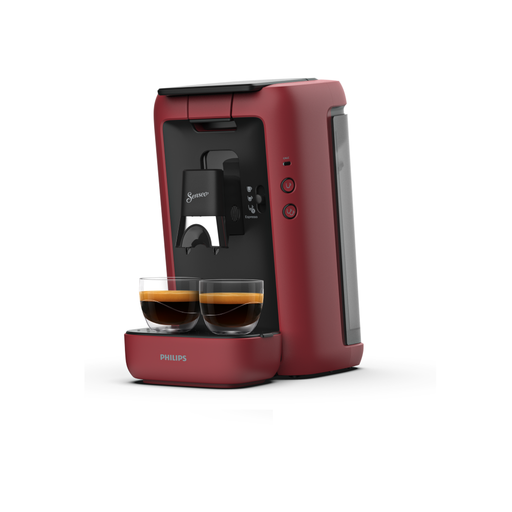 Image unavailable
Philips SENSEO Maestro CSA260/91, intense red
An option for households that prefer making coffee with SENSEO pods rather than choosing their own beans.
Check that it makes the drinks you want and that your pods are compatible before choosing this model.
View on Joybuy
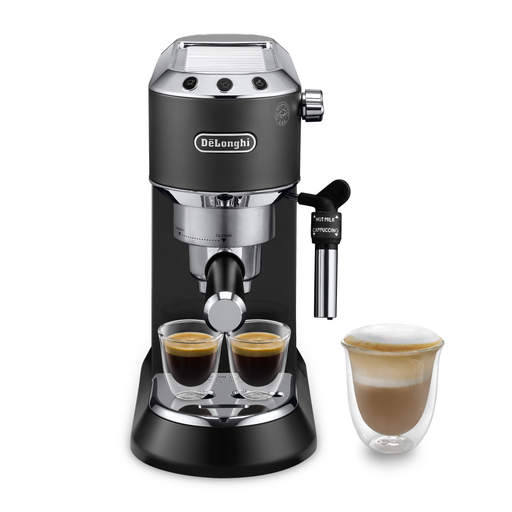 Image unavailable
De’Longhi Dedica Style EC685.BK, black
A portafilter machine to consider if you’d rather be hands-on when making espresso than choose an automatic bean-to-cup machine.
The product description lists 15 bar. If water capacity matters to your household, check the tank’s exact capacity before choosing.
View on Joybuy
 Image unavailable
HiBREW H16, bean-to-cup machine with milk system
Worth considering if several people want different drinks from an automatic bean-to-cup machine.
The model advertises six coffee varieties and has a touchscreen. Check the full list of recipes and the steps needed to clean the milk system.
View on Joybuy
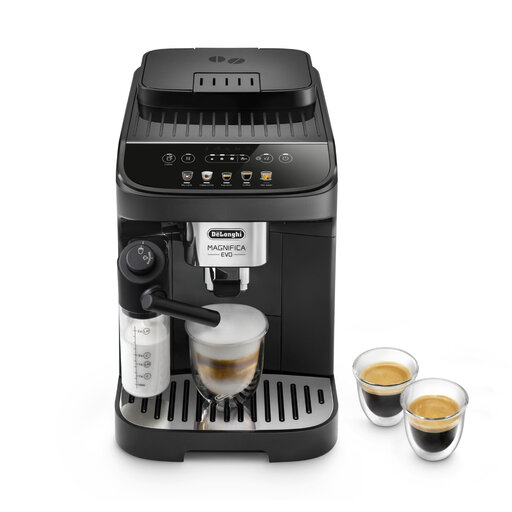 Image unavailable
De’Longhi Magnifica Evo ECAM290.61.B LatteCrema, black
Worth considering if you’re looking for a bean-to-cup machine with the LatteCrema milk system.
Check the exact list of drinks available on the ECAM290.61.B version and the milk system’s maintenance requirements.
View on Joybuy
Frequently asked questions
Do you need a grinder if you make several coffees a day?
No. How often you make coffee isn’t enough to determine which format is right for you. A bean-to-cup machine suits those who want to choose their beans and automate some drinks; a filter coffee maker is ideal for longer coffees to share, while a pod machine means fewer steps when making a drink. Also consider the space, noise and cleaning you’re happy to manage.
What needs maintaining on a bean-to-cup machine?
Clean the trays, look after the brewing unit according to the model’s instructions and descale the machine as directed. A milk system has its own cleaning steps. Que Choisir describes these tasks as regular, and De’Longhi notes that water hardness and how often you use the machine affect descaling. Follow your model’s manual for the right steps and compatible products.
Where should you put capsules and coffee grounds in France?
ADEME says aluminium and plastic capsules should go in the packaging recycling system. Also check the guidance on the product and from your local authority. Coffee grounds and paper filters can be composted if you have access to a composting solution.
Does a coffee machine bought from a trader come with a legal guarantee of conformity?
Yes. In France, according to the Ministry of the Economy, the legal guarantee of conformity applies to new, second-hand and refurbished goods sold by a trader to an individual. It covers faults that existed when the goods were delivered. Keep your proof of purchase and the product description in case you need to contact the seller.


