
Livraison le jour même ou le lendemain

Qualité garantie

Débloquez vos offres de bienvenue: Livraison GRATUITE | Jusqu'à -80 % | 30 jours d'essai gratuits à JoyPlus
Téléchargez l'application
A coffee machine can quickly turn into a disappointing purchase if its features don't match your habits. A capsule machine doesn't meet the same needs as a filter coffee maker, while a bean-to-cup model requires more maintenance than a pod machine.
Before comparing prices, it's best to avoid three common pitfalls:
Start by identifying the type of coffee you use day to day:
Also check which capsule brands and formats are accepted. A multi-function machine can be useful if several people enjoy different types of coffee, but its adapters must be correctly fitted and maintained.
For a single person or a small office, a compact coffee machine with a 300 to 600 ml water tank can help reduce water waste. On the other hand, a programmable coffee maker with a 1 to 1.5 litre capacity will be better suited to a family or a working day.
The capacity stated in "cups" is only a guide: a filter coffee cup doesn't necessarily match the volume of a French mug. Always rely on the volume given in litres or millilitres. Also think about the size of your cups. Some compact machines only accept short containers, which can rule out large mugs and certain travel cups.
Choose models with removable parts: filter holder, carafe, water tank and drip tray. These make cleaning easier and help prevent coffee residue from building up.
For an electrical appliance sold in France, check that it includes the required regulatory information, instructions in French and contact details for the responsible party established in the European Union. Features like automatic shut-off or dry-run protection are useful, but they don't replace following the safety instructions.
Finally, factor the running costs into your budget. A capsule machine needs a regular supply of capsules, while a filter coffee maker uses filters and ground coffee. Descaling should be carried out according to your water hardness and the manufacturer's recommendations.
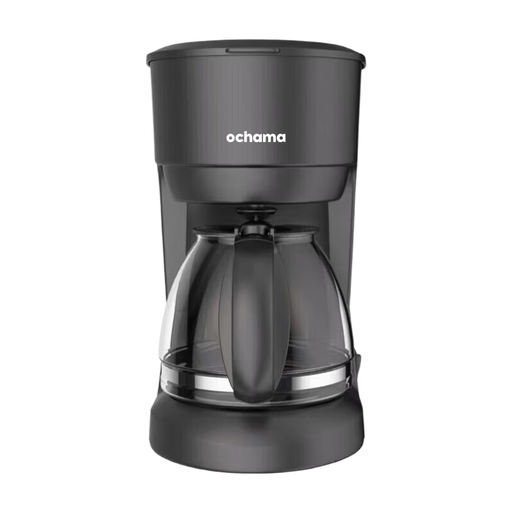
Why this choice suits this profile: Its automatic operation and compact design make it a good first filter coffee maker for home or a small office.
The listing mentions a compact design, a 750 ml water tank and removable parts. This makes it easier to check the space needed and maintenance requirements before buying.
600 W power, automatic brewing and a keep-warm function stated to last 30 minutes.
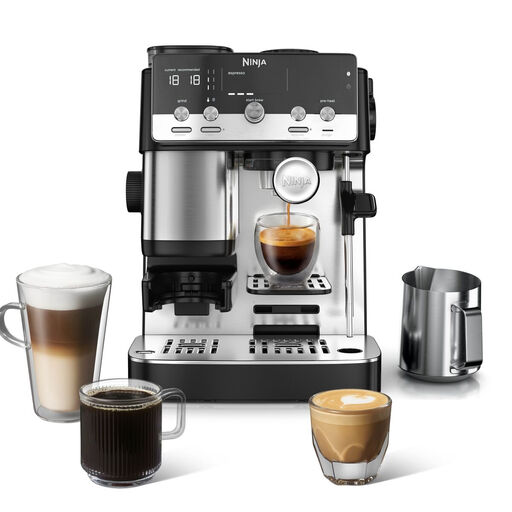
Why this choice suits this profile: This model is aimed at users who want to switch between espresso, filter coffee and milk-based drinks using whole coffee beans.
The built-in grinder means you don't need a separate appliance, while the stated removable parts make everyday cleaning easier.
Integrated conical burr grinder, weight-based dosing stated, milk frother for dairy and plant-based milk, and preparation of several drink types.
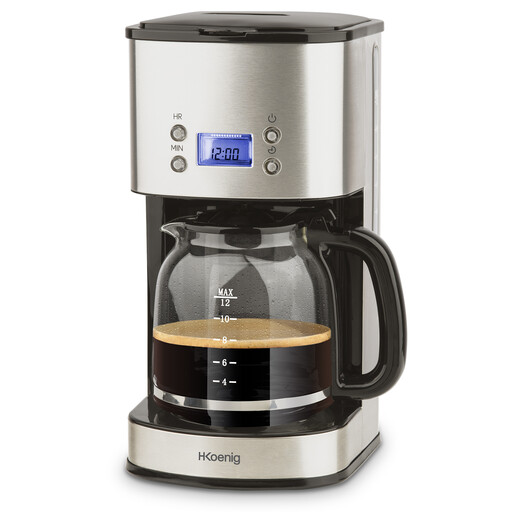
Why this choice suits this profile: Its 1.5 litre capacity and programmable timer allow you to brew several cups for a family or a working day.
The capacity is clearly stated and the removable swivel filter holder reduces the effort needed for filling and cleaning.
Programmable LCD display, 1.5 litre water tank, graduated glass carafe and keep-warm function.
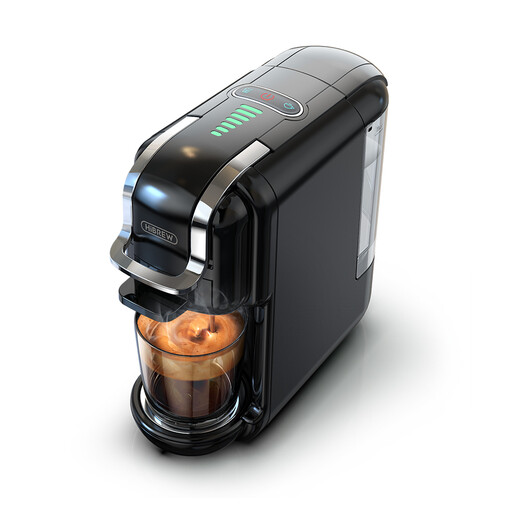
Why this choice suits this profile: This compact design suits users who switch between capsules, ESE pods and ground coffee in a small kitchen or office.
The stated compatibility with five formats means you don't need multiple appliances. However, each adapter must be properly locked before brewing.
600 ml water tank, hot and cold modes, stated 19 bar pressure and automatic shut-off after 15 minutes of inactivity.
We've put together a comprehensive, real-time updated list of products that meet these demanding selection criteria and European safety regulations.
Measure the available width, depth and height before buying. A compact capsule coffee machine generally takes up little space, while a bean-to-cup model needs easy access to the bean hopper and water tank. On a narrow worktop, a small filter coffee maker or a single-serve model will often be simpler to install.
It all depends on the type of coffee you choose and how often you use it. Capsules are convenient, but their cost per drink can be higher than ground coffee or beans. A filter coffee maker adds the cost of filters, unless it has a permanent filter. Don't forget descaling solution and the possible replacement of certain parts either.
Use suitable water, empty the grounds regularly and clean the removable parts after each use. Descale the machine following the instructions in the manual and never run the pump dry. With an espresso machine, rinse the filter holder after each brew and use a brush suited to its diameter, especially for 58 mm filter holders.