Busy households with varied tastes
If several people make coffee throughout the day, a capsule or pod machine means less to do. Just check that the system offers the coffees and drink sizes everyone wants.


When everyone at home likes their coffee a different way, capsules and pods keep preparation simple, while a portafilter gives you more control over the process. A bean-to-cup machine is better suited to regular use, provided everyone is happy to maintain it. Whichever type you choose, check which formats it accepts, the drink sizes available, the tank capacity and what needs cleaning.
If several people make coffee throughout the day, a capsule or pod machine means less to do. Just check that the system offers the coffees and drink sizes everyone wants.
A grinder lets you choose your beans and make drinks with freshly ground coffee. It’s worth considering if everyone is interested in adjusting the settings and happy to take on the maintenance.
With a portafilter machine, you add and tamp the ground coffee before brewing, as described by De’Longhi France for its manual machines. This approach works best if everyone involved is happy to take part each time a drink is made.
For a machine everyone will share, start with the steps each person is happy to do every day. Then look at the drinks it can make, the consumables it uses and the maintenance required for that particular model.
Worth considering: when several people want pre-measured coffee with minimal effort.
Bear in mind: the coffees available depend on which capsule format the machine accepts.
Worth considering: if an easy-to-make coffee is the priority, particularly a longer drink.
Bear in mind: compatible pods and drink sizes vary by system and model.
Worth considering: if users want to measure and tamp the ground coffee themselves.
Bear in mind: you’ll need to do this for every drink, then clean the portafilter.
Worth considering: for a household that makes coffee regularly and wants to choose its own beans.
Bear in mind: the grounds container, internal circuits and other parts listed in the instructions will need maintenance.
| What to consider | What to check | What I need |
|---|---|---|
| Making coffee for several people | Steps needed for each cup; tank capacity; whether the model can make two cups at once. | In the morning, several people need to be able to make a coffee without a long wait or having to learn a complicated process. |
| Choice of drinks | Available drink sizes; easy-to-use settings; drinks you can make without an extra accessory. | I switch between short and long coffees, while other people at home prefer their own settings. |
| Choice of coffee | The exact capsule or pod format; coffees available in that format; whether the machine accepts beans or ground coffee. | If our tastes change, I want to know which coffees we’ll still be able to use with the machine. |
| Maintenance | Access to the tank and containers; rinsing and cleaning requirements; descaling guidance for your water and usage. | A machine used every day needs to be easy for everyone to clean. |
| Waste | Capsule material; recycling instructions; whether individual portions are wrapped separately. | I want to know what to do with used portions, or choose beans or ground coffee if I’d rather avoid individual packaging. |
Capsule machines use a specific format, so two boxes of coffee that look similar won’t necessarily work in the same machine.
Check which system the model accepts and what coffees are available in that format before choosing your machine.
Limescale can affect temperature and pressure, warns UFC-Que Choisir. Containers and tanks also need cleaning, including on machines that use pre-measured portions.
Check the instructions to find out how to access the parts that need cleaning, and what rinsing and descaling are required.
Allow time for these tasks and check whether the model uses a filter cartridge.
A grinder avoids individual portions, but you’ll still need to empty the grounds container and follow the machine’s cleaning instructions.
Before choosing this type, make sure the people who’ll use the machine are happy to do these tasks and genuinely want to use beans.
In France, ADEME distinguishes between aluminium or plastic capsules and paper capsules when it comes to disposal after use.
Check the recycling label (Info-tri): ADEME advises putting aluminium or plastic capsules in the packaging recycling stream. Paper capsules can be composted or collected with food waste, depending on the local services available.
These examples represent different types of machine; features vary from one model to another.
A useful example of a capsule system, particularly the Vertuo range.
An example of a soft pod system for making coffee at home.
In France, the brand offers bean-to-cup machines as well as manual portafilter machines.
These models include bean-to-cup machines, capsule machines and machines that accept ground coffee, including a multi-format model. Compare each one with the habits of everyone who’ll be sharing it.
 Image unavailable
For a household that wants to make coffee from beans, this model combines a grinder with the LatteGo range. Check the instructions for available drinks and maintenance requirements before choosing it for shared use.
 Image unavailable
If everyone at home wants to try different drinks without switching to a manual portafilter machine, this model offers six drinks, a grinder, a milk system and touch controls. Check the instructions for cleaning requirements for the milk system and grinder.
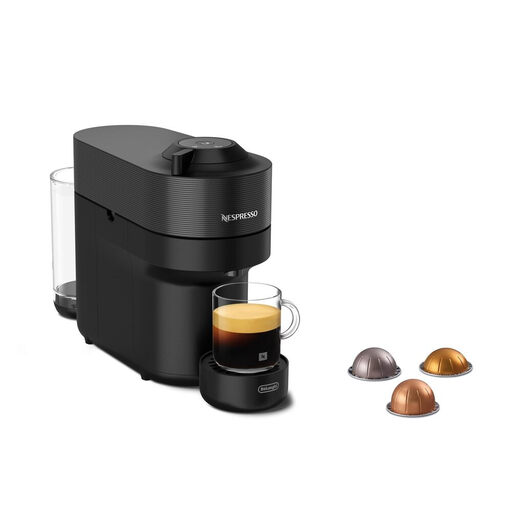 Image unavailable
This Vertuo capsule machine is a good fit for anyone who prefers pre-measured coffee. Its tank capacity is listed as 0.6 L, so bear in mind that you may need to refill it if you’re making several coffees in a row. Check that Vertuo capsules suit everyone’s tastes, too.
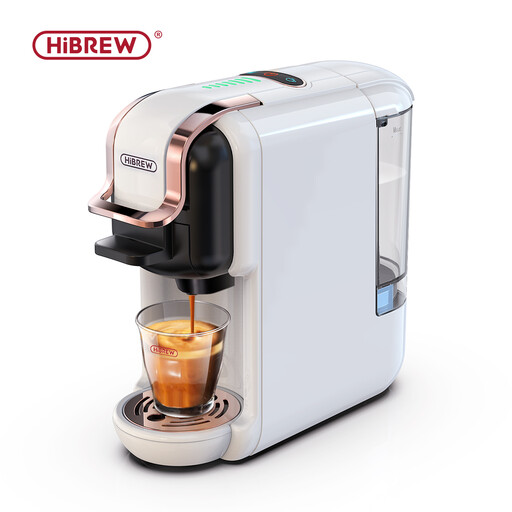 Image unavailable
This multi-format machine could suit a household where everyone prefers a different kind of coffee. The product title lists DG, Nes and E.S.E. formats, ground coffee, and hot and cold modes. Check exactly which adaptors and formats it accepts before buying.
 Image unavailable
This semi-automatic model is designed for users who are happy to take part in making their coffee. It’s described as suitable for ground coffee, espresso and milk-based drinks. Check the instructions to see what’s involved in making each drink and cleaning the milk system.
Not necessarily. ADEME says aluminium and plastic capsules should go in the paper and packaging recycling stream. Paper capsules can be composted or collected with food waste if a suitable local service is available; check the product’s recycling label, too.
It depends on the water you use and how many coffees you make. UFC-Que Choisir recommends descaling on average every two to three months. Always follow your machine’s instructions and maintenance alerts first.