
Livraison le jour même ou le lendemain

Qualité garantie

Débloquez vos offres de bienvenue: Livraison GRATUITE | Jusqu'à -80 % | 30 jours d'essai gratuits à JoyPlus
Téléchargez l'application
With the sheer number of models on the market, choosing a new coffee machine can quickly become a headache. Between bean-to-cup machines promising unparalleled freshness, filter coffee makers for everyday convenience, and pod models for their simplicity, it's hard to know where to start.
As a product expert for Joybuy, my mission is to guide you with clear, objective information, free from marketing jargon. This guide breaks down the different technologies for you and presents a selection of models suited to every type of user.
Before diving into a coffee machine comparison, it's essential to define your priorities. Here are three key criteria to help you make the right choice.
The type of coffee you prefer is the starting point. It determines not only the type of machine but also the in-cup taste, your budget, and the ease of daily use.
Your consumption habits will directly influence which features are essential for you.
Finally, a detail that is far from trivial: measure the available space on your countertop. Coffee machines come in all sizes, from ultra-compact models perfect for small kitchens to larger appliances with big water tanks and bean hoppers. Of course, design remains a very personal criterion that will contribute to the harmony of your kitchen.
To illustrate the market's diversity, here are three machines that each cater to a specific user profile.
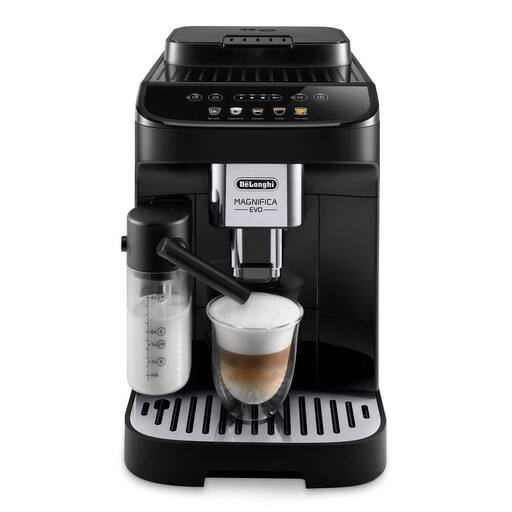
Why it stands out: This bean-to-cup coffee machine is notable for its fully automated milk system. Its LatteCrema Hot technology, according to De'Longhi, is designed to produce a dense, creamy milk foam, always at the right temperature. Conveniently, the MyLatte function allows you to use only the necessary amount of milk, thus preventing waste.
Key features:
Who is it for? For lovers of cappuccinos and other milk-based drinks who want to enjoy the freshness of coffee beans without the complexity of a manual machine. It's an excellent balance between automation, customisation, and in-cup quality.
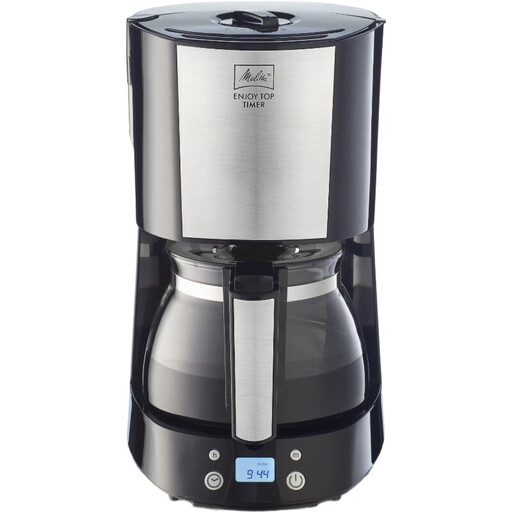
Why it stands out: This programmable filter coffee maker reinvents a classic with modern features. Its main advantage is its timer, which allows you to schedule coffee preparation in advance. Its patented aroma selector, the AromaSelector, is a real bonus: it lets you adjust the coffee's intensity, from mild to strong, without changing the quantities.
Key features:
Who is it for? For families or heavy coffee drinkers who appreciate the conviviality and simplicity of filter coffee. Its programming function is a real daily convenience for those with a busy lifestyle.
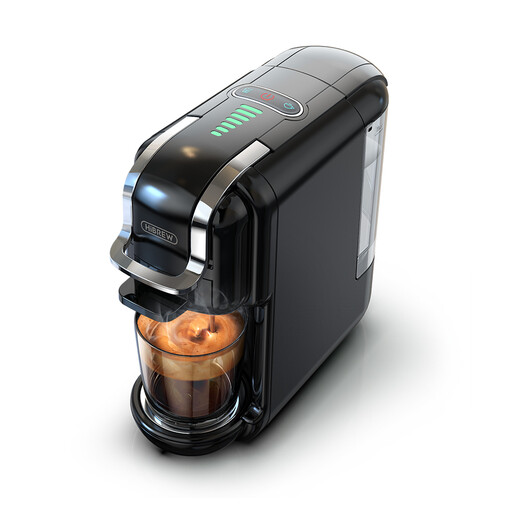
Why it stands out: Versatility is the key word for this capsule coffee machine. It comes with several adapters that make it compatible with a myriad of formats: Nespresso* Original capsules, Dolce Gusto* capsules, E.S.E. soft pods, and even ground coffee. Its ability to prepare both hot and cold drinks makes it particularly unique on the market.
Key features:
Who is it for? For households where tastes and preferences vary, for the curious who love to explore different types of coffee without multiplying appliances, or simply for those short on space. It is the ultimate flexible solution.
*A trademark of a third party, not affiliated with HiBREW or Joybuy.
Our selection highlights models that cater to specific needs. If you're drawn to the "bean-to-cup" promise and the convenience of all-in-one machines, you should know that the world of automatic coffee machines is particularly vast.
? Discover our full range of automatic coffee machines
The term bean-to-cup coffee machine is most often used to refer to an automatic espresso machine with a grinder. This is an espresso machine that integrates its own mill (or grinder) to grind coffee beans on demand, just before brewing. In contrast, a "classic" (or manual) espresso machine requires pre-ground coffee. The advantage of the integrated grinder is undoubtedly the unparalleled freshness and preservation of rich aromas.
Regular maintenance is the key to its longevity. Remember to empty and clean the grounds container and drip tray very regularly. For machines with a milk system, it is crucial to run the cleaning cycle after each use. Finally, the most important step is descaling: follow the manufacturer's recommendations (usually every 2 to 3 months, depending on your water hardness) to prevent limescale from damaging internal components and, most importantly, from altering the taste of your coffee.
Pressure is a critical parameter for making a true espresso. The standard for a professional-quality espresso is an extraction performed at around 9 bars of pressure. Many domestic machines advertise a pump pressure of 15 to 19 bars. This higher pressure at the pump ensures that the ideal 9-bar pressure is reached and consistently maintained at the brew group. This is what guarantees a rich crema and a full extraction of aromas.