Short on space and only making a few coffees
You mainly make one cup at a time and want a simple routine. UFC-Que Choisir describes capsule machines as compact and easy to maintain; a bean-to-cup machine takes up more space.


If you only make coffee occasionally and are short on space, a capsule machine can make it easier to prepare one cup at a time, provided you check which capsule format it uses and how to recycle them. A bean-to-cup machine needs more space and maintenance. A manual espresso machine suits you if you’re happy to handle ground coffee, while a filter coffee maker is worth considering if you want to serve several guests or make a smaller amount, depending on the model.
You mainly make one cup at a time and want a simple routine. UFC-Que Choisir describes capsule machines as compact and easy to maintain; a bean-to-cup machine takes up more space.
You’re happy to do a little more preparation so you can use beans or ground coffee instead of relying on a particular capsule format. Your choice then depends on how much time you want to spend making each cup.
You’d like to serve several people without having to make every cup separately, but don’t drink much coffee the rest of the time. Melitta offers filter coffee makers with jugs, as well as models designed for very small quantities.
Worth considering: for making a few individual coffees in a small kitchen, when ease of use is your priority.
The trade-off: your choice of capsules depends on which system the machine accepts, and their material determines how they should be sorted for recycling.
Worth considering: if you expect to make coffee regularly and want to choose your own beans.
The trade-off: UFC-Que Choisir says a grinder takes up more space and makes more noise than a capsule machine or filter coffee maker. You’ll also need to factor in maintenance.
Worth considering: if you want to use ground coffee and are happy to make each cup using a portafilter.
The trade-off: you’ll need to measure out the coffee, handle the portafilter and clean it afterwards.
Worth considering: if a jug suits the way you serve guests, or if you can find a model that’s suitable for smaller quantities.
The trade-off: choose the capacity based on how much coffee you’ll actually make, rather than assuming a large jug will also be suitable for one cup.
| Factor | What to check | Who is it for? |
|---|---|---|
| Preparation and maintenance | Check the dimensions with the water tank accessible, and see what rinsing or descaling the instruction manual recommends. | If I only make a cup now and then, I want to be able to pick up the routine easily between uses. Around 33% of consumers put this kind of simplicity first. |
| Choice of coffee | Check which format the machine accepts: capsules from a specific system, beans or ground coffee. | If I want to change my coffee without relying on a particular capsule format, being free to choose my beans or ground coffee becomes a priority. This matters most to around 25% of consumers. |
| Serving guests | Check how much coffee the machine makes per cycle and, for a filter coffee maker, the stated minimum quantity. | When friends or family visit, I’d rather be able to make several coffees without repeating the whole process cup by cup. This way of serving is the main consideration for around 25% of consumers. |
| Everyday considerations | If these factors matter to you, compare noise levels under similar conditions, how consumables should be sorted for recycling and the model’s repair options. | In a small home, I might prioritise noise, capsules that need sorting for recycling or the option of getting the machine repaired. For around 17% of consumers, one of these considerations comes ahead of the others. |
A grinder may suit you if you start making coffee regularly, but you’ll still need to make room for it and clean it even if you only make coffee occasionally. UFC-Que Choisir particularly highlights its space and noise requirements.
Think about how often you’ll use it and check the instruction manual for how to clean the containers, brewing unit and other accessible parts.
Recycling instructions vary depending on the material. ADEME says aluminium and plastic capsules should be sorted with packaging; UFC-Que Choisir also notes that instructions vary for some plant-fibre capsules.
Check what material the capsules you’re considering are made from, then read the product guidance and your local council’s recycling instructions.
You’ll also need to be able to reach the machine to fill the water tank and remove its containers. This is particularly important if you’re putting a bean-to-cup machine under a wall unit.
Measure the available width, depth and height, then allow enough room to carry out maintenance on your chosen model.
Nespresso says that a machine may not be repairable if parts are unavailable. So the existence of an after-sales service doesn’t guarantee that the model you’re interested in will be covered.
Check how diagnosis and repairs are handled, as well as the information provided about the availability of parts.
A brand to look at if you’re considering a capsule machine and want to find out what maintenance and support options are available for your model.
A brand to consider when comparing bean-to-cup espresso machines across different ranges, including Magnifica.
A brand to explore if you’re choosing between a filter coffee maker with a jug, a machine for smaller quantities and an automatic bean-to-cup machine.
These Joybuy machines illustrate the four ways of making coffee covered here: capsules, manual espresso, beans with a grinder and filter coffee. When choosing a filter coffee maker, consider whether you want to serve guests or make a smaller amount.
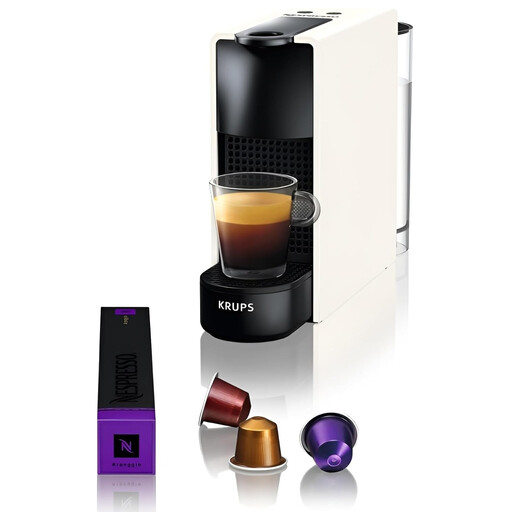 Image unavailable
Worth considering if you mainly make individual coffees and are short on space. The stated water tank capacity is 0.6 L; check which capsule format it accepts and how much room you’ll need around the machine.
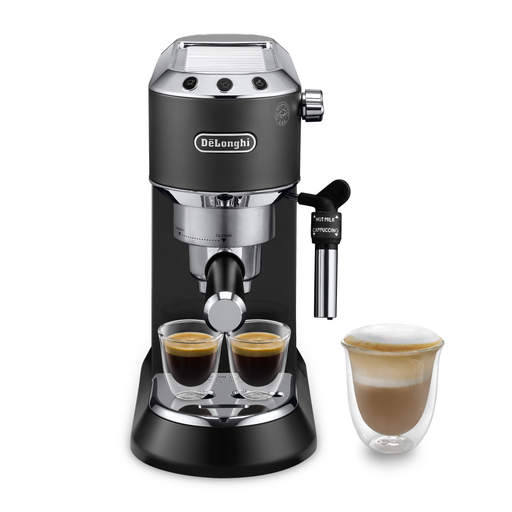 Image unavailable
Worth considering if you’re happy to prepare espresso manually instead of using a capsule system. The product title states a pressure of 15 bar; check the water tank capacity of the exact model before choosing.
 Image unavailable
Worth considering if you’d prefer an espresso machine with a grinder and expect to use it more regularly. Before deciding where to put it, check its dimensions, whether its noise level suits you and what maintenance the model needs.
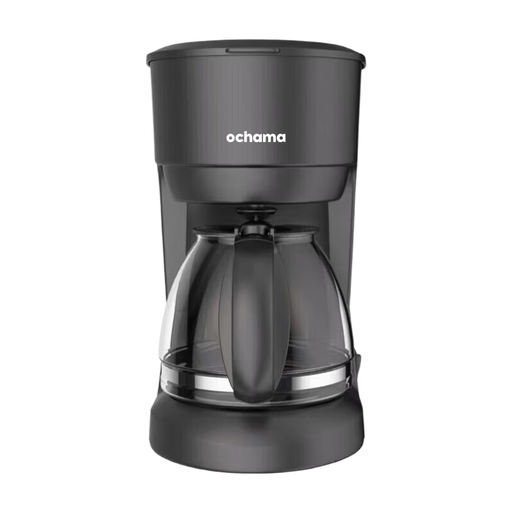 Image unavailable
Worth considering if you want to make filter coffee in a jug when you have guests. The product title states a capacity of 750 ml and a 30-minute keep-warm function; if you often drink coffee on your own, check the minimum amount it can make.
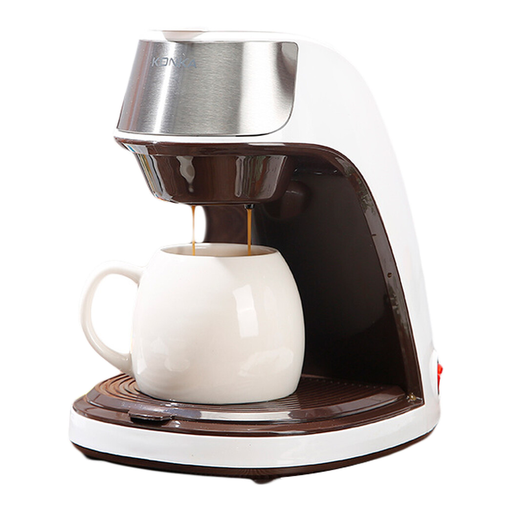 Image unavailable
Worth considering if you make a small amount at a time: the product title states a capacity of 300 ml. If you’re entertaining several people, check that this amount per brew suits the way you plan to serve them.
Follow the instructions for your model and take the hardness of your water into account. As an example that applies only to the relevant machines, Nespresso France recommends descaling every three months or after around 300 capsules. This schedule doesn’t automatically apply to other machines.
No, check what they’re made from first. In France, ADEME says aluminium and plastic capsules should be sorted with paper and packaging; for other materials, follow the product guidance and local instructions.
Not necessarily: it depends on how much noise you’re comfortable with at home and which model you choose. UFC-Que Choisir says a grinder is noisier than a capsule machine or filter coffee maker. If noise is a deciding factor, compare measurements taken under similar conditions or listen to the machine before buying.
For goods bought from a professional seller, the statutory guarantee of conformity applies to new, second-hand and refurbished goods, according to the French Ministry of the Economy. Check the repair arrangements for your specific model separately: the DGCCRF says the seller must tell you how long parts will be available if the manufacturer has provided this information.
Don’t rely on this index to compare coffee machines across the board. In the list of categories published by the French ministry responsible for ecological transition in January 2026, coffee machines aren’t included among the products covered. Instead, find out about parts and the repair process for the model you’re considering.