Essential buying criteria
Start by comparing the true long-term cost, then consider the daily steps involved, the space available and the maintenance routine you are prepared to follow.
| Priority |
What to check |
Your needs |
| Total cost over time |
Compare the purchase price, coffee or portions, any filters, descaling products and possible repairs. Always calculate using the same volume of drink per cup. |
I want to understand my spending over several months, rather than simply choosing the cheapest machine upfront. |
| Simplicity and drinks |
Check the preparation system, strength and volume settings, and whether there is a steam wand or milk system if you intend to use one. |
I either want to press a button for a pre-dosed coffee or choose my own beans and adjust my espresso more precisely. |
| Size and noise |
Measure the height, depth and width, including the space needed to fill the water and beans. Compare noise and vibrations based on tests carried out in comparable conditions. |
My machine must fit in my kitchen without obstructing cupboards, and its noise must remain acceptable when I make my coffee. |
| Maintenance and support |
Check the rinsing, emptying, milk-cleaning and descaling procedures. Also consult the manual, available parts and support for the exact reference. |
I am looking for a cleaning routine I can realistically keep up with, particularly if the water is hard or I prepare milk-based drinks. |
Joybuy options
These Joybuy options mainly cover espresso machines with bean grinders, alongside a soft-pod machine for households that prioritise quick preparation.
 Image unavailable
Philips EP2230/10 Series 2200 LatteGo
For households that want coffee beans and milk-based drinks with adjustable strength and volume.
12 grind settings, 1.8 L water tank, 275 g bean hopper, two-cup function and removable coffee group.
Check which drinks are actually programmed, along with the cost and replacement frequency of the AquaClean filter.
Joybuy
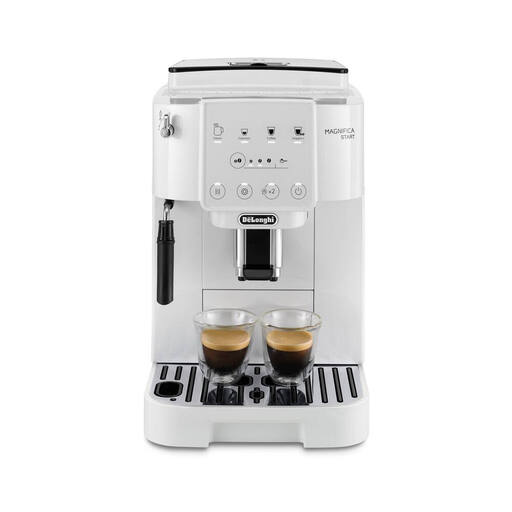 Image unavailable
De’Longhi Magnifica Start ECAM220.21.WW
Worth considering if you regularly prepare coffee from beans while still wanting the option to make milk-based drinks.
1.8 L water tank, 250 g bean hopper, 13 grind settings, 14-coffee grounds container, two coffees at once and adjustable steam wand.
The steam wand needs cleaning after milk-based drinks. Also check the actual noise level and the clearance required around the machine.
Joybuy
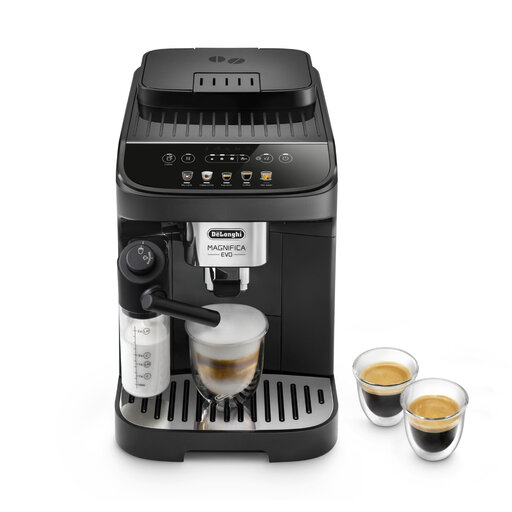 Image unavailable
De’Longhi Magnifica Evo LatteCrema ECAM290.61.B
This machine is aimed at households that want to prepare coffee from beans and milk-based drinks at the touch of a button.
1.8 L water tank, 250 g bean hopper, 13 grind levels, LatteCrema system, dishwasher-safe carafe, and rinsing and descaling programmes.
Check which recipes are available for the ECAM290.61.B EX:2 reference and review the carafe-cleaning procedures.
Joybuy
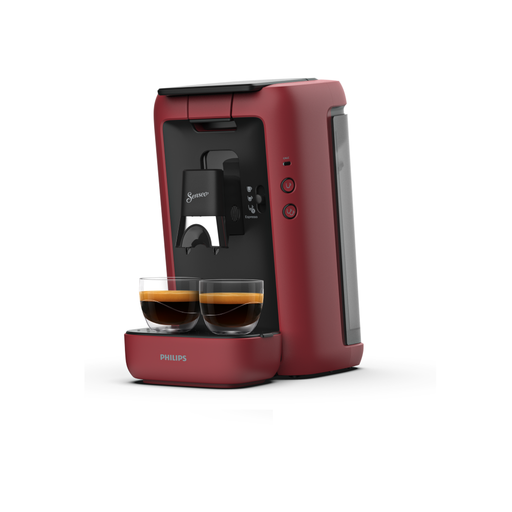 Image unavailable
Philips Senseo Maestro CSA260/91
An option for quick, everyday preparation with minimal effort, in a kitchen where worktop space is limited.
1.2 L water tank, one cup in under 45 seconds, two cups in under 75 seconds, automatic shut-off and removable dishwasher-safe parts.
The instructions specify SENSEO® pods, despite the word “capsule” in the title: check the accepted consumable format before buying.
Joybuy
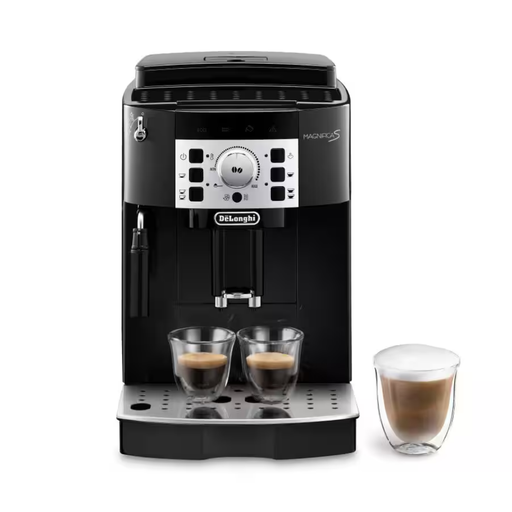 Image unavailable
De’Longhi Magnifica S ECAM22.140.B
Consider it if you want to switch between coffee beans and ground coffee, with two-cup preparation and a steam wand for occasional use.
Integrated grinder, 1.8 L water tank, stated water filter, Thermoblock, steam wand, descaling programme and dishwasher-safe drip tray.
Check the dimensions, weight, water-filter reference and the conditions governing its inclusion in the package.
Joybuy
Frequently asked questions
How can I compare the cost of a capsule machine with that of a bean-to-cup machine?
Calculate the cost over the same period and for the same number of cups, including the machine, coffee or portions, filters, descaler and any potential repairs. UFC-Que Choisir states that, in its analysis, the cost per cup of a bean-to-cup machine was two to three times lower than that of a pod espresso machine, although the initial investment is higher.
What water-tank capacity should I choose for everyday use?
There is no one-size-fits-all capacity: start with the number of coffees you make between refills and factor in any automatic rinsing. Also check the coffee-grounds container and the model’s dimensions. For example, De’Longhi states that the Magnifica S ECAM22.110.SB has a 1.8 L tank and a container for 14 pucks, but these figures do not apply to the entire range.
Are bean-to-cup machines too noisy for a flat?
A grinder is generally noisier and takes up more space than a capsule system, but the sound level depends on the model and the testing conditions. For a meaningful comparison, look for a test that measures both grinding and preparation; UFC-Que Choisir’s testing protocol includes a sound meter and an assessment of vibrations.
How often should an espresso machine be descaled?
Always follow the model’s manual and alerts first, as water hardness and frequency of use affect how often descaling is needed. UFC-Que Choisir refers to an average of one descaling every two to three months depending on these conditions. Nespresso recommends descaling every three months or after around 300 capsules for its own machines.
How should coffee capsules be recycled in France?
According to ADEME’s “Que faire de mes déchets ?” tool, aluminium and plastic capsules should go in the recycling bin, bag or container for paper and packaging. If you are unsure about local instructions or the capsule material, check the guidance provided by your local authority.


