Households looking for a fuss-free option
Capsules and pods make coffee with very little adjustment. Before choosing, check how much space you have and which type of coffee the machine takes.


For an easy cup of coffee every day, choose capsules or pods, after checking they fit your machine. Go for a portafilter if you want to measure and prepare your own espresso. An automatic bean-to-cup machine is better suited to a household that regularly uses whole beans and is happy to clean the containers and descale the machine as instructed.
How often you drink coffee is only one part of the decision. Think about how much you want to do for each cup, and what sort of cleaning routine you can keep up with.
Capsules and pods make coffee with very little adjustment. Before choosing, check how much space you have and which type of coffee the machine takes.
With a portafilter machine, you control how much coffee to use and how to prepare it. You’ll also need to clean the portafilter and its accessories after use.
An automatic bean-to-cup machine lets you start with whole beans without preparing a portafilter for every cup. Que Choisir notes that the containers and, depending on the machine, the brewing unit need regular rinsing.
Start by comparing the steps you’ll repeat every day, then think about the drinks you want, the space available and how to care for the specific model.
| Factor | What to check | What matters to me |
|---|---|---|
| Daily preparation | Compare how many steps each cup takes, which settings you need to adjust and how easy the water tank is to reach. A portafilter machine requires you to prepare the coffee before extraction; capsules and pods are pre-portioned. | In the morning, I’d rather press a button than measure out coffee, or I want to be involved in every step. |
| Coffee and drink options | Check which type of coffee the machine takes and, if needed, whether the exact model has a steam wand or milk system. Not every model in a range offers the same recipes. | I want to choose my beans or control the amount of coffee. If I often make milky drinks, the model’s features matter too. |
| Available space | Measure the space where you plan to put the machine, allowing room to fill the tank and reach the parts that need cleaning. Check the dimensions of the exact version you’re considering. | My machine needs to be easy to reach on the worktop without getting in the way of other tasks. |
| Cleaning and maintenance | Check the instructions for the containers, removable brewing unit, milk system and descaling. Que Choisir notes that water hardness and how often you use the machine affect how often it needs descaling. | I’m happy to empty and rinse several parts regularly, or I’d prefer a routine with fewer parts to handle. |
| Consumables and waste | Identify the exact capsule or pod format and check how easy it is to buy. For aluminium or plastic capsules, follow the sorting guidance provided by ADEME in France. | I want to be able to find coffee that fits my machine easily and know what to do with the packaging afterwards. |
Automatic coffee-making still involves emptying the containers and rinsing the parts specified by the manufacturer. Que Choisir recommends regularly cleaning the used-coffee and drip containers on machines with a grinder, in particular.
Before choosing a model, check the instructions to see which parts you can access, how the descaling programme works and what needs cleaning after making a milky drink.
The coffee needs to match the machine’s system: the words ‘capsule’ and ‘pod’ alone don’t tell you whether it will fit.
Check the exact name of the system, then make sure you can buy compatible coffee from the shops you usually use.
A capsule is still individual packaging, even if its material can be recycled.
If you choose capsules, follow ADEME’s guidance and local recycling instructions. If you’d rather avoid individually packaged capsules, also consider machines that use ground coffee or whole beans.
These brands offer examples of different ways to make coffee. Always check the features and compatible coffee for the specific model you’re considering.
De'Longhi offers manual portafilter machines and automatic machines with grinders: two distinct ways to make coffee at home.
Senseo is worth considering if you want to make coffee using soft pods.
Nespresso is a well-known capsule machine brand, but you’ll need to check which capsule system each model takes.
These models represent three ways to make coffee at home: capsules, a portafilter and an automatic grinder. First choose the system that suits your routine, then check the specifications of the model you’re interested in.
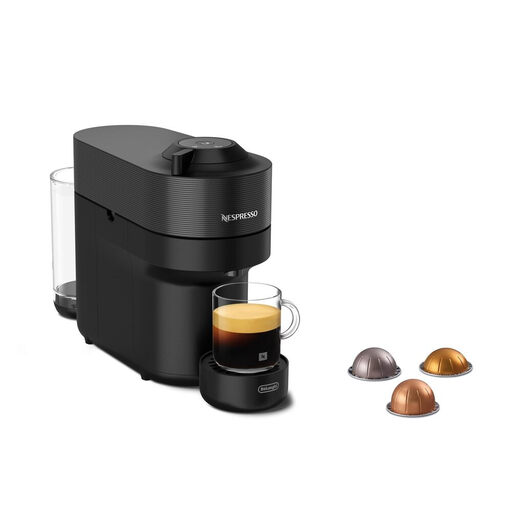 Image unavailable
A capsule machine for anyone who wants to keep coffee-making simple. Check that the Vertuo format and the capsules you plan to use suit your routine. Remember to descale the machine as instructed.
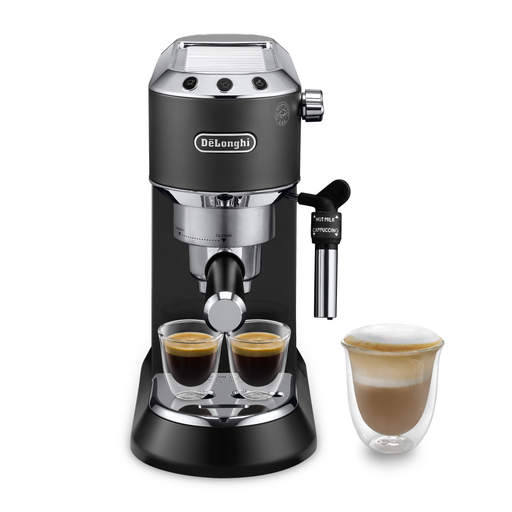 Image unavailable
This portafilter model is for anyone who wants to be involved in making their espresso. Be prepared to clean the portafilter after use, and check the tank capacity of the version on offer before you choose.
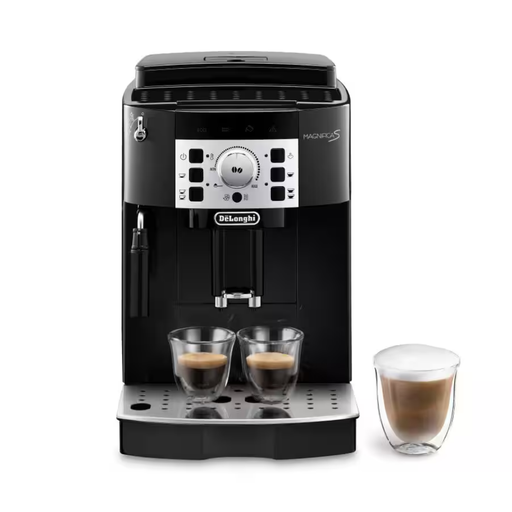 Image unavailable
An automatic machine with a grinder for households that regularly use whole beans. Measure the available space and make sure you can keep up with the emptying, rinsing and descaling routine for this model.
 Image unavailable
Consider this automatic grinder if milky drinks are part of your routine. Check the recipes available on the exact model, any accessories you’ll need and how to clean the milk system. A compatible AquaClean filter may not be included.
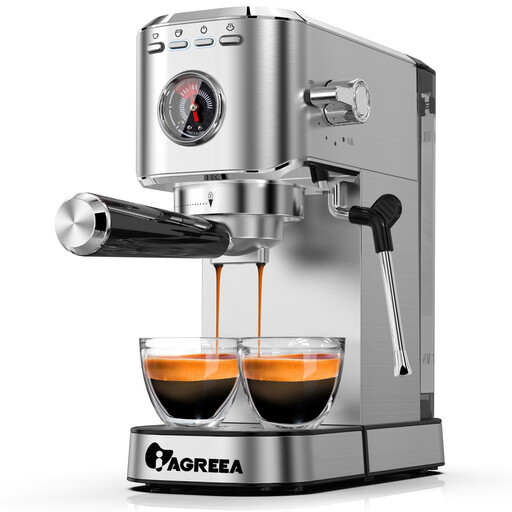 Image unavailable
This portafilter machine has a pressure gauge, steam wand and cup-warming tray. If you plan to use it in France, check the voltage and plug type before buying. You’ll also need to clean the parts you use after each coffee.
Start by thinking about the steps you’re happy to repeat: capsules or pods for pre-portioned coffee, a portafilter if you want to measure and prepare it yourself, or an automatic grinder if you want to use whole beans without filling a portafilter for every cup. Then check the space available, the drinks you want and the cleaning requirements for each model.
Follow your machine’s programme and instructions. Que Choisir suggests descaling every two to three months as a general guide, while noting that water hardness and how often you use the machine can affect how often it needs descaling.
Regularly empty and rinse the used-coffee and drip containers, then clean the accessible parts as directed in the instructions. Que Choisir also mentions cleaning the brewing unit. If you use the machine with milk, follow the instructions for cleaning the milk system after use.
According to ADEME, put them in the recycling bin, bag or container for paper and packaging. Also check the local guidance for your area.
A repair through the brand’s service team isn’t always possible. Nespresso France, for example, says it may be unable to offer a repair if the necessary parts are unavailable. For a specific model, check repair options and parts availability before buying. This is separate from the rights that apply to a faulty product.