
Livraison le jour même ou le lendemain

Qualité garantie

Débloquez vos offres de bienvenue: Livraison GRATUITE | Jusqu'à -80 % | 30 jours d'essai gratuits à JoyPlus
Téléchargez l'application
Buying a coffee machine isn't just about comparing the number of bars or how the appliance looks. Between espresso machines, automatic bean-to-cup models, capsule machines and filter coffee makers, the real differences come down to the type of coffee you use, how much control you want, the maintenance required and the space you have in your kitchen.
Some marketing claims are also worth taking with a pinch of salt. Here are the main pitfalls to avoid before you place your order.
A 15-bar coffee machine or a 20-bar coffee machine usually indicates the maximum pump pressure. The coffee isn't extracted at this level constantly, and higher pressure alone doesn't guarantee a better result. The fineness of the grind, the coffee dose, the water temperature and the freshness of the beans or ground coffee all matter just as much.
Pressure is still a useful indicator when comparing espresso machines, as long as you don't look at it in isolation.
A bean-to-cup coffee machine requires more attention than a capsule machine or a filter coffee maker. You'll need to empty the grounds container, clean the brewing unit and run a descaling cycle regularly, depending on how often you use it and the hardness of your water.
A removable water tank, an easily accessible drip tray and components that are dishwasher-safe make this routine much simpler. Still, check the manual before using any descaling product, because not all manufacturers recommend the same solutions.
A compact coffee maker can be perfect for a small kitchen, a studio flat or an office. But you need to make sure your cups fit under the spout: some models only accept shorter containers. Measure the available space, taking into account the width, depth and height under your cupboards.
Also check the plug type and electrical specifications. For installation in France, choose an appliance that is compatible with a 220–240 V, 50 Hz supply where this information is provided.
For one person, a 300 to 600 ml tank may be enough. A couple or a family would be better off choosing a model with at least 1 litre. A coffee machine intended for multiple users should also have a large enough grounds container or a well-designed rinsing system.
The stated capacity doesn't always match the actual number of cups. A filter coffee cup and an espresso obviously don't use the same amount of water.
A cappuccino machine can include a manual steam wand or an automatic system with a milk carafe. The wand gives you more control over the texture of the foam, but it needs to be cleaned after each use. The automatic system saves time, but requires regular cleaning of the pipes and carafe.
Go for removable tanks, containers and drip trays. This design makes daily cleaning easier and helps prevent residue build-up.
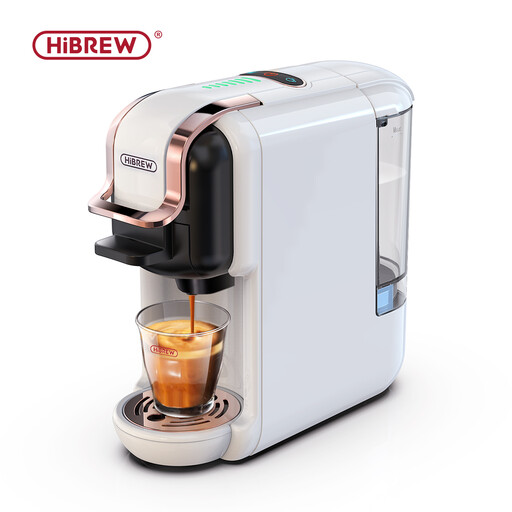
Why this choice suits this profile: With dimensions of 245 × 110 × 245 mm and a 600 ml tank, it fits easily on a small worktop. It accepts several capsule formats, ESE pods and ground coffee.
Compatibility is shown adaptor by adaptor, which reduces the risk of ending up with a machine that only works with one format. However, do measure your cups: containers taller than about 9.7 cm are not designed to fit.
Stated pressure of 19 bars, hot and cold modes, automatic shut-off after 15 minutes and dry-run protection.
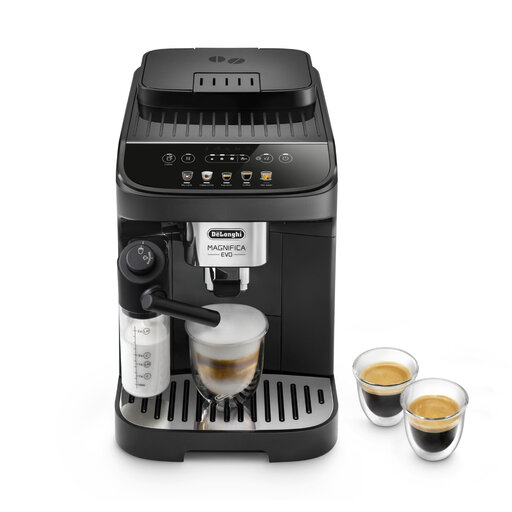
Why this choice suits this profile: This automatic bean-to-cup machine is aimed at households that want to make drinks using whole beans while keeping the settings simple and easy to use.
The 1.8 litre water tank, 250 g bean hopper and the rinse and descaling programmes make daily use more predictable.
Adjustable conical burr grinder with 13 fineness settings, five drinks at the touch of a button and MyLatte function with a dishwasher-safe milk carafe.
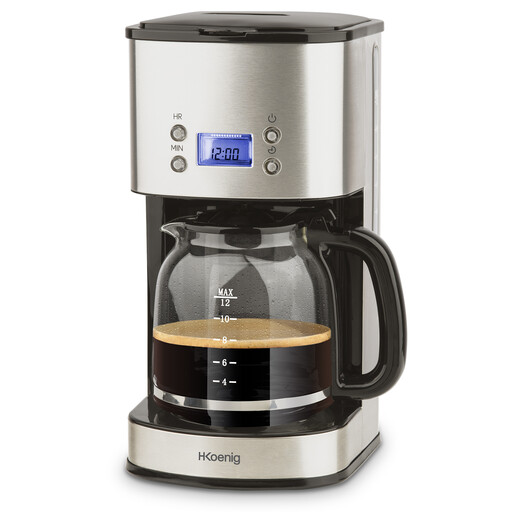
Why this choice suits this profile: Its 1.5 litre capacity and programmable features with an LCD screen make it ideal for families, workspaces and filter coffee lovers who brew several cups at once.
The graduated carafe helps you control the volume brewed, while the swivel, removable filter holder makes cleaning easier after a day's use.
1,000 W power, keep-warm function and a stated capacity of up to 12 cups.
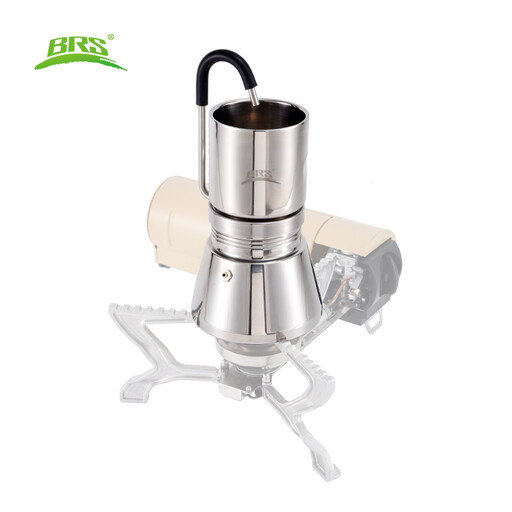
Why this choice suits this profile: With its 250 ml capacity, this moka pot is designed for campers and anyone who wants to make coffee without an electrical appliance.
Its food-grade stainless steel construction avoids relying on a fragile glass carafe and allows you to use different compatible heat sources.
Capacity suitable for around 2 to 4 people, closed lid for transport and compatibility with a gas stove, camping stove or hob.
We've put together a full selection, updated in real time, of products that meet these demanding criteria and European safety standards.
A filter coffee maker with a tank of around 1.5 litres works well when you're brewing several cups in a row. If everyone prefers a different drink, an automatic bean-to-cup machine offers more options, though it usually comes with higher maintenance and a bigger investment.
Not necessarily. The figure shown usually refers to the maximum pump pressure. When making your choice, also look at temperature stability, the types of coffee accepted, the quality of the portafilter and how easy it is to clean.
It all depends on the coffee you choose, how many drinks you make and how often you maintain it. Capsules are convenient, but their cost per cup varies a lot depending on the format and brand. Whole beans or ground coffee generally make it easier to compare the price of each serving. You also need to factor in water, electricity and the descaling products needed to keep your machine in good working order.