
Livraison le jour même ou le lendemain

Qualité garantie

Débloquez vos offres de bienvenue: Livraison GRATUITE | Jusqu'à -80 % | 30 jours d'essai gratuits à JoyPlus
Téléchargez l'application
Choosing a coffee machine can quickly become a headache. Between the promises of "professional pressure" on entry-level models and the hidden costs of certain pod systems, it's easy to make a choice you'll regret. Before taking the plunge, let's review the most common pitfalls to avoid unnecessary expenses.
The first pitfall: focusing solely on bar pressure. A high number (19 or 20 bars) is often a marketing ploy, but it in no way guarantees good coffee if the machine doesn't maintain a perfectly stable water temperature during extraction. This consistency is what separates a rich espresso from weak, watery coffee.
A second hurdle is the long-term cost. A capsule or pod machine is tempting with its low upfront price, but the cost of consumables quickly adds up. Not to mention the closed ecosystem that ties you to a single brand, limiting your choices and your freedom.
Finally, beware of gimmicky features. Do you really need ten different programs if you only drink espressos? Paying for options you'll never use is a guaranteed waste.
To make the right choice, let's focus on the few parameters that will truly make a difference in your daily routine.
This is the starting point. Each type of machine serves very specific needs:
For a true espresso, an extraction pressure of around 9 bars at the group head is considered ideal. While many machines advertise 15 or 20 bars, this refers to the pump's output pressure, not the pressure applied to the coffee. The most important factor remains the machine's ability to maintain stable pressure throughout the extraction.
The heating system is just as crucial. A Thermoblock heats water quickly and on demand, ensuring a constant temperature, which is essential to avoid "burning" the coffee and to extract all its aromatic subtleties.
Consider your habits. If you're a fan of milk-based drinks, a cappuccino machine with a proper steam wand is essential. If you travel often, a portable coffee machine could be an interesting option.
Never underestimate maintenance. Easily removable components (water tank, drip tray, brew group) and automatic cleaning or descaling programs will simplify your life and ensure the longevity of your appliance.
To help you see more clearly, here are a few models that perfectly illustrate these criteria and cater to very different user profiles.
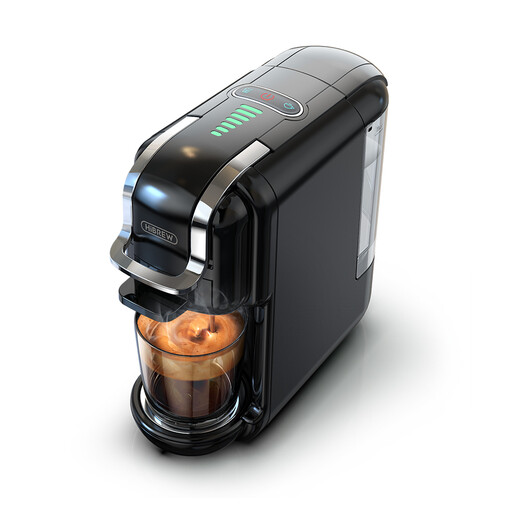
The user profile: Ideal for families or flatshares where tastes vary. It accepts the most common capsules (Nespresso, Dolce Gusto, ESE) as well as ground coffee, offering maximum versatility without cluttering the kitchen.
It breaks free from the lock-in of capsule ecosystems. By also accepting ground coffee, it allows you to control your coffee budget over the long term.
5-in-1 Versatility: compatible with major capsule formats and ground coffee. Hot/Cold Function: perfect for preparing iced coffees in the summer.
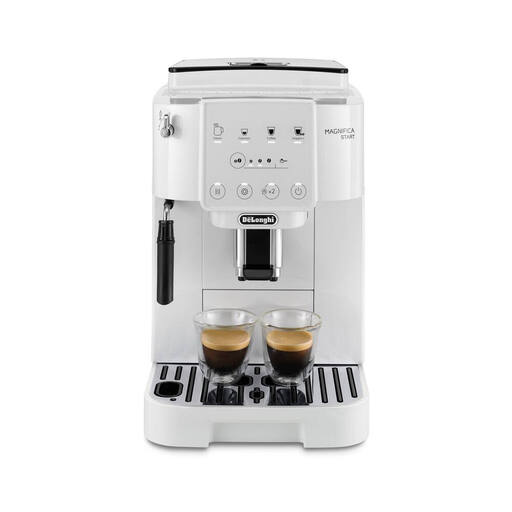
The user profile: For those who won't compromise on freshness. This bean-to-cup machine grinds beans on demand, releasing maximum aroma for an incomparably high-quality result in the cup.
It avoids the trap of superfluous features. It gets straight to the point: a perfectly mastered espresso, long coffee, and Doppio+, with a steam wand for cappuccinos, all without lengthy menus.
Integrated grinder: 13 grind settings for precise control. 15-bar pressure: for a rich extraction and a creamy *crema*. Simplified maintenance: automatic cleaning and descaling programs.
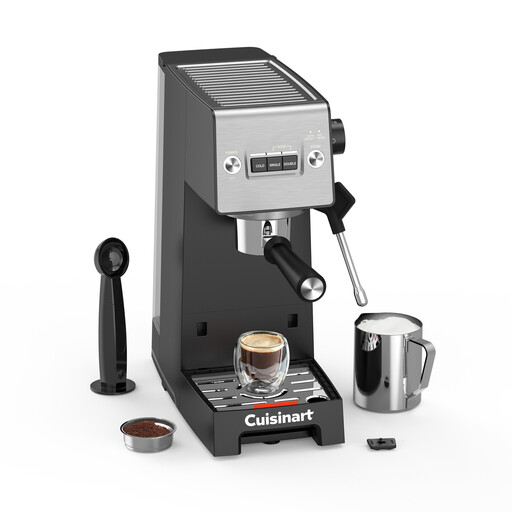
The user profile: Perfect for getting started in the art of espresso. This semi-automatic machine offers manual control over extraction and a steam wand to practice creating the perfect milk foam, all in a very compact design.
It avoids the "false pressure" trap. Its 15-bar pump is paired with a design that promotes stable extraction, giving you immediate feedback on the quality of your grind and tamp.
Manual control: stainless steel portafilter for one or two espressos. Integrated steam wand: for making cappuccinos and lattes. Slim design: minimal footprint on the countertop.
Discover our complete and up-to-date selection of coffee machines, all tested and approved according to our selection criteria and current safety standards.
Upfront, a bean-to-cup coffee machine with grinder represents a larger investment. However, the cost per cup is incomparably lower. A 1 kg bag of coffee beans (about 140 coffees) costs between €15 and €25, which works out to about €0.11 to €0.18 per coffee. In comparison, a single capsule costs between €0.35 and €0.60. The investment in a bean-to-cup machine therefore quickly pays for itself.
The ideal pressure for an espresso extraction is around 9 bars, applied directly to the puck of ground coffee. The 15, 19, or 20 bars advertised by manufacturers refer to the pump's power, but the pressure is then regulated at the brew group. This number is an indicator of the machine's raw power, but temperature stability and grind quality are far more crucial for the result in the cup.
It all depends on the build quality, frequency of use, and, most importantly, the diligence of its maintenance. A well-maintained machine (regular descaling, cleaning of the brew group) can work perfectly for 5 to 10 years, and even longer for premium models. Forgetting to run descaling cycles remains the primary cause of premature failure.