Shoppers keeping an eye on fat
You want to check a specific nutrition value, even if that means choosing a fruity sorbet rather than creamy ice cream to go with your coffee.


If keeping fat low is your priority, compare nutrition values on the same basis before choosing a flavour. Under EU Regulation (EC) No 1924/2006, solid foods must contain no more than 3 g of fat per 100 g to carry this claim. Carrefour describes its apple sorbet tub as containing 0% fat, but this fruity option won’t give you the taste of coffee ice cream. Carrefour Extra Coffee and Chocolate Pieces ice cream, by contrast, contains 9.3 g per 100 g.
You want to check a specific nutrition value, even if that means choosing a fruity sorbet rather than creamy ice cream to go with your coffee.
You prefer coffee-, vanilla- or chocolate-flavoured ice cream to accompany an espresso, while treating flavour pairing and a ‘low fat’ claim as two separate considerations.
You want a tub that suits your snack time and check the product details, nutrition information and availability before choosing.
Choose this if: fat content matters more than coffee flavour and you’re happy with a fruity contrast.
Bear in mind: Carrefour describes its Carrefour Extra Apple Sorbet as ‘0% fat’, but it won’t taste like coffee ice cream. This claim alone doesn’t tell you how much sugar it contains.
Choose this if: getting a coffee flavour in your dessert matters more than meeting a strict fat limit.
Bear in mind: Carrefour lists 9.3 g of fat per 100 g for its Extra Coffee and Chocolate Pieces ice cream. Carte d’Or Coffee ice cream is listed at 4.7 g per 100 ml, a different unit that can’t be converted without product-specific recipe data.
Choose this if: you prefer vanilla with your coffee and don’t need a ‘low fat’ claim.
Bear in mind: Carrefour lists 8.7 g of fat per 100 g for its Carrefour Extra Vanilla ice cream, so you’ll still need to check the figures for the specific product you choose.
| Criterion | What to check | Who is it for? |
|---|---|---|
| Fat content | The value per 100 g for a solid food and, separately, the amount of sugar. | I want to check whether it meets the ‘low fat’ criterion, even if that means passing on creamy ice cream. This is the top priority for around 50% of shoppers. |
| Pairing with coffee | The flavour and ingredients of the exact tub, without confusing values per 100 ml with those per 100 g. | With an espresso, I’d rather have a coffee flavour and am happy to consider its fat content separately. Taste comes first for around 30% of shoppers. |
| Format and availability | The packaging format, local availability and nutrition information for the product. | I need a pack that’s suitable for snack time and a product I can actually buy. This is the top priority for around 20% of shoppers. |
The name or impression of being lighter doesn’t replace the nutrition information. For a solid food to carry this claim, EU Regulation (EC) No 1924/2006 sets a maximum of 3 g of fat per 100 g.
Check the value for the exact product and look at sugar separately.
According to Carrefour, its Extra Coffee and Chocolate Pieces ice cream contains 9.3 g of fat per 100 g. Coffee flavour and low fat are two different priorities here.
If the fat limit is important to you, check it before choosing a product for its flavour. A fruity sorbet could be an option if you like that pairing.
These units measure volume and weight respectively. Without information to convert the figures for the recipe in question, they aren’t a like-for-like comparison.
Compare values given in the same unit and check the basis used for the criterion that matters to you.
A category page may show several flavours without giving the nutrition values for each one. Check the ingredients and packaging for the specific product you’re buying.
Check its product page and packaging to confirm the nutrition values, allergens, format and local availability.
Carrefour Extra products with published information include an apple sorbet and coffee- or vanilla-flavoured ice cream tubs.
Carte d’Or Coffee ice cream in a tub is for anyone who wants that flavour in a dessert served with their coffee.
The Ben & Jerry’s products described by Carrefour are ice cream pots with recipes containing mix-ins, rather than the tubs featured here.
E.Leclerc’s ice cream and sorbet category includes ESKISS coffee-flavoured tubs.
Auchan’s tub category includes coffee-flavoured ice creams and sorbets.
The Häagen-Dazs product mentioned in the Carrefour range reviewed is a vanilla ice cream pot.
These fruity sorbets could go with coffee if you’d rather have a contrast of flavours than coffee-flavoured ice cream. The product names indicate a weight of 488 g. Check the packaging format if you specifically want a tub, and look at the nutrition information for the product you choose.
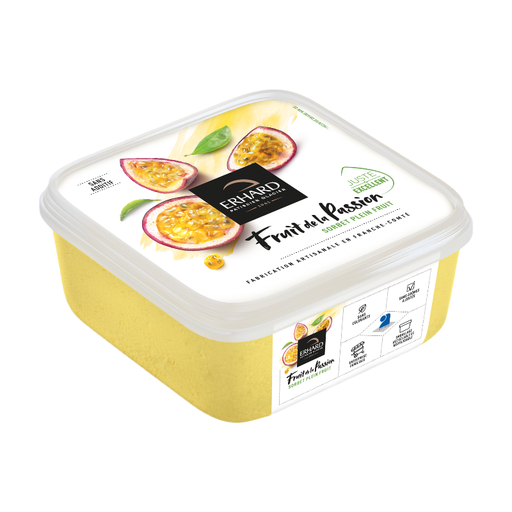 Image unavailable
Worth considering with coffee if you’re happy with passion fruit flavour instead of coffee ice cream.
The stated weight is 488 g. Check the packaging if you specifically need a tub, and check the fat, sugar and allergen information for the exact product.
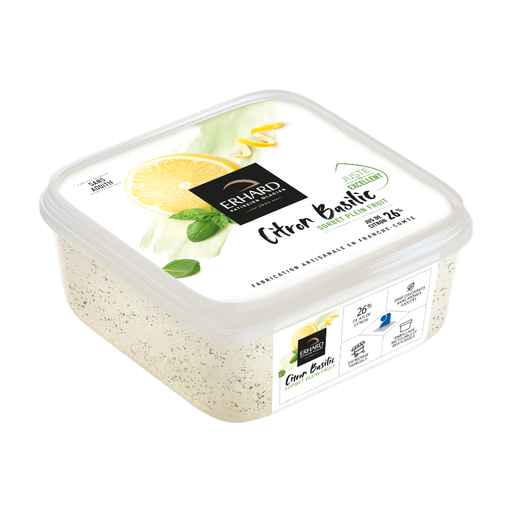 Image unavailable
Worth considering with coffee if you prefer a lemon and basil pairing to a coffee-flavoured dessert.
The stated weight is 488 g. Check the packaging format if you’re looking for a tub, then check the fat, sugar and allergen information for this product.
Under EU Regulation (EC) No 1924/2006, this claim is reserved for foods containing no more than 3 g of fat per 100 g if they’re solid, or 1.5 g per 100 ml if they’re liquid. When checking a tub with values given per 100 g, use that same basis rather than a per-100-ml value taken from a different recipe.
No. It also depends on the flavour you’re looking for. Carrefour describes its Extra Apple Sorbet as ‘0% fat’, but its fruity flavour won’t replace that of coffee ice cream. Check the sugar content too if that matters to you.
Not by comparing the figures directly: 100 ml is a volume, while 100 g is a weight. Unless you have information to convert the values for each recipe, stick to figures given on the same basis.
Before buying, check the ingredients and allergen list for the exact product, then check the packaging again before eating it. You can’t work out the allergens in your recipe from the coffee flavour, the brand or the product information for another tub.