
Livraison le jour même ou le lendemain

Qualité garantie

Débloquez vos offres de bienvenue: Livraison GRATUITE | Jusqu'à -80 % | 30 jours d'essai gratuits à JoyPlus
Téléchargez l'application
The aroma of freshly ground coffee is an experience that pre-ground coffee simply can't match. Yet, choosing a coffee grinder can quickly become a headache. Between the marketing jargon and confusing spec sheets, it's all too easy to end up with a disappointing device that gets relegated to the back of a cupboard.
As a product expert at Joybuy, my mission is to help you see things more clearly. Let's break down the pitfalls to avoid and the criteria that truly matter to make the right choice for your needs and budget.
Before you even start comparing models, you need to know the deal-breakers that too often turn a good deal into a disappointment.
To avoid these pitfalls, focus on three technical points that make all the difference in a coffee grinder's real-world performance.
The burrs are the heart of your grinder. They crush the beans consistently, unlike blade grinders which chaotically shatter them.
A precise adjustment system is essential for switching between different brewing methods. A good grinder should allow you to effortlessly go from a very fine grind for an espresso coffee grinder to a coarse grind for a French Press. "Micrometric" or stepless systems, or those with very fine steps, are what guarantee this level of control.
The choice depends on your routine and priorities.
To move from theory to practice, here are a few models that suit different needs and avoid the pitfalls we've discussed.
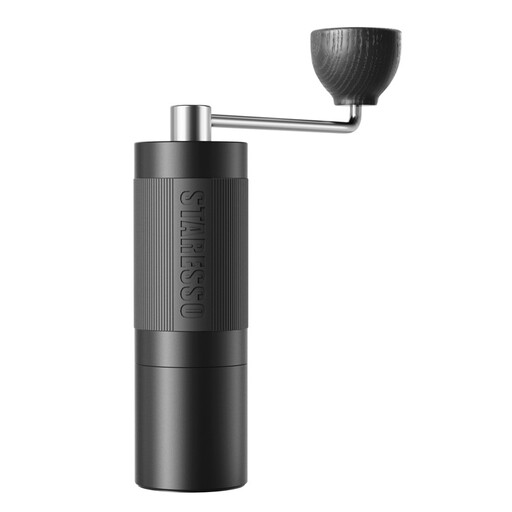
Why we chose it : For those who refuse to sacrifice coffee quality, even on the go. Its all-metal construction and compact size make it a reliable travel companion, whether for camping, hiking, or simply at the office.
It features high-performance stainless steel burrs, which are far more durable and precise than ceramic. Its fully disassemblable design allows for easy and thorough cleaning to eliminate any retention.
Its dual ball bearing system ensures a smooth, effortless rotation. The result : a more pleasant and, most importantly, more consistent manual grinding experience.
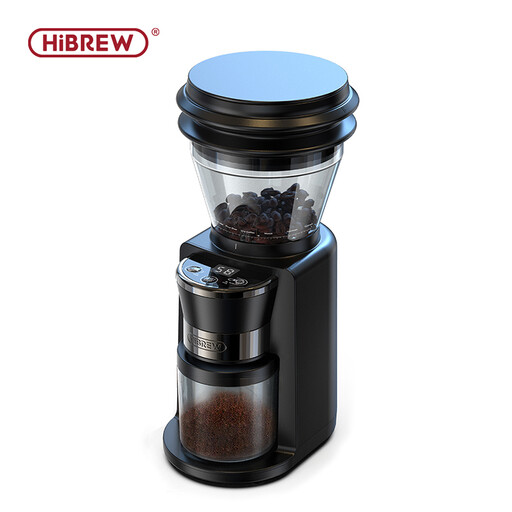
Why we chose it : For those who want the convenience of an electric grinder without sacrificing precision. It's designed for fans of both espresso and slow brew methods who demand fine control and simple daily use.
It overcomes the pitfall of imprecise settings with its 34 grind levels. It also integrates an anti-static function and a bellows to clear out residue, ensuring a fresh grind and near-zero retention.
Its high-precision conical burrs, coupled with a digital dosing function, ensure perfect consistency. This is the secret to pulling a perfect espresso shot every time.
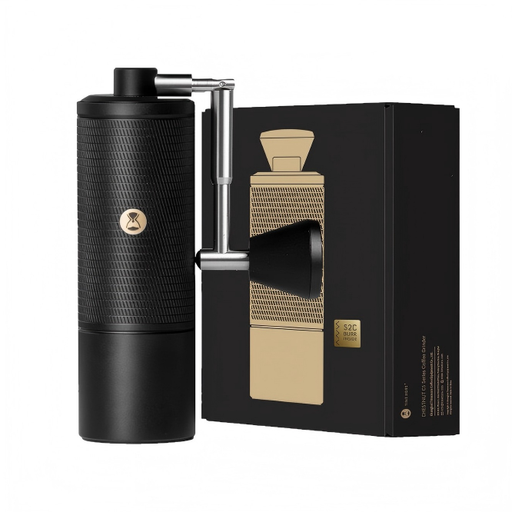
Why we chose it : The ideal entry point into the world of high-quality grinding. It's the perfect option for those looking to level up their coffee game without investing in an expensive electric grinder.
It is equipped with conical stainless steel burrs that guarantee a uniform grind, light-years ahead of the inconsistency of blade grinders or low-end ceramic burrs. Its stepped adjustment system is precise, reliable, and offers true versatility.
Its performance-to-price ratio is simply excellent. It makes precision grinding accessible and finally allows you to unlock the full potential of your specialty coffee beans.
We have curated a full range of products that meet our strict selection criteria and current safety standards.
Yes, absolutely, provided you choose the right model. A quality manual coffee grinder, equipped with robust steel burrs and a micrometric (or very fine-stepped) adjustment system, can easily produce a grind fine and uniform enough for an espresso machine. The crucial factors are the rigidity of the central axle and the precision of the burr alignment.
Regular cleaning is essential. On a daily basis, a simple brush-off is enough to remove coffee residue from the burrs and grind chamber. For a deep clean (every two to three weeks), disassemble the burrs (if your model allows) and brush them meticulously. Most importantly, never use water, as it will cause steel parts to rust.
It all depends on the material and your usage. Well-made stainless steel burrs are extremely durable: they can grind several hundred kilograms of coffee before showing signs of wear. For typical home use, this means many years of worry-free operation. Ceramic burrs, while hard, are more brittle and risk chipping much sooner.