
Livraison le jour même ou le lendemain

Qualité garantie

Débloquez vos offres de bienvenue: Livraison GRATUITE | Jusqu'à -80 % | 30 jours d'essai gratuits à JoyPlus
Téléchargez l'application
Finding the right gear for great coffee at home can often feel like a puzzle. Between marketing jargon, a jungle of technologies, and hit-or-miss designs, buyer's remorse is always a risk. Our mission? To help you see clearly. Let's break down the pitfalls to avoid and the real criteria that matter to find the coffee gear that’s right for you—and built to last.
Before you pull out your credit card, let's review the common mistakes that can end up being costly.
Making the right choice means focusing on objective data. These are the true guarantees of your coffee's quality and your machine's longevity.
For an espresso machine, pressure is the name of the game. A pressure of 9?bars at the group head is the recognised standard for achieving a rich espresso and a beautiful crema. While many machines advertise "15 bars" or "19 bars," this value often refers to the pump's maximum capacity, not the actual, stable pressure during extraction. Water temperature stability (ideally between 90 and 95?°C) is just as crucial to avoid "burning" the coffee.
Whether it's a coffee grinder, a pour-over coffee maker, or barista accessories, prioritise robust materials like stainless steel or food-grade aluminium. They resist corrosion and wear far better than plastic. Also, check your equipment's compatibility. For espresso enthusiasts, 58?mm portafilters are a standard that opens the door to a vast ecosystem of accessories (tampers, baskets, etc.). For filter coffee, coffee filter sizes (like the No. 4 type) are also well-standardised.
Your user profile will determine the ideal equipment. For you, is coffee all about speed and simplicity? Instant coffee or a no-frills capsule machine will do the trick. But if you dream of exploring aromas and mastering every step of the ritual, a good coffee grinder and precise barista accessories are investments that will change everything.
Here is our selection of gear that checks all the boxes, designed for different types of users.
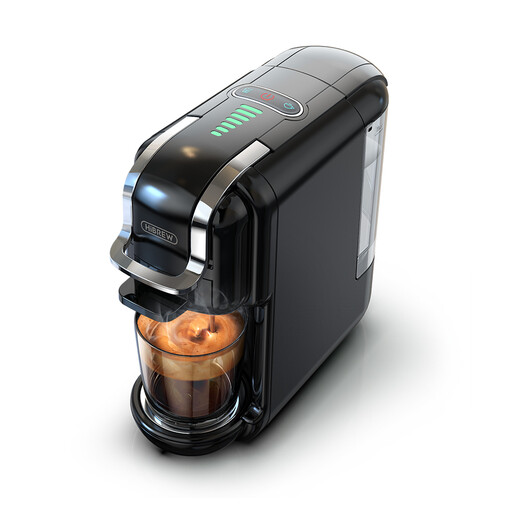
Why we chose it: Perfect for households with varied tastes or for those who refuse to be limited to a single type of capsule. It allows you to switch between different formats (Nespresso, Dolce Gusto, ESE, ground coffee) with one compact device.
This model breaks free from the constraints of proprietary capsules. Thanks to its 5-in-1 compatibility, you are free to choose your brands, vary the flavours, and control your budget.
Its strength: total versatility with 5 adapters and a hot/cold mode to suit any season. Its 19-bar pump ensures sufficient pressure for a successful extraction.
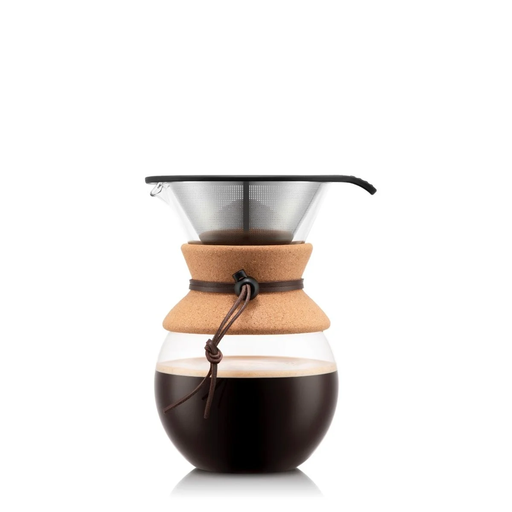
Why we chose it: The perfect solution for filter coffee purists who seek clarity of flavour and enjoy the ritual of manual preparation.
No more hidden costs or wasted paper filters! Its permanent stainless steel filter and borosilicate glass carafe are simply built to last.
A minimalist, sustainable, and economical approach. It enhances the most subtle aromas of the bean, without the complexity of an electric machine.

Why we chose it: The secret to great coffee starts with a great grinder. This one offers formidable precision to adapt to all methods, from a fine grind for espresso to a coarser one for a French press.
Unlike blade grinders that "chop" and heat the beans, its stainless steel conical burrs guarantee a perfectly uniform grind. The result: the aromas are preserved.
With 48 settings and broad compatibility with 51, 54, and 58 mm portafilters, it's an upgradeable tool that will accompany you on your quest for the perfect coffee.
Explore our full selection of products that meet our standards for quality and durability.
Is a separate coffee grinder necessary for good espresso? Absolutely. It's even the most cost-effective investment to radically improve the quality of your espresso. The freshness of the grind is a non-negotiable factor for in-cup quality: ground coffee loses its most volatile aromas in just a few minutes. A coffee grinder with burrs (conical or flat) will give you a uniform grind and the ability to adjust its fineness, something impossible with pre-ground coffee.
How do I maintain my coffee equipment to ensure its longevity? Regular maintenance is key. For an espresso machine, this involves descaling (frequency depends on your water hardness), cleaning the group head with a brush to remove coffee residue, and rinsing the portafilter after each use. For grinders, periodic cleaning of the burrs is recommended. Using a quality coffee filter, such as a filter cartridge in your machine's water tank, can also limit limescale buildup.
What is the lifespan of a capsule coffee machine? It all depends on the build quality, your frequency of use, and, most importantly, the rigour of your maintenance. An entry-level model may show signs of weakness after 2 to 3 years, while a better-built and regularly descaled machine can run smoothly for 5 to 7 years, or even longer. The choice of durable materials and the availability of spare parts are good indicators of longevity.