
Livraison le jour même ou le lendemain

Qualité garantie

Débloquez vos offres de bienvenue: Livraison GRATUITE | Jusqu'à -80 % | 30 jours d'essai gratuits à JoyPlus
Téléchargez l'application
Choosing the right coffee cups and mugs is about more than colour or style. A cup that is too small, an awkward handle, a scorching-hot outer wall or a lid that lets liquids through can quickly turn an appealing purchase into a poor choice. At home, in the office, at a hotel or in a café, the key considerations vary depending on capacity, frequency of use and ease of cleaning.
Here are the essential points to consider before choosing a coffee mug, a coffee cup, glass cups or a travel cup.
A 350 ml container cannot necessarily be filled right to the brim. You need to leave a little room to prevent spills, especially with a milky coffee or a drink intended for transport. An espresso cup holding 90 to 120 ml is not suitable for the same purpose as a 270 ml cappuccino cup or a 415 ml mug.
Before placing your order, compare the capacity with the amount of your usual drink:
A double-wall cup or an insulated mug limits the transfer of heat to the outside. This does not mean that the product is completely leakproof, or that your drink will stay at exactly the same temperature for several hours.
For a travel-friendly model, check each of the following separately:
A double-wall glass is generally suitable for enjoying drinks at home or in the office. For travel, a vacuum-insulated stainless-steel model will be more suitable.
The product description should clearly state whether the item is dishwasher-safe: this cannot be inferred from the cup’s appearance. Some ceramic mugs can go in the dishwasher and microwave, while others need to be washed by hand to preserve their finish.
Glass, porcelain and ceramic can still break if dropped. Models with printed designs may also lose their lustre when cleaned with overly abrasive products. In catering environments, it is better to choose standardised sizes that are easy to stack and suitable for frequent washing.
The capacity should match the recipe you are preparing and the machine you are using. An espresso cup that is too large will make a small serving look tiny and cause a small amount of coffee to cool more quickly. Conversely, a cappuccino cup that is too narrow may not leave enough room for the milk foam.
The handle shape also deserves your attention. Mugs with handles offer a more secure grip, particularly when holding very hot drinks. For the office, choose a sufficiently wide and stable base, along with a diameter suited to your workspace.
Ceramic mugs are particularly well suited to everyday use and offer a familiar feel in the hand. Porcelain provides a more delicate finish, while transparent glass lets you admire the different layers of a latte or the colour of your tea.
Borosilicate glass is used for some double-wall models. However, you should avoid thermal shock, such as pouring a boiling drink into a cold cup or placing a hot cup on a very cold surface.
Vacuum-insulated, double-wall stainless steel is well suited to journeys and travel. It should generally not be placed in the microwave. Inspect the seals and lids regularly to spot the first signs of wear.
For products intended to come into contact with food, consult the information provided by the manufacturer or seller about the materials, cleaning requirements and responsible person in the European Union. In France, this information must be sufficiently clear to allow you to make an informed choice.
A few precautions apply to all models:
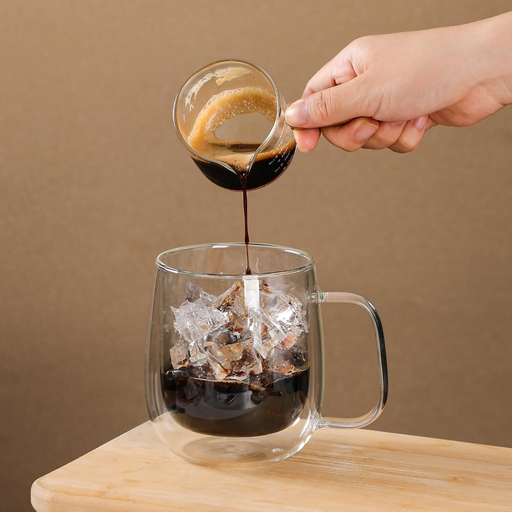
Why this choice suits this profile : This set of two 350 ml mugs is a versatile starting point for coffee, tea, lattes or cold drinks, whether at home or in the office.
The double wall and handle prevent the main drawbacks of a mug whose surface becomes too hot or which is awkward to hold. The product description also states that it is dishwasher-safe.
350 ml capacity, transparent glass, integrated handle and a set of two.
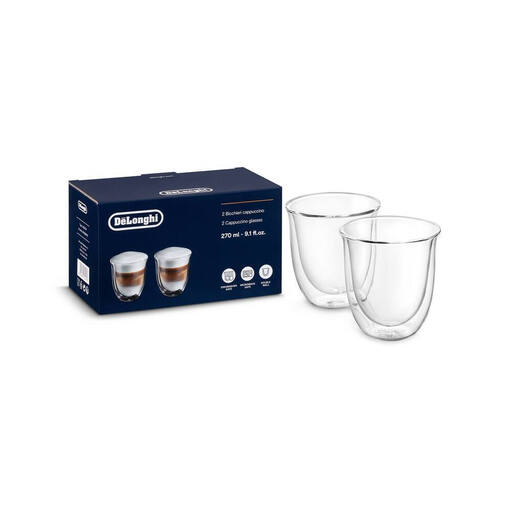
Why this choice suits this profile : Fans of milk-based drinks will appreciate the 270 ml capacity and transparent glass, which showcases cappuccinos and lattes alike.
The double wall limits direct contact with a very hot surface. However, the product description recommends avoiding thermal shock and use in the microwave.
Hand-blown borosilicate glass, 270 ml capacity, set of two and stated dishwasher compatibility.
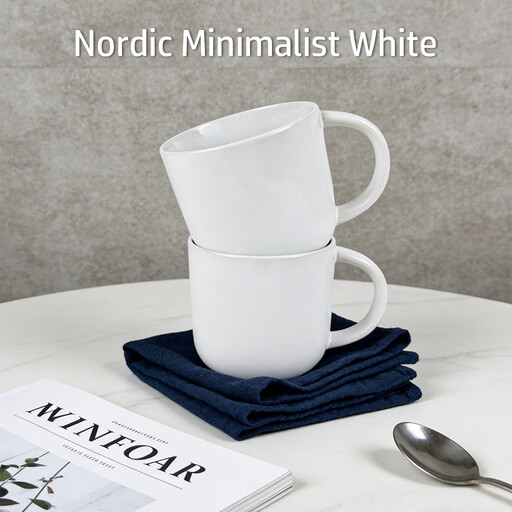
Why this choice suits this profile : The large size and set of four are ideal for larger families, offices, cafés and establishments looking for uniform tableware.
The clearly stated capacity helps prevent unpleasant surprises. The product description mentions lead-free ceramic that is chip-resistant and compatible with the dishwasher and microwave.
415 ml per mug, four identical pieces, white colour and easy cleaning.
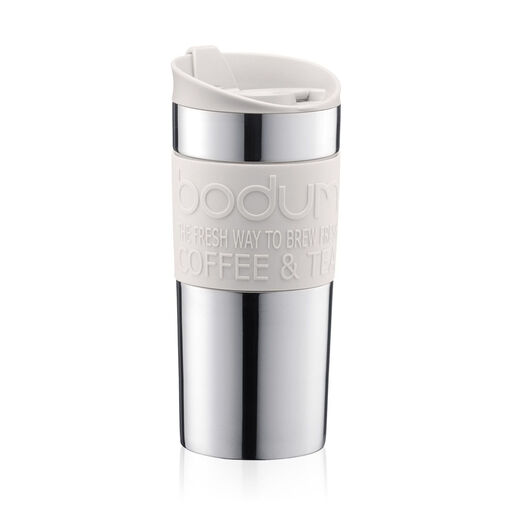
Why this choice suits this profile : This travel cup is made for commuting, car journeys and breaks at the office, thanks to its compact design.
The product description clearly distinguishes between the vacuum insulation, flip-top lid and precautions to take during transport. Hand washing is recommended.
Double-wall stainless steel, 350 ml capacity, flip-top lid and a shape compatible with standard cup holders.
We have brought together a complete, real-time updated selection of products that meet these demanding criteria and European safety regulations.
For an espresso, a 90 to 120 ml cup is generally sufficient. For filter coffee, tea or a latte, choose around 250 to 350 ml. Mugs of 400 ml and above are suitable for large drinks, hot chocolate or long working sessions at the office.
Some models are advertised as dishwasher-safe, but this is not a general rule. Always check the product description. Even when machine washing is permitted, avoid thermal shock and handle the glass with care.
It can hold hot or cold drinks, depending on the manufacturer’s instructions. However, models with lids are generally not designed for fizzy drinks. They are not microwave-safe and must be closed securely before being transported.