People who already own a capsule machine
If you own a machine, its system determines which packs to look at. NESCAFÉ France offers a separate Dolce Gusto range, while Carte Noire describes its capsules as compatible with Nespresso Original.


When choosing coffee capsules as part of a more sustainable shop, start by checking your machine’s exact system: Dolce Gusto and Nespresso Original are different formats. Then compare the pack size with how much coffee you drink, choose the type of drink you want and check how to recycle the capsules.
If you own a machine, its system determines which packs to look at. NESCAFÉ France offers a separate Dolce Gusto range, while Carte Noire describes its capsules as compatible with Nespresso Original.
Pack size matters when you’re matching your shopping to how much coffee you drink. The ranges featured by Carrefour and E.Leclerc include packs of 40 capsules.
Espresso, lungo, decaf or a milky drink: first check that the recipe works with your machine. For disposing of used capsules, ADEME’s guidance varies depending on the material and the collection options available.
If you use a capsule machine at home, start by identifying its system. Then narrow down your choice by checking the pack size, recipe and how to dispose of used capsules.
| Criteria | What to check | Who is it for? |
|---|---|---|
| Compatibility | The system shown on your machine and the pack, such as Dolce Gusto or Nespresso Original. | I don’t want to end up with capsules I can’t use in my machine. Around 36% of consumers would put compatibility first. |
| Pack size | The number of capsules and, for recipes that use more than one capsule, how many you need per drink. | If I don’t drink this recipe often, I’d rather avoid buying too many. The right quantity would be the top priority for around 29% of consumers. |
| Type of drink | The recipe listed, such as espresso, lungo, ristretto, decaf or a milky drink, depending on the system. | I’m looking for a particular drink, rather than choosing a capsule based on its format alone. This would come first for around 21% of consumers. |
| Waste and recycling | The material, the on-pack recycling information and local options for used capsules. | I want to know what to do with capsules after use, or consider a compatible refillable option. Around 14% of consumers would make this a priority. |
The term describes the coffee, not the capsule system accepted by a machine. A pack labelled simply “capsules” isn’t enough to confirm that it’s compatible either.
Check your machine’s system and look for a matching compatibility statement on the pack.
A pack of 40 capsules gives you more servings of the same recipe than a pack of 10. It may not suit how often you make that drink.
Check the capsule count and choose a quantity you expect to use.
Where a capsule should go depends on its material. Paper capsules can only be composted or collected with food waste if a suitable service is available.
Check the on-pack recycling information and your local guidance before throwing capsules away or composting them.
NESCAFÉ France offers Dolce Gusto capsules for black coffee and milky drinks.
Carte Noire offers a range of capsules compatible with Nespresso Original.
Carrefour lists Carrefour Selection products in its range of capsules compatible with Nespresso.
Auchan offers capsules compatible with Nespresso, including espresso, lungo and decaf coffee options.
E.Leclerc offers a 40-capsule pack under the Eco+ brand. It contains 208 g of pure Arabica, roasted and ground coffee.
These Carte Noire and GIMOKA products suit different tastes, and the system compatibility should be checked for each one. The name of the first Carte Noire product includes “Dolce”, so don’t assume it’s compatible without checking the pack.
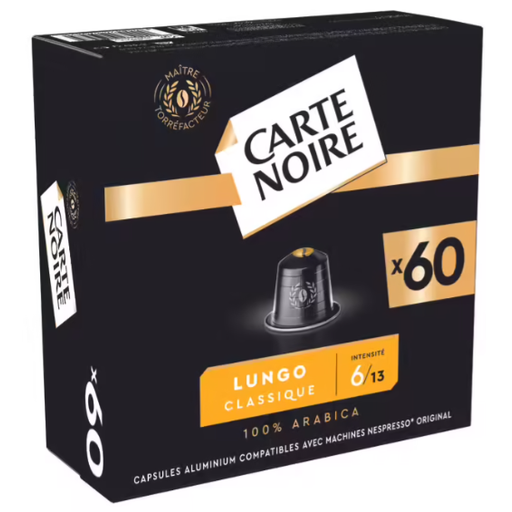 Image unavailable
Worth a look if you’re after a lungo in a pack of 60 capsules.
The name includes “Dolce”: check the pack to confirm which system it’s compatible with before buying.
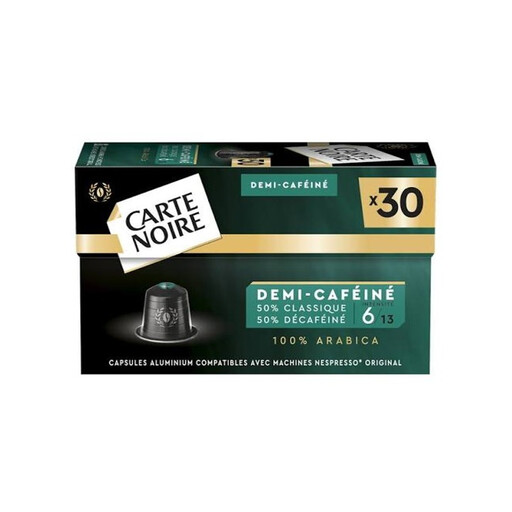 Image unavailable
A decaf option to consider if your machine matches the stated compatibility.
The pack contains 30 capsules; check which machine models are supported on the pack.
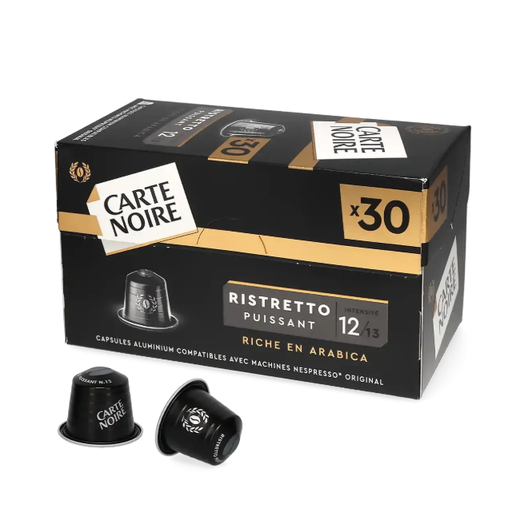 Image unavailable
Consider this if you’re looking for a ristretto recipe and the stated compatibility suits your machine.
The pack contains 30 capsules.
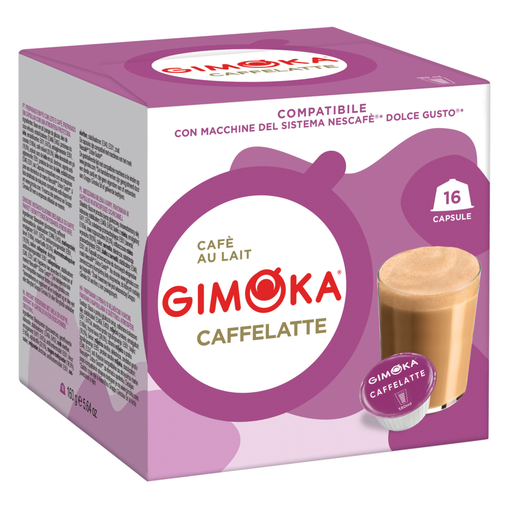 Image unavailable
Worth a look if you fancy a Caffè Latte and have a machine that accepts capsules compatible with Dolce Gusto.
The pack contains 16 capsules and weighs 160 g. Check the ingredients and capsule material on the packaging.
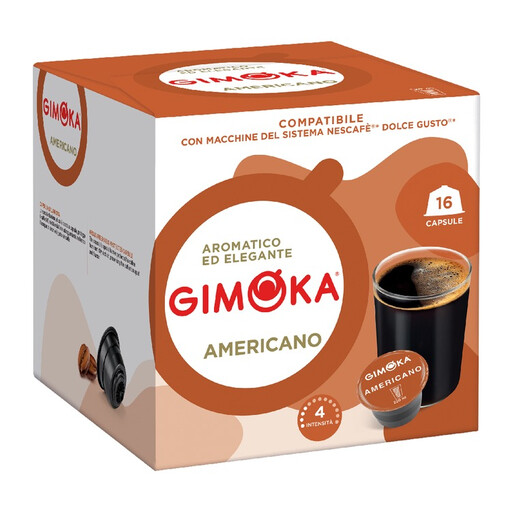 Image unavailable
Worth a look if you prefer an Americano recipe and have a machine that accepts capsules compatible with Dolce Gusto.
The pack contains 16 capsules and weighs 112 g. Check the material shown on the packaging so you can follow the right recycling instructions.
Compare the system shown on your machine with the compatibility information on the pack. NESCAFÉ France offers Dolce Gusto capsules, while Carte Noire offers a range compatible with Nespresso Original: these are different formats.
According to ADEME’s guide, updated on 1 October 2026, aluminium and plastic capsules go in the recycling bin, bag or container for paper and packaging. For paper capsules, composting or food-waste collection depends on the services available near you; check the on-pack recycling information too.
No: being able to recycle a capsule doesn’t get rid of its individual packaging. ADEME recommends reducing this packaging where possible. If you’re considering a refillable capsule, check that a specific model fits your machine and bear in mind that you’ll need to fill and clean it.