Choosing coffee capsules has become a real headache. Between promises of exotic flavours, opaque intensity scales, and the challenge of compatibility, it's all too easy to fill your cupboards with disappointing capsules. Our mission: to help you see things more clearly and make an informed choice that's perfectly suited to your machine and your palate.
This guide breaks down the essential criteria for choosing the right coffee capsule and helps you avoid the pitfalls that could ruin your coffee break.
The 3 Pitfalls to Avoid When Buying Your Capsules
The pod coffee market is flooded with options, but not all are created equal. Here are the most common mistakes and our advice on how to avoid them.
- The Myth of Universal Compatibility: The word "compatible" is no guarantee of optimal performance. A poorly designed capsule can lead to leaks, a slow flow, or even damage your machine's piercing mechanism in the long run. The shape, materials, and precision of the design are crucial factors.
- Arbitrary Intensity Scales: An intensity of 10 from one brand can sometimes be equivalent to an 8 from another. This number, while highly visible on the packaging, is not standardised at all. It most often indicates the degree of roasting and the coffee's body, but says nothing about its aromatic richness. Relying solely on this number is the surest way to be disappointed.
- The Illusion of "Gourmet" Flavours: A flavoured coffee (vanilla, caramel, hazelnut) is often tempting, but the quality is extremely variable. The flavouring, often artificial, can either overpower the coffee's taste or, conversely, be so subtle it becomes undetectable. The result rarely lives up to the promise of a coffee-shop-worthy drink.
The Key Criteria for Choosing the Right Coffee Capsule
To stop making mistakes, focus on these three essential criteria before every purchase.
1. Compatibility with Your Machine's System
This is the non-negotiable starting point. Each system has its own technology and a specific capsule format.
- Nespresso Original Compatible Capsules: Designed for the Nespresso Original system, they are most often made of aluminium or plastic. Be careful not to confuse them with capsules for the Vertuo system, which are wider and recognisable by their barcode.
- NESCAF? Dolce Gusto Capsules: These larger capsules are exclusive to NESCAF? Dolce Gusto machines. The system can prepare a wide variety of drinks (hot chocolates, teas, etc.) and often requires two capsules (one for milk, one for coffee) for milk-based recipes.
- Tassimo Pods (T-Discs): These discs, called T-Discs, are exclusive to Tassimo machines. Each Tassimo pod has a barcode that the machine reads to automatically adjust the water amount, temperature, and brewing time. The promise: a perfectly controlled preparation for every drink, from ristretto to long coffee.
- Senseo Pods: These are soft, filter-paper pods compatible with Senseo machines. They produce a filter-style coffee, which is milder and topped with a thin layer of crema, and is distinctly different from a true espresso.
2. The Type of Coffee and Its Aromatic Profile
Far more than intensity, it's the aromatic profile that will define your tasting experience.
- Espresso, Ristretto, Lungo: These terms refer to the length of your coffee, i.e., the amount of water used. The ristretto is the shortest and most concentrated, the espresso is the standard (around 40 ml), and the long coffee (or lungo) uses more water for a larger, milder cup.
- Origin and Blend: A "single origin" coffee (like L'OR's Colombia) highlights the characteristics of a unique terroir. In contrast, a blend combines several origins to create a balanced and consistent taste profile, as L'OR espresso or Starbucks do in their capsules.
- Roast: A light roast preserves floral and fruity notes (with more pronounced acidity), while a dark roast develops notes of cocoa, toast, and spice, with more bitterness.
3. The Capsule Material: Aluminium or Plastic?
The capsule material has a direct impact on preserving the aromas.
- Aluminium: Aluminium is considered the gold standard. It forms a perfect barrier against oxygen, light, and moisture, thereby preserving the coffee's freshness and aromas. Aluminium capsules are recyclable, provided they are dropped off at dedicated collection points.
- Plastic: Often more affordable, plastic capsules can offer a decent experience, but their barrier against oxygen is sometimes less effective. Their recyclability depends on the type of plastic and your local recycling guidelines.
Our Coffee Capsule Recommendations
To guide you, here is our selection of reliable choices, paired with user profiles to help you find the capsule that's right for you.
FOR THE INTENSE ESPRESSO LOVER
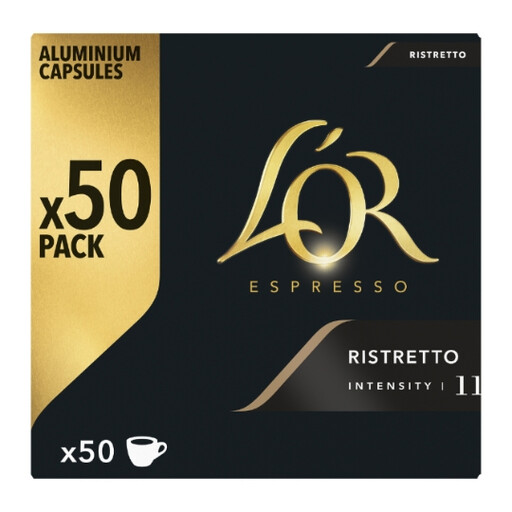
Why we chose it: Ideal for Nespresso Original machine owners looking for a short, powerful, and complex coffee to start the day off right. The bulk pack of coffee capsules is also more economical for regular consumption.
Why it works
Here, the intensity of 11 isn't just a marketing gimmick: it's backed by a rich aromatic profile with spicy and woody notes. The aluminium capsule ensures perfect compatibility and optimal preservation, avoiding technical and taste-related disappointments.
The real advantage
A characterful ristretto, topped with a dense, golden crema. The 50-capsule pack ensures excellent value for money.
FOR THE GOURMET DRINK FAN
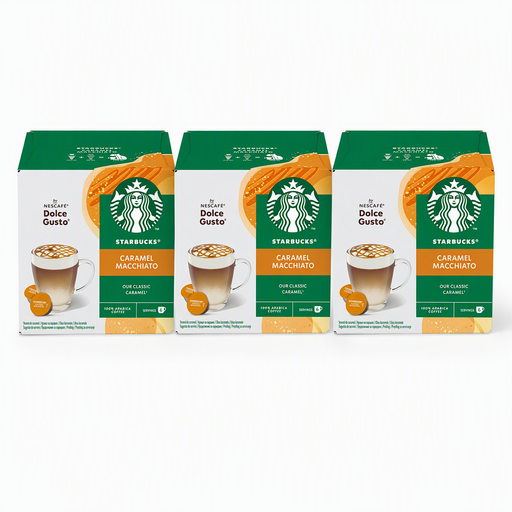
Why we chose it: Perfect for Dolce Gusto machine owners who want to enjoy the pleasure of a signature coffee shop drink without leaving home. Ideal for a comforting break.
Why it works
Starbucks avoids the disappointing gourmet coffee trap here thanks to the Dolce Gusto two-capsule system: one contains the espresso, the other the caramel-flavoured milk. The result is a creamy, smooth, and well-balanced milk-based drink, light-years away from a simple synthetic flavouring.
The real advantage
The signature taste of a Starbucks Caramel Macchiato at home. The preparation is foolproof and the result is consistent, cup after cup.
FOR THE LARGE-CUP-OF-COFFEE DEVOTEE
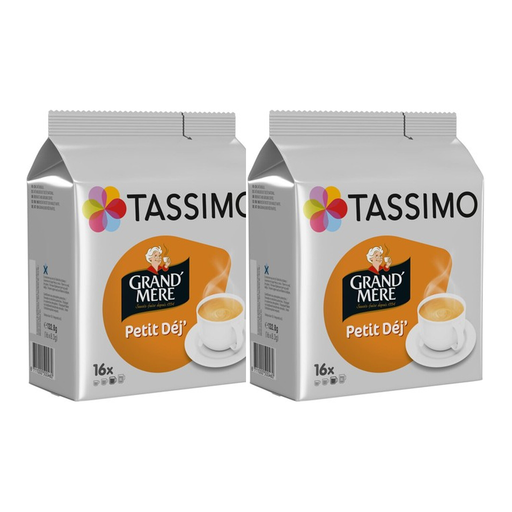
Why we chose it: For Tassimo users who can't imagine a morning without a large, comforting mug of coffee. A reliable choice reminiscent of good old-fashioned filter coffee, but with added simplicity.
Why it works
Compatibility is guaranteed here, as it's an official T-Disc. The Intellibrew technology reads the barcode to prepare a perfectly calibrated long coffee, eliminating any risk of error or incorrect measurement.
The real advantage
The familiar and unifying taste of Grand-Mère, combined with the effortless simplicity of Tassimo. The ultimate reliable option for your everyday coffee.
Looking for other hidden gems?
Discover our full selection of capsules that meet our quality criteria and current standards.
Frequently Asked Questions (FAQ)
1. Will compatible capsules damage my Nespresso machine? Generally, no. Capsules from reputable brands that have invested in R&D to ensure perfect compatibility pose no risk. Problems (leaks, blockages) occur almost exclusively with low-end capsules, whose plastic or aluminium deforms under pressure or whose dimensions are imprecise. Trust brands that are highly rated by users, like L'OR espresso or Starbucks.
2. What's the difference between an espresso, a ristretto, and a long coffee? It's all about the amount of water that passes through the same dose of ground coffee:
- Ristretto: Very short (approx. 25 ml), it's more concentrated in aroma, more intense, and often less bitter.
- Espresso: The standard size (approx. 40 ml), offering the best balance of body, aroma, and bitterness.
- Long coffee (Lungo): Longer (approx. 110 ml), it's more diluted, milder, and reveals different aromatic facets of the same coffee.
3. How do I recycle my coffee capsules? Recycling depends on your capsule's material.
- Aluminium capsules (Nespresso, L'OR, etc.): They are 100% recyclable. Simply empty the coffee grounds and drop them off at a dedicated collection point (often at recycling centres or through the brands' return programmes).
- Tassimo pods (T-Discs): They can be recycled through the TerraCycle programme.
- Plastic capsules and Senseo soft pods: Sorting is more complex. Refer to your local council's recycling guidelines, as they are not always accepted in the standard recycling bin.