Fans of crunchy biscuits with their coffee
If you’re looking for chocolate on the outside of a biscuit, distinguish chocolate-coated wafers, such as those described by Carrefour and E.Leclerc, from biscuits with chocolate inside.


If you’re after chocolate on the outside of a biscuit, look for a wafer explicitly described as chocolate-coated. If you prefer a traditional French biscuit, the St Michel options mentioned here are filled or have a chocolate centre, with no confirmed outer coating. To compare recipes, check the nutrition information per 100 g, how much you plan to eat and the allergens. In France, the DGCCRF states that Nutri-Score is optional, unlike the nutrition declaration required for the relevant prepacked foods.
If you’re looking for chocolate on the outside of a biscuit, distinguish chocolate-coated wafers, such as those described by Carrefour and E.Leclerc, from biscuits with chocolate inside.
The DGCCRF says that nutrition information per 100 g provides a common basis for comparing the relevant prepacked foods. Nutri-Score can help you assess a product when it appears on the packet, but displaying it is optional.
The specific recipes featured by St Michel and Carrefour include ingredients containing gluten, milk or soya, among others. Check the label on the biscuit you’re thinking of buying rather than assuming the ingredients are the same as in another variety.
For your morning coffee break, start by working out what matters most to you: ingredients, allergens, a handy format to take with you or where the chocolate sits in the biscuit.
| What to consider | What to check | Who is this for? |
|---|---|---|
| Nutrition information | Compare sugars, fat and saturated fat per 100 g, then consider the portion you plan to eat. | If I want to compare two recipes without relying solely on the logo on the packet, I need figures I can compare like for like. Around 31% of consumers put this nutritional comparison first. |
| Allergens | Read the ingredients and allergen information for the product you’ve chosen, including any warnings about possible traces. | When I need to avoid a particular ingredient, the exact recipe matters more than my taste preferences; around 25% of consumers prioritise checking allergens. |
| Coffee-break format | Check how many biscuits are in the pack and whether they come in individual wrappers. | To take a biscuit with me for my morning coffee, I look for packaging that’s easy to carry and open. Around 25% of consumers prioritise this convenience. |
| Texture and chocolate | Know the difference between “coated”, “filled” and “chocolate-centred”, and check what type of chocolate is listed. | I prefer to decide whether I want an outer layer of chocolate or chocolate inside the biscuit before comparing the other details. Around 19% of consumers prioritise texture and taste. |
A filled biscuit or one with a chocolate centre has chocolate inside; it may not satisfy a craving for a layer of chocolate on the outside.
Check the product description: “coated”, “filled” and “chocolate-centred” describe different types of biscuit.
The DGCCRF says Nutri-Score is optional in France. If it’s not shown, you should still read the nutrition declaration for the relevant prepacked foods.
If a logo is shown, consider it alongside the nutrition information per 100 g and the ingredients list. Don’t assume the biscuit meets your criteria based on the logo alone.
Ingredients vary from one recipe to another. Some St Michel products list milk, soya and egg, while the milk chocolate-filled biscuit also contains hazelnuts.
Check the ingredients and any warnings about traces on the packaging of the product you’re buying, especially if the recipe or format has changed.
St Michel offers a biscuit filled with milk chocolate and a more indulgent biscuit with a dark chocolate centre.
Carrefour describes a chocolate-coated wafer range, with 40% chocolate listed in the ingredients.
E.Leclerc offers wafers with a low-fat cocoa filling, coated in dark chocolate.
Auchan offers filled and chocolate-coated wafers in a pack of 16 biscuits weighing 150 g.
These options are crunchy chocolate biscuits to enjoy with a coffee: one lace crêpe and two wafers. They’re not the same format as a traditional French biscuit.
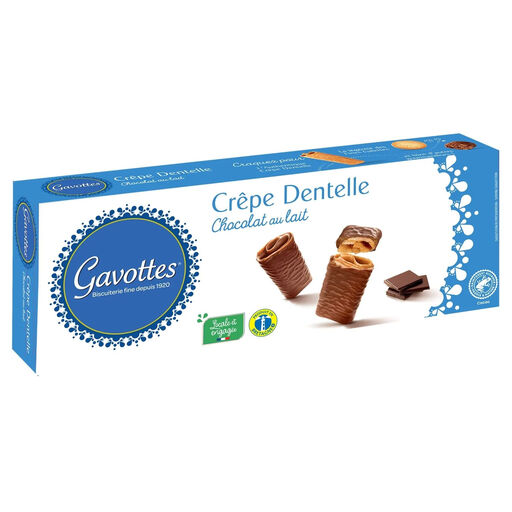 Image unavailable
Worth considering if you’d rather enjoy a milk chocolate lace crêpe with your coffee than a filled biscuit. The title lists 90 g and a pack of 6: check the product details to see what the stated weight refers to before choosing a pack.
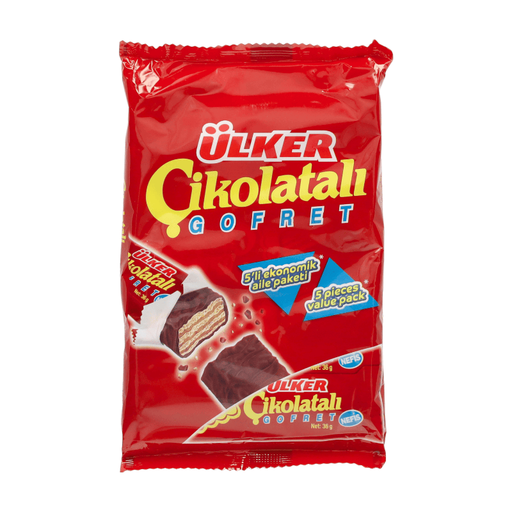 Image unavailable
This wafer is worth a look if you’re after a chocolate biscuit rather than a traditional biscuit for your coffee break. Check the net weight on the packaging before comparing pack sizes: the title says 180 g, while the associated description says 144 g. If allergens matter to you, check the label for this recipe too.
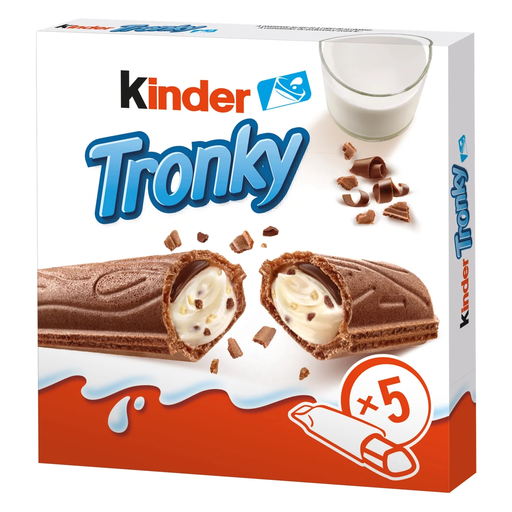 Image unavailable
A wafer bar could be a handy option if you’re looking for a biscuit to take with you for your morning break. If portion size or ingredients will influence your choice, check the packaging for pack details and compare sugars and saturated fat per 100 g.
No. The DGCCRF states that displaying Nutri-Score is optional, while a nutrition declaration is compulsory for the relevant prepacked foods. To compare biscuits or wafers without a logo, check their nutrition information per 100 g.
No. “Filled” means the chocolate is inside, while “coated” means there’s a layer on the outside. The St Michel biscuits mentioned here are described as filled or chocolate-centred. If you’re looking for an outer coating, check the exact product description for a chocolate-coated wafer.
Start with the nutrition information per 100 g, the common basis specified by the DGCCRF, then check the weight of one biscuit and how many you plan to eat. Comparing nutrition per biscuit doesn’t replace comparing per 100 g when portion sizes differ.
Read the ingredients and any warnings about traces for the exact product you’re buying. The St Michel and Carrefour products mentioned here show that gluten, milk, soya and hazelnuts vary from one recipe to another; don’t assume the label for one variety applies to another.