What sets the machines apart?
For everyday coffee, the brewing method determines the steps you’ll take and the consumables you’ll need. Then look at the space, capacity and maintenance requirements of the model you’re considering.
Capsules
Worth considering: if you want an espresso with minimal fuss.
Bear in mind: you’ll need to keep buying capsules that are compatible with the machine.
Soft coffee pods
Worth considering: if you prefer a simple brewing process using pods designed for your chosen system.
Bear in mind: the drinks available and compatible pods depend on the model.
Portafilter
Worth considering: if you want to prepare your own ground coffee.
Bear in mind: you’ll need to fill, fit and empty the portafilter every time you make coffee.
Bean-to-cup grinder
Worth considering: if you regularly use beans but don’t want to handle a portafilter.
Bear in mind: the machine needs maintenance, and its size and noise are worth considering. Que Choisir highlights both as drawbacks compared with capsule systems.
Filter coffee maker
Worth considering: if you mainly want to make several long coffees rather than a short espresso.
Bear in mind: it’s designed for a different use, so check the amount it makes and the model’s features.
| Criteria |
What to check before you buy |
Who is it for? |
| Everyday steps |
Compare how the model makes coffee and how it needs to be cleaned, especially after one or two cups. |
When every morning matters, I want to make coffee without measuring or tamping it each time. Around 29% of consumers would put this convenience at the top of their list. |
| Running costs and consumables |
Check which format the machine accepts, what you’ll need to buy regularly and the recommended maintenance. |
If I make coffee often, I want to know what repeat purchases will cost and be able to choose my coffee. This would be the top priority for around 36% of consumers. |
| Control over preparation |
Check the portafilter accessories or the actual settings available on the grinder you’re considering. |
I’d rather be involved in making my coffee, even if it means more steps and cleaning. Control would be the priority for around 21% of consumers. |
| Space and capacity |
Measure the space available and check you can access the reservoirs. Compare the stated capacity with the drinks your household makes. |
If several people drink coffee, I want to avoid constant refills without taking up too much worktop space. I might also prefer to make several long coffees. Around 14% of consumers would prioritise this. |
Joybuy machines for different ways of making coffee
These machines cover the methods featured here: bean-to-cup grinding, pods, capsules and portafilters. Compare the consumable format and everyday steps before choosing a model.
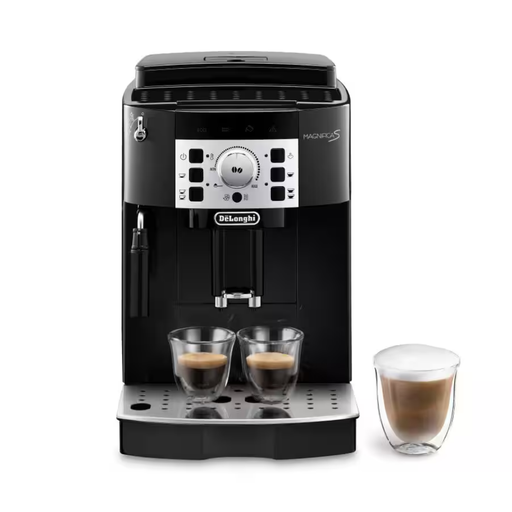 Image unavailable
De’Longhi Magnifica S ECAM22.140.B, black
Worth considering if you regularly make coffee from beans but don’t want to fill a portafilter for every cup.
Automatic espresso machine with grinder. Measure the space available and check the maintenance requirements before choosing this model.
View on Joybuy
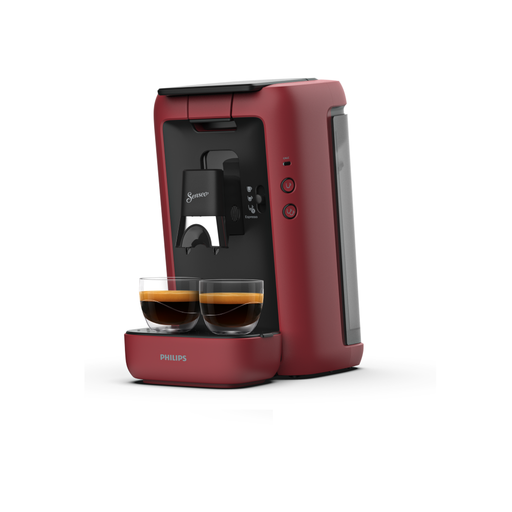 Image unavailable
Philips SENSEO Maestro CSA260/91, intense red
Worth considering if you prefer the simple SENSEO process for your everyday coffee.
Check which pod format this version accepts and the descaling steps outlined in its instructions.
View on Joybuy
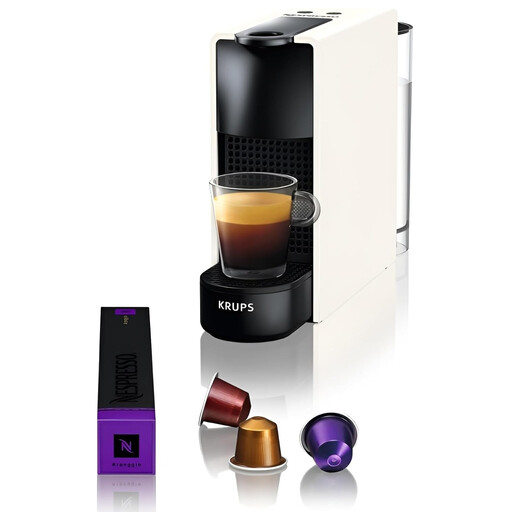 Image unavailable
Krups Nespresso Essenza Mini, white
Worth considering if you want to make individual coffees with a capsule machine.
Listed with a 0.6 L reservoir and a rated power of 1,200 W. Check the exact capsule system; depending on how often you make coffee, you may need to refill the reservoir.
View on Joybuy
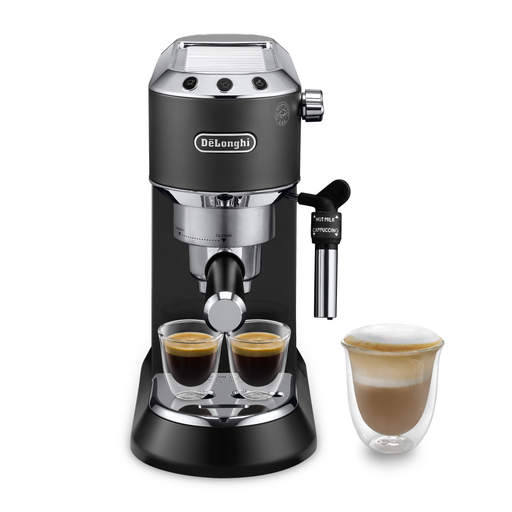 Image unavailable
De’Longhi Dedica Style EC685.BK, black
Worth considering if you want to make coffee with a portafilter and are happy to clean it after use.
Manual espresso machine. Before choosing this version, confirm its reservoir capacity: the information available for this model is inconsistent.
View on Joybuy
 Image unavailable
HiBREW H1C 6-in-1, black
Worth looking at if you want a single-serve machine and are interested in exploring different coffee formats.
The product description states a rated pressure of 20 bar, but this alone doesn’t determine the result in the cup. Before you buy, confirm that every format you plan to use is compatible.
View on Joybuy
Frequently asked questions
Will a capsule machine take any capsule?
No. Compatibility depends on the machine’s system. Que Choisir says most brands accept just one type of capsule, so check the compatible model in the instructions before buying in bulk.
Will a grinder definitely make my coffees cheaper?
Not necessarily for your household. Que Choisir says a grinder can reduce the cost per cup compared with pod espresso, but your comparison should also take into account the machine you choose, how many coffees you make, the beans you use and maintenance.
What maintenance does an espresso machine need?
Clean and descale it as instructed for your model. Philips says that, for the relevant machines, you should descale when the indicator light or display prompts you. Also check the instructions for the milk system, if there is one.
Where can I take used coffee capsules in France?
Follow the disposal guidance for the capsule material and your local area. ADEME describes a recycling route for capsules collected separately, while Nespresso lists its own collection points. Also check the recycling information on the packaging.
What statutory guarantee applies to a machine bought from a retailer in France?
According to the French Ministry of the Economy, the statutory guarantee of conformity applies to new, second-hand and refurbished goods sold by a business to a consumer in France. If the product is faulty or doesn’t conform to its description, contact the seller and keep your proof of purchase and the product description.


