
Livraison le jour même ou le lendemain

Qualité garantie

Débloquez vos offres de bienvenue: Livraison GRATUITE | Jusqu'à -80 % | 30 jours d'essai gratuits à JoyPlus
Téléchargez l'application
Coconut water is popular for its slightly sweet taste and convenient packaging. It works just as well with lunch as it does after a workout, or as part of your household supplies. But not all products are the same. Whether you’re looking at 100% coconut water, a coconut-based drink, a product with pulp or added sugar, or one made from concentrate, it’s worth checking the label carefully.
A drink may feature a coconut on the packaging while containing only a small amount of coconut water. Some recipes are made with coconut concentrate, water, flavourings or even ascorbic acid. They may taste pleasant, but their ingredients are very different from those of 100% coconut water.
Coconut water naturally contains sugars. To check whether sugar has been added, look at the ingredients list rather than relying on the nutrition table alone. If a product lists ‘coconut water, water, sugar’, it can’t be considered coconut water with no added sugar, even if it still tastes relatively light.
A 1 L carton of coconut water can be handy at home, but it usually needs to be refrigerated after opening and consumed quickly. A 310 ml can or individual carton, on the other hand, is better suited to drinking straight away. For an office, family or business, a multipack of coconut water means you can shop less often, as long as you have enough space to store it.
If you’re looking for 100% coconut water, check that the ingredients list contains only ‘coconut water’. Products labelled as 98.5% or 99% may contain sugar, vitamin C or other ingredients. That’s not necessarily a problem, but it should match what you’re looking for.
The words ‘from concentrate’ indicate a different manufacturing process from coconut water that is not made from concentrate. If this matters to you, compare products on that basis rather than relying on the packaging alone.
The nutrition table shows the amount of carbohydrate and sugars per 100 ml. As a guide, the products featured here generally contain between 1.6 g and 7.7 g of sugars per 100 ml, depending on the recipe. A drink containing pulp and added sugar may have more sugar than 100% coconut water.
If you drink it regularly, take the amount you actually consume into account too. A 1 L bottle isn’t a single serving, so it’s better to work out the total amount of sugars in the glass you pour.
Before placing your order, check the storage instructions on the packaging. Some products can be stored at room temperature before opening, while others need to be refrigerated. Most should be consumed soon after opening.
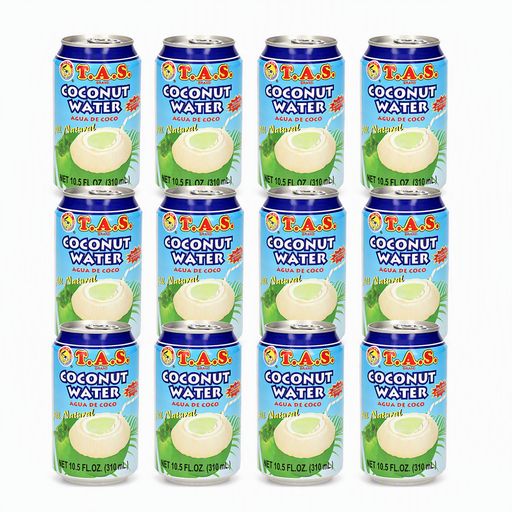
Why this is a good fit: The individual can lets you try 100% coconut water without committing to several litres straight away. The pack of 12 also makes a handy supply for trips or breaks.
The product listing states that it contains 100% coconut water, with no added sugar or pulp. At 310 ml, this format also reduces the risk of leaving a large bottle open for several days.
100% coconut water, 18 kcal per 100 ml according to the product listing, in a can that keeps for 24 months unopened.
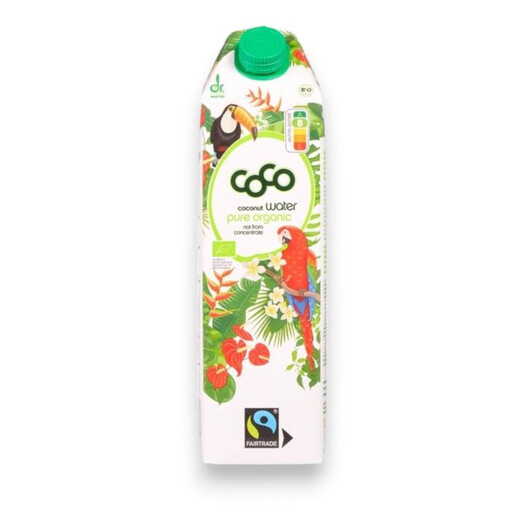
Why this is a good fit: This option is for shoppers who care about sourcing and certifications, and want a plant-based drink to serve at home or in the office.
The product listing describes it as organic, fair trade coconut water that is not made from concentrate. These details are worth distinguishing from a simple marketing claim.
1 L format, 13 kcal and 2.2 g of sugars per 100 ml according to the product listing, with organic and fair trade certifications stated.
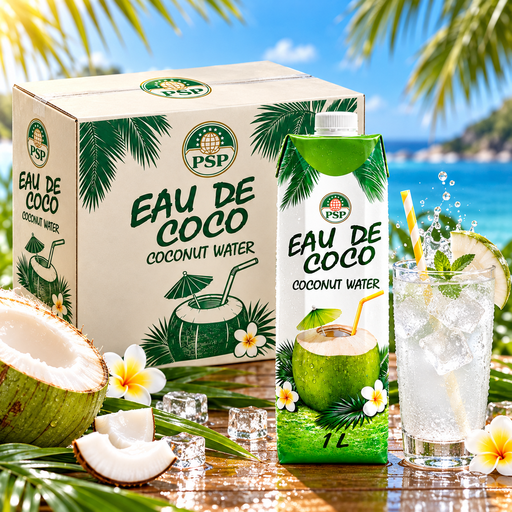
Why this is a good fit: A 12-litre case meets the needs of larger families, offices, restaurants and businesses that want to keep stock on hand.
The product is stated to contain 100% coconut water, with no colourings, preservatives or artificial flavourings. The larger format also avoids using lots of individual packs.
Case of 12 × 1 L, with no fat listed; suitable for drinking on its own, adding to smoothies or using to make drinks.
We’ve put together a comprehensive selection, updated in real time, of products that meet these exacting selection criteria and European safety requirements.
For sport, a small-format hydrating drink is easy to carry. However, coconut water may not be a substitute for a drink specifically formulated for long or intense exercise. For everyday drinking, look for a short ingredients list and a sugar content that suits your habits.
Vegetarian and vegan shoppers can choose vegan coconut water, while checking for flavourings, additives and allergen information. Products made from 100% coconut water will generally suit this preference if no animal-derived ingredients are listed.
If you enjoy a bit of texture, coconut water with pulp offers a different experience. However, it often contains added sugar, as do some coconut-based drinks. So compare the ingredients list and nutrition table before placing your order.
Yes, it naturally contains sugars. However, not all recipes have added sugar. To check, look for ‘sugar’, ‘cane sugar’ or ‘fructose’ in the ingredients list.
It depends on the brand and packaging. Product listings often recommend refrigerating the drink after opening and consuming it within two to three days. Always check the label on your pack.
A 1 L format is suitable for serving by the glass and making smoothies. For an individual serving, a 330 ml carton or 310 ml can helps avoid leftovers. Cases of 12 are better suited to regular restocking, particularly in offices and food service businesses.