
Same-day & Next-day Delivery

Quality Guaranteed

Unlock Your Welcome Offers: FREE Delivery | Up to 80% OFF | Free 30-day JoyPlus trial
Download the APP
Coconut water has established itself as the healthy, trendy alternative to industrial sodas and juices. Praised for its freshness and hydrating properties, it's winning over a growing number of consumers seeking natural products. But with overflowing shelves, it can be tough to distinguish a quality beverage from a product full of marketing promises. Before buying coconut water in bulk, it's crucial to know the pitfalls to avoid to make the right choice.
Grocery shopping shouldn't be an obstacle course. Yet, some labels are designed to mislead you. Here are the red flags to keep in mind.
To make a clear choice, focus on three essential criteria. They will guarantee a successful purchase, whether you're looking for a natural hydrating drink for sports or for the whole family.
The ingredients list is your best friend. Premium coconut water should contain only one ingredient: coconut water.
Coconut water comes in several sizes. Choosing the right one not only saves money but also helps reduce waste.
The type of packaging plays a key role in preserving the product. Cartons (like Tetra Pak) are the most common because they effectively protect the liquid from light and air. This preserves freshness and nutritional qualities for longer before opening.
Because every consumer is different, here is our selection of products that cater to various profiles while meeting the quality criteria we've just discussed.
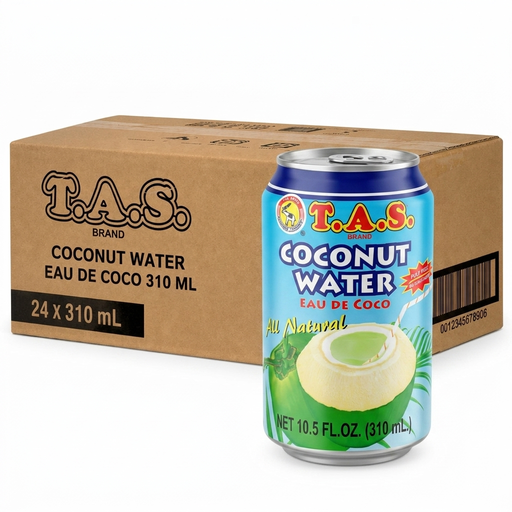
Why we chose it: For those who make no compromises on purity. It's the perfect option for healthy hydration after a yoga session or simply as a refreshing daily drink, with absolutely nothing added.
The ingredients list couldn't be simpler: 100% coconut water. No added sugar, no concentrate, no flavours. The product thus avoids the trap of hidden sugars and false promises of purity.
A 100% pure composition and a 24-can case format, very convenient for always having a healthy drink on hand.
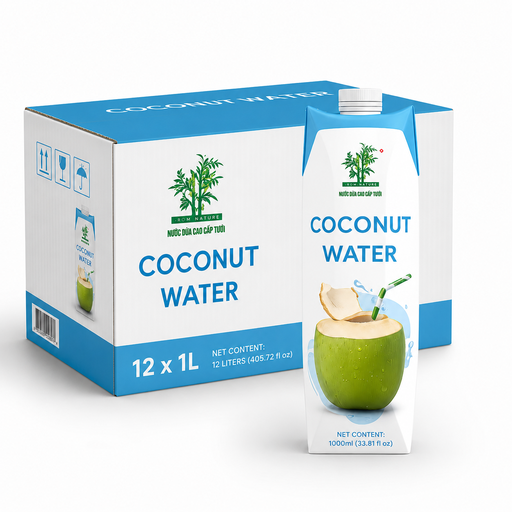
Why we chose it: Perfect for those who drink coconut water daily and are looking for the best value for money. The 1L coconut water size is ideal for family meals or for making smoothies.
This product avoids the poor value-for-money pitfall of smaller sizes. Buying a case of coconut water with 12 litres allows for substantial long-term savings and fewer trips to the checkout.
An economical bulk format (12x1L) and a formula with 98.5% coconut water. The very slight touch of cane sugar will appeal to those who find 100% pure coconut water a bit bland.
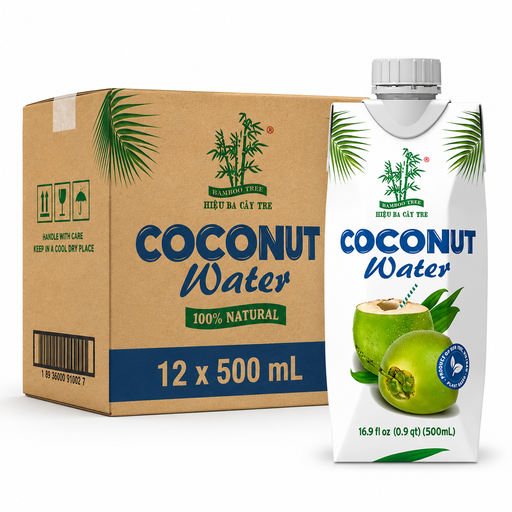
Why we chose it: The 500 ml size is the perfect compromise for hydrating after a workout. It fits easily into a bag and provides just the right amount for effective rehydration.
This case of coconut water avoids the pitfall of impractical large formats. No need to carry a 1L bottle for a single session. This size is designed for single, on-the-go use, while remaining economical thanks to buying in a multi-pack.
A convenient 500 ml package, ideal for on-the-go consumption. The 12-pack provides a stock for several workouts.
We have compiled a complete selection of products that meet our quality criteria and current regulations.
Yes, coconut water is an excellent natural hydrating drink. Rich in electrolytes, especially potassium, it helps the body maintain a proper fluid balance. It's a great alternative to sports drinks, which are often too sugary, for recovering after moderate exercise.
Before opening, a case of coconut water in a carton can be stored for several months at room temperature, away from light and heat. Refer to the best-before date (BBD) indicated on the packaging. Once a carton is opened, it must be refrigerated and consumed within 3 days to ensure its freshness.
Be careful not to confuse them; they are two very different products. Coconut water is the translucent liquid found inside young, green coconuts. It is very low in calories and contains almost no fat. Coconut milk, on the other hand, is made by pressing the white pulp of a mature coconut. It is much richer, creamier, and more caloric, and is mainly used in cooking.