
Livraison le jour même ou le lendemain

Qualité garantie

Débloquez vos offres de bienvenue: Livraison GRATUITE | Jusqu'à -80 % | 30 jours d'essai gratuits à JoyPlus
Téléchargez l'application
Coconut mochi has won over foodies looking for exotic flavours and unique textures. This famous glutinous rice cake, with its soft coconut centre, is an experience in itself. But with classic mochi, coconut ice mochi, and versions filled with fruit or flavoured with pandan, how do you make the right choice?
At Joybuy, our mission is to do the groundwork for you. We've carefully vetted the different options to bring you a curated selection of coconut mochi. Our goal: to help you find the perfect treat to delight your taste buds.
Before you indulge, here are a few key things to check to ensure you make the right choice when ordering your mochi online.
The first question to ask yourself is about temperature.
Coconut is the star, but it pairs wonderfully with other ingredients.
Taking a look at the ingredient list and country of origin is always a good idea. It tells you a lot about the mochi's style. For example, mochi from Taiwan are known for their ultra-soft texture and creative fillings, while Thailand has mastered the art of coconut milk desserts, especially ice mochi.
Enough theory, let's get to the tasting! Here are three coconut mochi that caught our eye, each with its own unique personality.
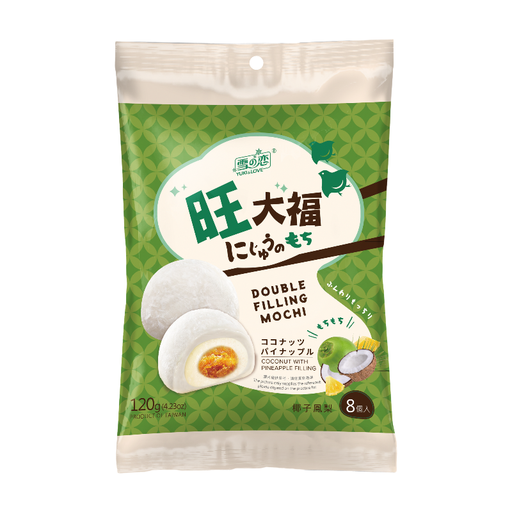
Made in Taiwan, this mochi is a tropical getaway in a single bite. It combines a creamy coconut filling with a hint of candied pineapple, all wrapped in a remarkably tender glutinous rice dough. The balance between the richness of the coconut and the zest of the pineapple is a true success.
For lovers of fruity desserts who want a classic mochi with a little something extra. It's the perfect introduction to the world of modern Japanese desserts.
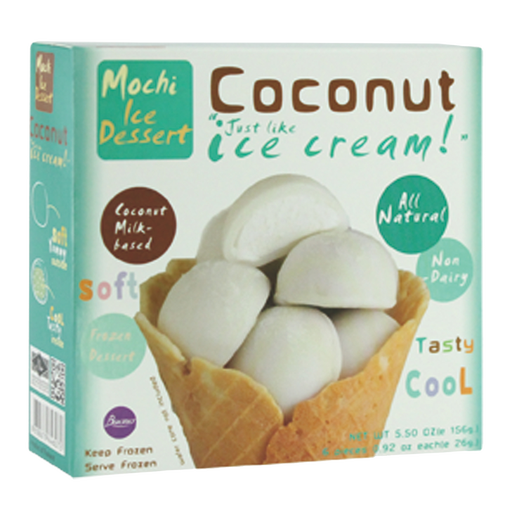
BUONO's coconut ice mochi is the gold standard for fans of frozen desserts. Each bite releases an ultra-creamy ice cream made from real coconut milk, delivering an authentic and powerful flavour. A significant bonus: the recipe is 100% plant-based and therefore lactose-free.
For anyone craving a light, refreshing dessert for summer or to end a meal on an exotic note. A must-have for plant-based enthusiasts.
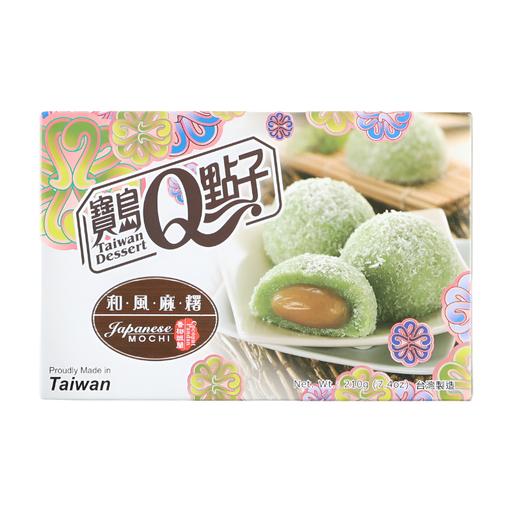
From Royal Family Food (Q-Brand), this mochi offers a surprisingly bold flavour combination. It contrasts the sweetness of coconut with the delicate, vanilla-like botanical aromas of the pandan leaf. This duo is very popular in Asia and breaks the mould, offering a truly unique tasting experience.
For flavour explorers who love to venture off the beaten path. It's the perfect choice to surprise guests at teatime or to serve alongside coffee.
The world of coconut desserts is endless! If our mochi selection has made your mouth water and you want to discover other gems made with this exotic fruit, feel free to explore our dedicated category.
Discover All Our Coconut Desserts
It all depends on the type of mochi. Classic mochi (like Yuki & Love, Q-Brand) can simply be kept at room temperature in a cool, dry place away from sunlight. Once the package is opened, consume them quickly to maintain their softness. Coconut ice mochi, on the other hand, must always be kept in the freezer (-18°C / 0°F) and should be eaten straight from the freezer without thawing.
Mochi is originally a traditional Japanese dessert. Its popularity has spread far beyond Japan's borders, and many Asian countries have created their own versions. Taiwan, in particular, has established itself as a leading producer, famous for its mochi with bold flavours, like the ones in our selection. As a result, you can find mochi from various origins, each with its own character.
The secret to its unique texture—at once elastic, soft, and chewy (a quality known as "Q" in Asia)—lies in its key ingredient: glutinous rice flour. When mixed with water and sugar and then steamed, this flour transforms into a sticky dough. It's through kneading this dough that the recognisable consistency of the glutinous rice cake is achieved.