People keeping an eye on fat
You’re looking for coconut milk for porridge, a smoothie or a weekend recipe, and would rather check the nutritional values than rely on the word “light” alone.


For porridge, a smoothie or another recipe that calls for culinary coconut milk, choose a light option by checking its fat content, pack size and storage instructions after opening. For a drink, cereal or coffee, look for a coconut plant-based drink instead: it isn’t interchangeable with culinary coconut milk in a recipe.
You’re looking for coconut milk for porridge, a smoothie or a weekend recipe, and would rather check the nutritional values than rely on the word “light” alone.
You use coconut milk for an occasional recipe. Pack size and storage instructions after opening matter if you don’t plan to use the rest straight away.
You mainly want something to pour over cereal, add to coffee or enjoy in a glass. In this case, it’s essential to distinguish between a coconut plant-based drink and culinary coconut milk.
First, decide whether you need a cooking ingredient or a drink. Then compare the nutritional information on a like-for-like basis — per 100 g or per 100 ml — without treating these units as equivalent.
| Criterion | What to check | Who is it for? |
|---|---|---|
| Fat | Check the fat and saturated fat content per 100 g or 100 ml; only compare values given in the same unit. | If I’m making a coconut recipe while keeping an eye on its fat content, this figure matters more than the word “light”. Around 42% of consumers would put this criterion first. |
| Pack size and leftovers | Check the amount in the pack and the storage instructions after opening. | For a single weekend recipe, I want a suitable amount or to know when to use up the rest; this would be the priority for around 33% of consumers. |
| Use as a drink | Check the product description and the proportion of coconut milk; also look at the stated sugar and fat content. | If I’m looking for something to drink or pour over cereal, I don’t want to accidentally buy a cooking ingredient. Around 25% of consumers would choose based first on whether it’s suitable as a drink. |
These product descriptions refer to different uses. A drink listed by Auchan contains 8% coconut milk and has 1.3 g of fat per 100 ml; this figure doesn’t describe culinary coconut milk.
For drinking or serving with cereal, look for a plant-based drink. For a recipe that calls for coconut milk, check the product description and ingredients of the one you choose.
The word doesn’t tell you how much fat or saturated fat the product contains. Auchan’s Kara Light listing states 12 g of saturated fat per 100 ml, while Suzi Wan lists 7.2 g per 100 g: these figures use different units.
Check both lines in the nutritional information and make sure the values use a comparable basis before deciding between products.
For Kara Light, Auchan advises keeping it in the fridge and using it within three days of opening. Supermarchés Match advises keeping Suzi Wan Light in the fridge for four days.
Choose a quantity that suits your planned recipes and follow the instructions on the pack you buy.
Any amount you don’t use within the stated time may go to waste.
Carrefour lists AYAM light culinary coconut milk in a 330 ml pack with a screw cap.
Suzi Wan Light is coconut milk for cooking, shown here in a smaller pack.
Auchan’s listing shows Kara Light culinary coconut milk in a 200 ml pack.
These products suit two different breakfast needs: light culinary coconut milk for a recipe or smoothie, and a coconut plant-based drink for coffee. Choose according to how you plan to use it, rather than treating the two as interchangeable.
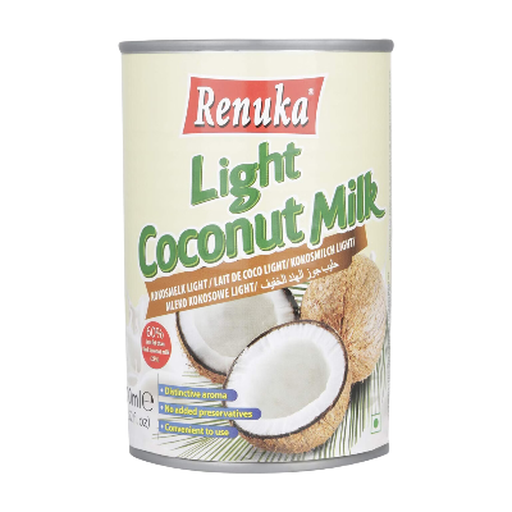 Image unavailable
For a recipe or smoothie that calls for light culinary coconut milk. The tin contains 400 ml.
After opening, transfer any leftovers to an airtight, non-metallic container, keep in the fridge and use within three days.
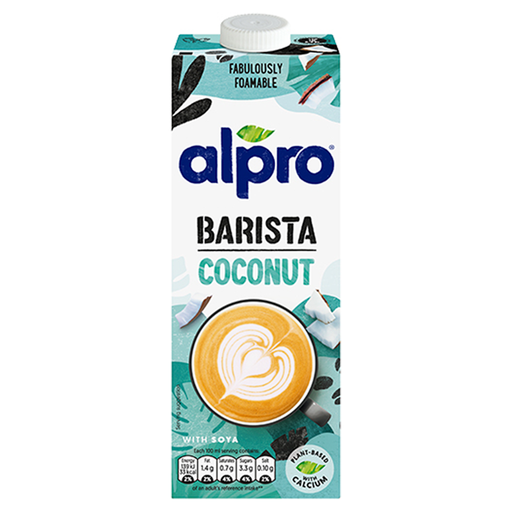 Image unavailable
For coffee or another hot breakfast drink: this coconut plant-based drink isn’t concentrated culinary coconut milk.
1 L pack. Check the packaging for storage instructions after opening.
No: the word alone isn’t enough to compare products. Carrefour states that AYAM light contains 5 g of fat per 100 ml, Suzi Wan lists 8 g per 100 g for its Light version, and Auchan states that Kara Light contains 13 g per 100 ml. Check the unit before making a direct comparison.
A coconut plant-based drink is suitable for this, while culinary coconut milk is an ingredient for recipes. Read the product description and ingredients: for example, the drink listed by Auchan contains 8% coconut milk.
Follow the instructions for the product you buy. Auchan advises keeping Kara Light in the fridge for three days after opening; Supermarchés Match gives four days for Suzi Wan Light.
Compare values expressed in the same unit. The DGCCRF explains that nutritional declarations are given per 100 g or per 100 ml to make comparisons easier; don’t automatically treat a value per 100 g as the same as one per 100 ml.