Anyone making vegan one-pot dishes
For a curry, dahl, soup or sauce, compare coconut milk for cooking by its coconut content, fat content and the quantity your recipe needs.


For a curry, dahl or vegan sauce, start by looking for coconut milk for cooking, then compare the coconut content, fat content and ingredients of the exact product. Coconut cream is better suited to recipes that call for a very thick consistency; in the products compared here, coconut drinks are more diluted and aren’t a direct substitute. If vegan certification matters to you, check that it appears on the product you choose.
For a curry, dahl, soup or sauce, compare coconut milk for cooking by its coconut content, fat content and the quantity your recipe needs.
If you’re looking for a short ingredients list or an organic product, check the exact variety. Carrefour France product details range from recipes containing only coconut and water to those with stabilising gums.
These names refer to different products. The coconut cream and drink products featured by Carrefour France differ considerably in their coconut content, so start with the consistency your recipe calls for.
First, choose the type of product your recipe calls for. To compare different coconut milks for cooking, check their ingredients and choose a pack size you can use in line with the storage instructions.
| What to consider | What to check | Who it matters to |
|---|---|---|
| Consistency of one-pot dishes | Compare the coconut extract content and fat per 100 ml, where stated. | For a curry or dahl, I want a sauce with the consistency my recipe calls for. Around 36% of consumers put consistency at the top of their list. |
| Ingredients and vegan suitability | Read the ingredients for the exact variety and check for any vegan statement or certification you’re looking for. | Before using a product in my vegan recipes, I want to know what it contains rather than relying on the word “coconut” alone; ingredients are the top priority for around 29% of consumers. |
| Useful quantity | Match the pack size to the recipes you have planned and check the storage instructions once opened. | If I’m only cooking a small amount, I’d rather not open more coconut milk than I can use. Pack size comes first for around 21% of consumers. |
| Product type | Check whether it’s labelled coconut “milk”, “cream” or “drink” before choosing. | When my recipe calls for coconut milk, I want to avoid using a drink that’s too thin or a cream that’s thicker than expected. Around 14% of consumers prioritise this distinction. |
The Bjorg coconut drink featured by Carrefour France contains 4% coconut and 4% coconut water. Its ingredients differ from those of the coconut milks for cooking mentioned here, so your sauce may turn out thinner than expected.
For a one-pot dish, check that the product name and ingredients match what your recipe calls for before considering a substitute.
The Suzi Wan thick coconut cream featured by Carrefour France contains 90% coconut extract. If you use it in a recipe designed for coconut milk, you may need to adjust the recipe.
Choose it when you need a particularly thick consistency, or adjust the quantity and liquid to suit the recipe.
The ingredients aren’t the same across products: Carrefour France lists only coconut and water for Real Thai and Kara Bio, while Carrefour Bio also contains guar gum.
Check the ingredients of the product you buy, and look for an explicit vegan statement if that’s one of your criteria. A short ingredients list isn’t, by itself, a certification.
Carrefour France lists Real Thai coconut milk for cooking in a 200 ml carton.
Carrefour France lists, among other products, organic coconut milk and Kara light coconut milk.
Carrefour France describes its 330 ml organic coconut milk as a plant-based cooking ingredient.
Carrefour France lists both coconut milk and coconut cream for cooking under this brand.
These products are coconut milk for cooking, including for curries, soups and sauces. Choose between a smaller pack, a larger quantity or a multipack to suit your recipes, then check the ingredients and any vegan statement you’re looking for on the product you buy.
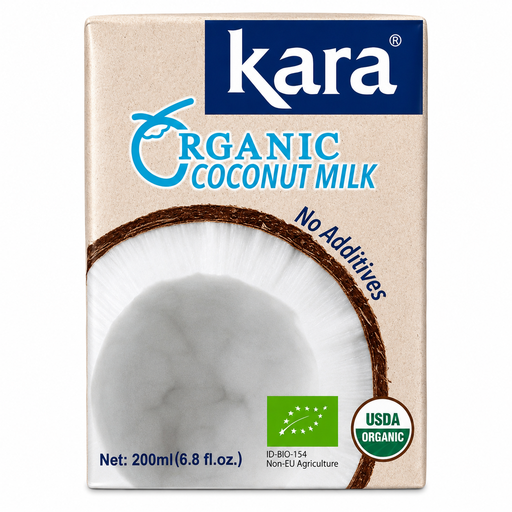 Image unavailable
Worth considering for a curry or soup recipe that calls for a small amount of coconut milk. Check the ingredients and look for any vegan statement you require on the packaging.
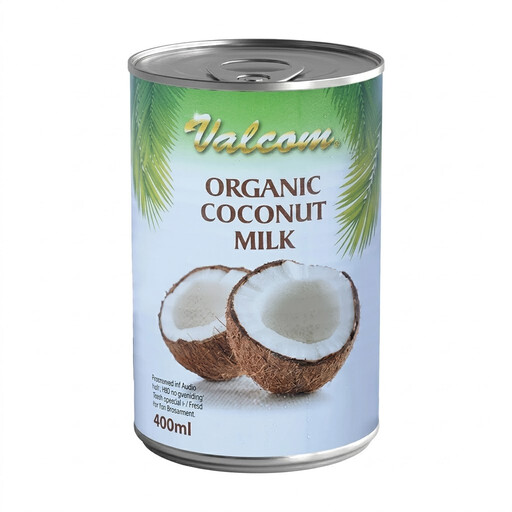 Image unavailable
For recipes that use more coconut milk, such as curries or soups. The ingredients include guar gum; check the label if you’re looking for a thickener-free recipe or a vegan statement.
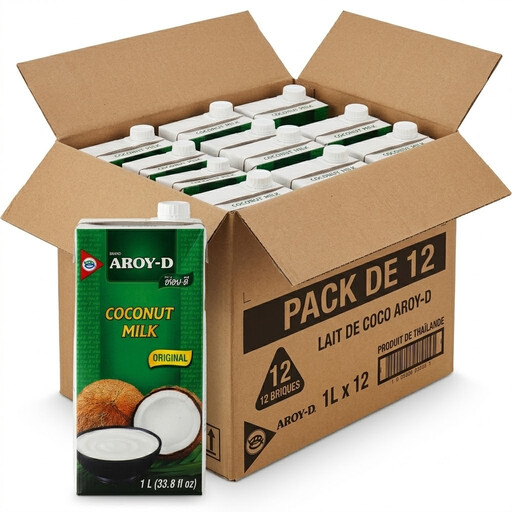 Image unavailable
Worth considering if you’re planning several recipes with coconut milk. This pack contains twelve 1 L cartons, so make sure you’ll use them all and follow the storage instructions once opened.
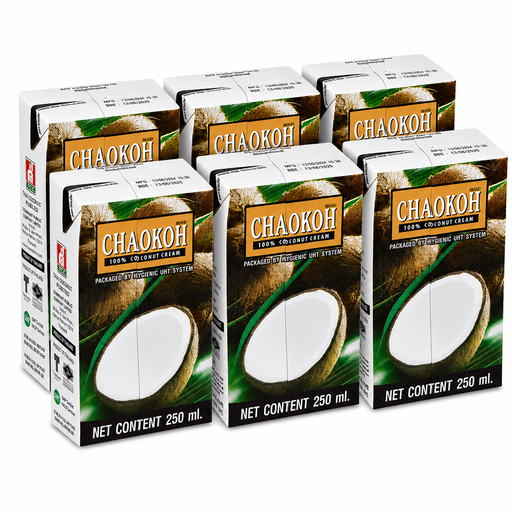 Image unavailable
The 250 ml bottles can be opened as needed for several curry or soup recipes. The ingredients include the emulsifier E435; if vegan suitability is important to you, check its origin or look for an explicit statement on the packaging.
 Image unavailable
This smaller pack may suit a one-off curry or soup recipe. The ingredients include citric acid; check the ingredients and any vegan statement that matters to you.
No. The word “coconut” alone doesn’t guarantee that a product meets all your vegan criteria. Read the ingredients and look for an explicit statement or certification if you require one. Carrefour France lists only coconut and water for the Real Thai and Kara Bio products mentioned here, but those ingredients lists alone don’t count as certification.
Choose coconut cream if your recipe calls for a particularly thick consistency. The Suzi Wan thick coconut cream featured by Carrefour France contains 90% coconut extract; adjust the quantity if you’re following a recipe designed for coconut milk.
Not directly if you’re relying on coconut milk to give the sauce its consistency. The Bjorg drink featured by Carrefour France contains 4% coconut and 4% coconut water, while the coconut milks for cooking mentioned here have different coconut extract contents. Be prepared to adapt the recipe if you switch product type.
Start with the product name and ingredients list, then compare the nutritional information on the same basis, including fat per 100 ml where stated. The DGCCRF notes that the product name and ingredients are among the labelling details to check. For your recipe, also check the pack size and storage instructions for the specific product.