People who like a coconut drink with their biscuits
If you want a drink to enjoy on its own, add to coffee or blend into a smoothie, look for a ready-to-pour coconut drink. It is not the same as culinary coconut milk, which is intended for recipes.


If you want something coconut-flavoured to enjoy with biscuits in the evening, choose a ready-to-pour plant-based drink rather than culinary coconut milk. A multipack of small portions of coconut milk is a better choice if you regularly make desserts or other recipes. If so, check how much you use each time you open a pack, along with the allergens and storage instructions for each product.
If you want a drink to enjoy on its own, add to coffee or blend into a smoothie, look for a ready-to-pour coconut drink. It is not the same as culinary coconut milk, which is intended for recipes.
If desserts, curries, soups or sauces are often on the menu, you can open several small containers as you need them for different recipes, rather than opening the whole multipack at once.
For a small late-night recipe, the size of each container matters just as much as the size of the multipack. Choose an amount that suits the recipe, and follow the product’s storage instructions once opened.
First decide whether you want to drink the coconut product with your snack or use it in a recipe. Then compare the container sizes with how much you’ll actually use, and check the label details.
| What to consider | What to check | Who is this for? |
|---|---|---|
| Product type | Look for the description “coconut plant-based drink” or “culinary coconut milk”, then compare the ingredients and nutritional values using the same unit. | If I’m having a glass with my biscuits in the evening, I’m looking for a ready-to-pour drink rather than a dessert ingredient. Around 40% of consumers would prioritise a drink for this use. |
| Multipack format | Check the number of containers, the volume of each one and how much each recipe needs. | When I make different coconut recipes at different times, I’d rather be able to open the portions separately. Having individual portions available would be the priority for around 30% of consumers. |
| Leftovers after opening | Consider how much you’ll use, along with the storage temperature and timeframe shown on the packaging. | For a small late-night recipe, I don’t want to leave an opened container for longer than the recommended time. Avoiding leftovers would come first for around 30% of consumers. |
These product descriptions refer to different uses. Carrefour lists Alpro coconut drink as containing 0.8 g of fat per 100 ml; Carrefour Sensation and Grace list 18 g, per 100 g and per 100 ml respectively. Keep these units separate when comparing nutritional values.
For a glass to enjoy with biscuits, look for “coconut plant-based drink”. For a dessert or sauce, check the product description, ingredients and the amount required by the recipe.
A multipack of small containers is not used in the same way as one large container: follow the label instructions for storing each portion once opened. The Auchan and Joybuy product pages give different storage times after opening: three days for Grace and 24 hours for Vietcoco.
Choose an individual container close to the amount you’ll use, note when you opened it, and follow the refrigeration and use-by instructions for the product you buy.
If you open more than the recipe needs, you may have product left over that needs using quickly.
Products from the same brand can vary: Alpro says its coconut drink may contain traces of nuts, while the Joybuy product page for the Barista version lists soya.
Check the allergens on the packaging of the exact product you’re buying, especially if you’re switching to a different version.
The date shown on an unopened pack does not replace the instructions that apply once the product has been opened. The government department responsible for consumer affairs notes, for example, that a use-by date no longer applies after opening.
Check that the packaging is in good condition before buying, then follow the stated storage temperature and timeframe once opened.
The products below illustrate different uses. Always check the product page and label for the exact product you’re considering.
The 1 L coconut plant-based drink is suited to enjoying by the glass or adding to a drink, rather than using as concentrated culinary coconut milk.
Its 400 ml culinary coconut milk is worth considering for a one-off recipe, rather than serving by the glass with biscuits.
Auchan lists Grace 400 ml coconut milk for desserts and savoury dishes.
Aldi sells Asia Green Garden coconut milk in a 400 ml container, worth considering for a recipe that calls for this amount.
These two CHAOKOH multipacks are for households that make coconut recipes regularly and want to open separate bottles as needed. If you simply want a drink to enjoy with biscuits, look for a coconut plant-based drink instead.
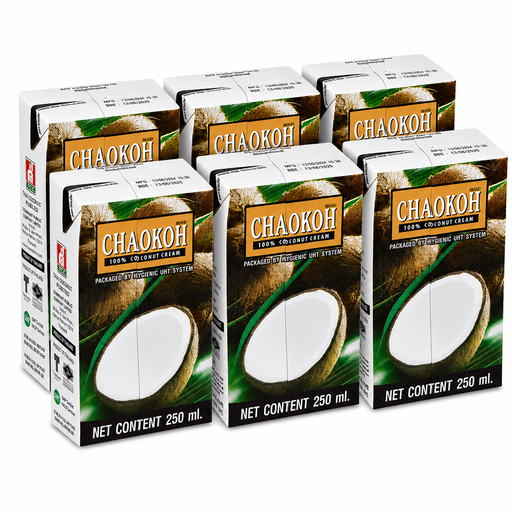 Image unavailable
For coconut recipes made at different times, this multipack lets you open one 250 ml bottle at a time.
It contains six bottles. This is culinary coconut milk, not a plant-based drink ready to serve with biscuits. Check the packaging for allergens and instructions for use after opening.
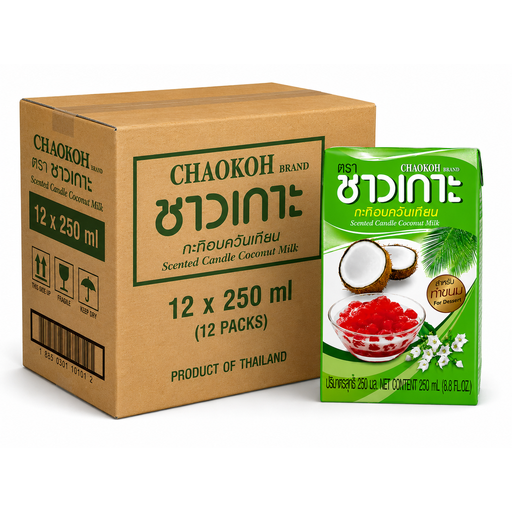 Image unavailable
If you regularly make coconut desserts, you can open the 250 ml bottles separately as you need them for each recipe.
The multipack contains twelve bottles. This coconut milk for desserts is not a ready-to-pour plant-based drink; check the packaging for allergens and instructions for use after opening.
They are not interchangeable for this use: choose according to whether you want to serve a drink or make a recipe. Carrefour Sensation and Grace list their coconut milks for cooking, while Alpro coconut drink is intended to be enjoyed on its own or added to a drink.
Follow the timeframe and storage temperature shown on the packaging for the product you’ve bought. The Auchan and Joybuy product pages give different instructions for two products: three days in the fridge for Grace and 24 hours for Vietcoco.
First check the product description, ingredients, allergens, net quantity and the date that applies to the product. For prepacked food sold in France, the DGCCRF says that labelling information must be visible, legible and written at least in French. Before choosing a large pack, also check the storage instructions for after opening.