For a family sauce, soup or curry, start with coconut milk for cooking. Compare the nutritional information and the amount you use before choosing between a light and classic version. A coconut plant-based drink is better suited to drinking or liquid recipes. The word ‘mild’ tells you nothing about its flavour in a recipe or its nutritional content. As Manger Bouger reminds us, keeping an eye on a child’s meals should never turn into a weight-loss diet.
Who is this choice for?
Parents cooking with coconut for the family
For a sauce, soup or curry the children will enjoy, texture and flavour matter just as much as the amount you use. Product information published by Carrefour France and Auchan France lets you compare light and classic versions, without making assumptions about individual tastes.
Households choosing between a drink and a cooking ingredient
A carton of coconut plant-based drink and coconut milk intended for cooking may not serve the same purpose. Check the product description and consider the texture you want for your recipe to help you decide.
Parents mindful of their child’s meals
If you’re concerned about your child’s weight, choosing an ingredient is no substitute for advice tailored to their needs. Manger Bouger reminds us that portion sizes change with age and that children should not be put on weight-loss diets.
What should you look for in store?
First, choose according to how you plan to use it: cooking with coconut milk or cream, or using a plant-based drink. For a family recipe, the word ‘mild’ is no substitute for checking the ingredients and nutritional information.
Light coconut milk for cooking
Worth considering: for a coconut sauce, soup or curry when you want to compare its nutritional content with a classic version.
Keep in mind: ‘light’ doesn’t mean fat-free. Check the saturated fat content too, and consider how much you’ll use.
Classic coconut milk or cream
Worth considering: when your recipe calls for a creamy texture or a more pronounced coconut flavour.
Keep in mind: consider the amount in the finished dish and compare the nutritional information for the product you choose, particularly if it’s a cream.
Coconut plant-based drink
Worth considering: for drinking or making a liquid recipe, rather than when you want the creaminess of coconut milk for cooking.
Keep in mind: its ingredients and how it behaves in a sauce may differ from a cooking ingredient. According to Anses, plant-based drinks are not a substitute for breast milk or infant formula for children under one.
| What to consider |
What to check |
Who is it for? |
| Nutritional content in the recipe |
Compare the kcal, fat and saturated fat per 100 ml in the light and classic versions, then consider how much you’ll actually use. |
For a family sauce, I want to keep the coconut flavour while controlling what it adds to the dish. Around 42% of consumers would put this adjustment first. |
| Flavour and texture |
Check whether it’s coconut milk or cream and look at the proportion of coconut extract; then adjust the amount to suit your recipe. |
If the children prefer a milder flavour, I want to be able to adjust the recipe without assuming that ‘mild’ describes its nutritional value. This would be a priority for around 33% of consumers. |
| Product type |
Check whether it’s described as a ‘plant-based drink’ or ‘coconut milk’, and compare the nutritional information using the same unit. |
Before buying a carton for cooking, I want to avoid mistaking a drink for a cooking ingredient that would give a different result. Around 25% of consumers would make this distinction their first criterion. |
Common pitfalls to avoid
-
Confusing a plant-based drink with coconut milk for cooking
The Alpro coconut drink and Kara pourable coconut milk featured by Carrefour France and Auchan France respectively have different ingredients and uses. A drink may change the texture you expect from a sauce or curry.
Check the product description on the packaging and choose according to your recipe, rather than relying on the word ‘coconut’ alone.
-
Assuming ‘light’ means ‘fat-free’
The Kara Light coconut milk featured by Carrefour France still contains 13 g of fat, including 12 g of saturated fat, per 100 ml.
Compare the figures per 100 ml with those for the classic product you’re considering, then take into account how much you’ll add to the dish.
-
Putting a child on a diet because you’re concerned about their weight
Manger Bouger advises against weight-loss diets for children. Switching coconut milk alone won’t address questions about a child’s growth or weight.
Adjust portions to your child’s age and, if you’re concerned about their weight, seek advice from a healthcare professional.
-
Forgetting how to store an opened carton
Instructions for the Kara products featured by Auchan France say to keep them in the fridge and use them within three days of opening.
Check the instructions on your carton and choose a size that suits the recipes you plan to make.
An opened carton that you can’t use within the stated time may go to waste.
Brands to compare
Kara
Coconut milk for cooking in light, classic and organic versions. Compare each product individually.
- The Kara Light featured by Carrefour France contains 134 kcal and 13 g of fat per 100 ml, compared with 182 kcal and 18 g per 100 ml for the Kara pourable coconut milk featured by Auchan France.
- The organic version featured by Auchan France contains 64% coconut extract. ‘Organic’ doesn’t mean it has a lower nutritional content than the light version.
Suzi Wan
A range for cooking that includes light and classic coconut milk, as well as coconut cream.
- According to product information from Carrefour France, the light coconut milk contains 22% coconut extract and the classic version 56%. The concentration is worth considering for your recipe.
- The coconut cream featured by Carrefour France contains 252 kcal and 25 g of fat per 100 ml. It shouldn’t be compared with a plant-based drink as if they had the same use.
Alpro
A coconut plant-based drink, which is different from coconut milk for cooking.
- The drink featured by Carrefour France contains 20 kcal and 0.8 g of fat per 100 g.
- Its ingredients include coconut milk and rice. Check that it will give you the result you want before using it in a sauce instead of coconut milk.
Carrefour Bio
Organic coconut milk for cooking, sold in a 330 ml carton by Carrefour France.
- The product featured contains 76% coconut extract, which is useful to know if the amount of coconut matters for your recipe.
- It contains 170 kcal and 17 g of fat per 100 ml. The organic label doesn’t mean you can skip comparing the nutritional information.
Real Thai
Concentrated coconut milk for recipes where coconut takes centre stage.
- The product featured by Carrefour France contains 85% coconut extract and water.
- It contains 185 kcal and 19 g of fat per 100 ml. If you’re looking to change the nutritional content of your recipe, compare the amount you plan to use too.
Coconut milk available on Joybuy
These three coconut milks offer some options to consider for family cooking. Compare their product descriptions and nutritional information before choosing. Neither the word ‘light’ nor the product name guarantees a mild flavour that children will enjoy.
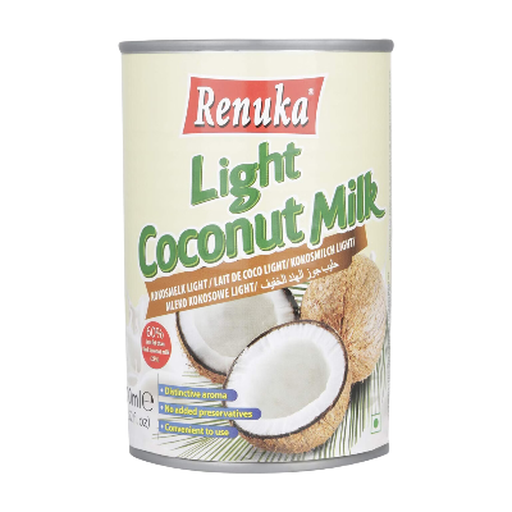 Image unavailable
Renuka Coconut Milk Light 9%, 400 ml tin
Worth considering for a coconut sauce, soup or curry. It comes in a 400 ml tin. Compare the nutritional information and the amount you plan to use in your recipe, rather than judging its nutritional content by the word ‘light’ alone.
If you’re looking for a mild flavour for children, take their preferences into account and check the information on the packaging.
View on Joybuy
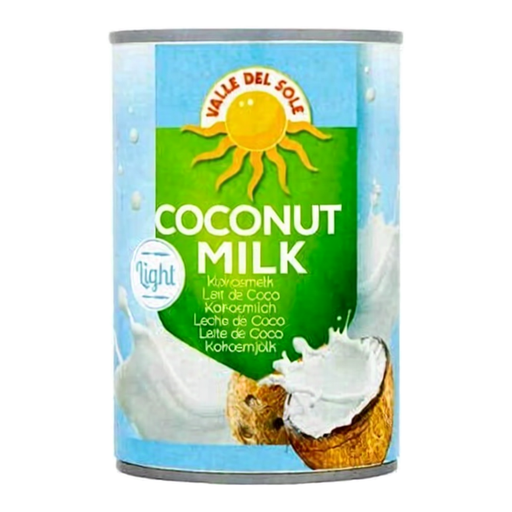 Image unavailable
Valle Del Sole Coconut Milk 6%, 400 ml
Worth comparing for a coconut sauce, soup or curry. It comes in a 400 ml pack. Read the nutritional information using the same units as for the other products you’re considering.
You can’t tell whether children will like its flavour from the wording in the product name.
View on Joybuy
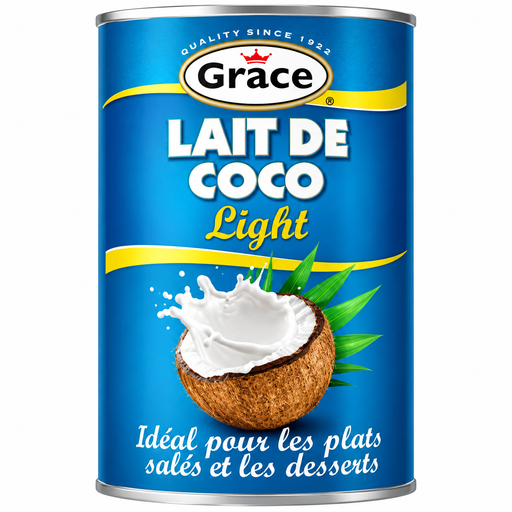 Image unavailable
Grace Light Coconut Milk, 400 ml
Worth considering if you want to use a coconut product in a recipe. It comes in a 400 ml pack, but check its product description and intended uses on the packaging. Depending on what you’re making, a drink and coconut milk for cooking won’t give the same result.
For a recipe for children, consider the flavour you’re looking for without assuming that ‘light’ means ‘mild’.
View on Joybuy
Frequently asked questions
Is light coconut milk enough to keep track of the nutritional content of a recipe?
No. The amount you use matters too. The Kara Light featured by Carrefour France contains 13 g of fat, including 12 g of saturated fat, per 100 ml. Compare the figures per 100 ml with those for classic coconut milk, then measure how much you add to the dish.
Can a coconut plant-based drink replace infant formula?
No, not for a child under one. Anses says that everyday drinks, including plant-based drinks, cannot replace breast milk or infant formula suitable for this age group.
What should I do if I’m worried about my child’s weight?
Don’t put your child on a diet in response to this concern. Manger Bouger advises against weight-loss diets for children. Portion sizes should be adjusted to their age; seek advice from a healthcare professional about your child’s individual circumstances.
How long can you keep coconut milk after opening?
Follow the instructions for the product you’ve bought. For the Kara coconut milks featured by Auchan France, the guidance is to keep them in the fridge and use them within three days of opening. Don’t automatically apply this timeframe to other brands.


