Parents of a baby under one
If you’re thinking of using a coconut drink in your baby’s bedtime bottle, bear in mind that Anses says ordinary plant-based drinks should not be used instead of breast milk or infant formula at this age.


For a baby under one, do not replace breast milk or infant formula with coconut milk, even if it is concentrated. Anses advises that ordinary plant-based drinks are not suitable substitutes. For your baby’s bedtime bottle, choose infant formula that is right for their age; after their first birthday, Assurance Maladie recommends choosing growing-up milk. Culinary coconut milk is for cooking, not for making up a baby’s bottle.
If you’re thinking of using a coconut drink in your baby’s bedtime bottle, bear in mind that Anses says ordinary plant-based drinks should not be used instead of breast milk or infant formula at this age.
The right milk for an evening bottle changes as your child grows. Assurance Maladie advises continuing with infant formula until one, then recommends growing-up milk until the age of 3.
You can compare the ingredients in coconut milks intended for family recipes. However, their coconut extract content doesn’t make them suitable for a baby’s bottle.
First, consider your child’s age and the type of milk intended for their diet. Only compare coconut content for cooking, not for a baby’s bottle.
| Criterion | What to check | Who it matters to |
|---|---|---|
| Type of milk | For a baby, check that the product is labelled as infant formula suitable for their age, rather than a “coconut drink” or “cooking ingredient”. | When I make a bottle for a baby, my priority is not to mistake an everyday drink for their infant formula. Around 50% of consumers put this need first. |
| Child’s age | Confirm your child’s exact age and check the age range on the milk. Follow advice from their healthcare professional, if applicable. | If my child moves into a new age bracket, I want to know which type of milk is right for that stage before I buy. This is the priority for around 30% of consumers. |
| Coconut for cooking | For a recipe, compare the ingredients, the proportion of coconut extract and the storage instructions after opening. Don’t apply these criteria to a baby’s bottle. | When I’m cooking, I’m mainly looking for the coconut flavour and texture that suit my recipe, not a product for a baby’s bottle. Around 20% of consumers prioritise this use. |
The name doesn’t mean it’s the same type of product: the coconut products mentioned here are plant-based drinks or cooking ingredients. Anses advises that ordinary drinks should not replace breast milk or infant formula before the age of one.
For a baby’s bottle, choose infant formula that’s right for their age.
The proportion of coconut extract helps you compare products for cooking; it doesn’t tell you whether they’re suitable for a baby’s diet.
Keep this criterion for family recipes and don’t use it to choose a replacement for infant formula.
Instructions for storing a cooking ingredient after opening aren’t instructions for preparing or storing a baby’s bottle.
Follow the instructions for the infant formula you’ve chosen and make up the bottle as directed on the packaging.
Suspected cow’s milk protein intolerance doesn’t make coconut milk suitable for a baby’s bottle.
Ask a doctor or paediatrician which infant formula is right for your child’s needs.
These coconut products show the difference between a plant-based drink and a cooking ingredient; none is presented as infant formula.
A ready-to-drink coconut-based plant drink, which Alpro presents for everyday consumption and cooking.
Organic coconut milk in a 400 ml tin, presented by Carrefour as a cooking ingredient.
A 400 ml tin of coconut milk sold by E.Leclerc as part of a grocery range for cooking.
Organic coconut milk in a 200 ml carton, presented by Auchan as a cooking ingredient.
These products are for choosing milk for a bottle according to age: a follow-on milk labelled for use from 6 months and growing-up milks to consider after your child’s first birthday. Check the age range and the instructions for each product before choosing.
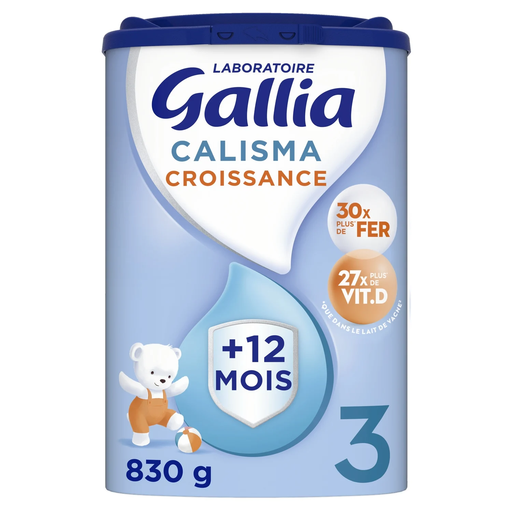 Image unavailable
A powdered growing-up milk to consider for a bottle after your child’s first birthday, not for a younger baby.
The product name indicates that it’s for use from 12 months. Follow the preparation instructions on the packaging.
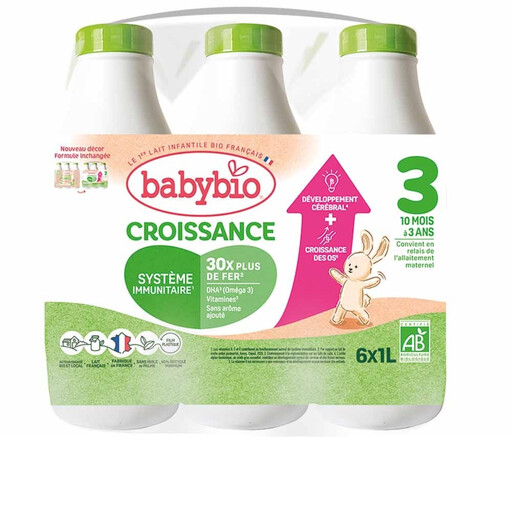 Image unavailable
A liquid option to consider for a bottle after your child’s first birthday if you’d rather not make up powdered milk.
The pack contains six 1 L cartons. Check the age range and instructions for use after opening on the packaging.
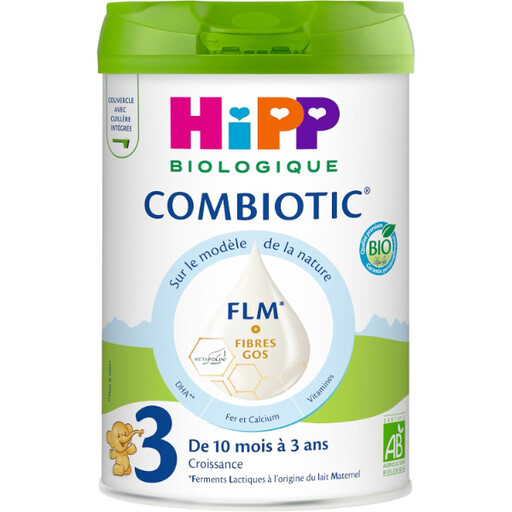 Image unavailable
A powdered growing-up milk to consider after your child’s first birthday, taking their exact age into account.
The product name indicates an age range of 10 months to 3 years. For this choice of bottle milk, bear in mind that Assurance Maladie recommends growing-up milk after the age of one.
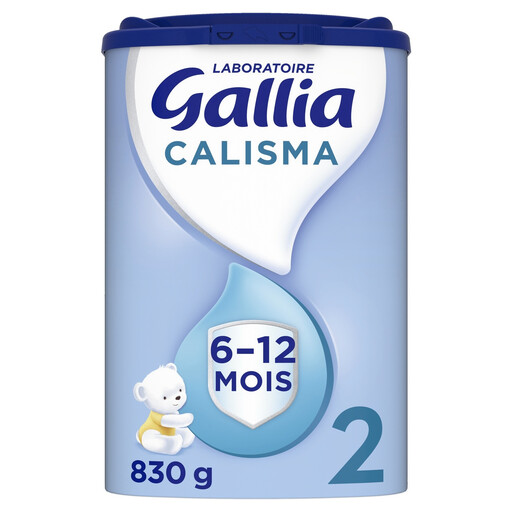 Image unavailable
This powdered follow-on formula is for a bottle for a child within the stated age range, not for replacing with a coconut drink.
The product name indicates that it’s for use from 6 months. Confirm your child’s age and follow the product’s preparation instructions.
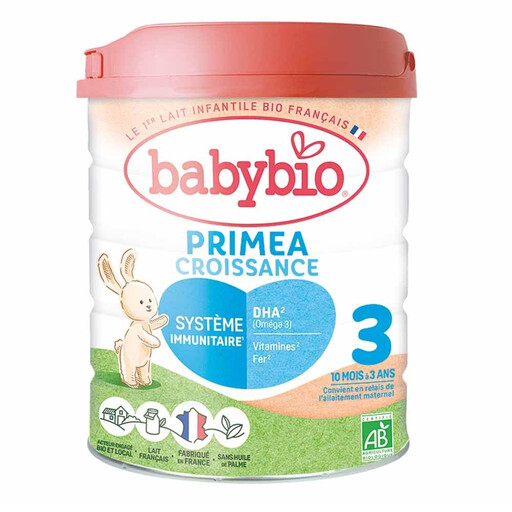 Image unavailable
A powdered growing-up milk to consider for a bottle after your child’s first birthday.
The product name indicates that it’s for use from 10 months; Assurance Maladie recommends continuing with infant formula until the age of one. Follow the preparation instructions on the packaging.
No, not for a baby. Calcium or vitamins in an everyday plant-based drink don’t make it infant formula. Anses advises that these drinks should not replace breast milk or infant formula before the age of one.
The type of milk depends on your child’s exact age, not on when they have their bottle. Anses distinguishes between first infant formula from birth and follow-on formula after that until the age of one. Assurance Maladie advises continuing with infant formula until one, then recommends growing-up milk until the age of 3.
No. The percentage of coconut extract helps you compare ingredients for cooking, but it doesn’t turn either culinary coconut milk or a coconut drink into infant formula.
Don’t replace your baby’s milk with coconut milk. Ask a doctor or paediatrician which specially formulated infant formula is right for your child.
It’s best to make it up just before feeding, in line with Anses recommendations. If you need to prepare it in advance, follow the relevant bottle hygiene guidance and the instructions for the infant formula you’re using, rather than the storage instructions for culinary coconut milk.