Parents looking for an occasional coconut ingredient
You’ve started weaning and would like to add coconut milk to a recipe, without using it as your baby’s main milk.


For a weaning recipe, culinary coconut milk may be used as an occasional ingredient. Check the ingredients for the product you choose, particularly if you’re avoiding dairy ingredients. A coconut drink, like culinary coconut milk, should not replace breast milk or infant formula before the age of one, in line with Anses guidance. If you’re considering a replacement for your baby’s main milk because of a suspected or diagnosed allergy, speak to a healthcare professional.
You’ve started weaning and would like to add coconut milk to a recipe, without using it as your baby’s main milk.
You want to check the ingredients in a coconut product. If you’re avoiding these proteins in your baby’s main milk, you’ll need medical advice.
You need to distinguish culinary coconut milk from a coconut drink: they have different ingredients and different roles in your baby’s diet.
Suitable for: using in small quantities as an ingredient in a weaning recipe, once weaning has begun.
Bear in mind: this product does not replace your baby’s main milk, and its ingredients vary between products.
Not to be confused with: this is a plant-based drink, not the culinary coconut milk used in recipes.
Limitation: according to Anses, an ordinary plant-based drink cannot replace breast milk or infant formula before the age of one.
If milk is the concern: ask a healthcare professional to advise you on choosing a suitable infant formula.
Don’t confuse the two: infant formula is not interchangeable with a coconut drink from the drinks aisle.
| Criteria | What to check | Who is it for? |
|---|---|---|
| Role of your baby’s main milk | The product category and intended use: a recipe ingredient or a main milk suitable for your baby’s age. | If I’m adding coconut to a purée, I want to avoid confusing this ingredient with my baby’s usual milk. Around 46% of consumers would prioritise this distinction. |
| Dairy ingredients | The full ingredients list and any allergens stated on the packaging of the product you buy. | If I need to avoid cow’s milk proteins, the word ‘coconut’ alone doesn’t tell me what’s in the product. Around 36% of consumers would make this their priority. |
| Culinary composition | The stated coconut content, fat per 100 mL and pack size, based on how much the recipe requires. | For a small dish, I’m looking first for ingredients and a container that suit the way I’ll use it in the kitchen. Around 18% of consumers would put this need first. |
The product name doesn’t mean it meets the needs covered by a baby’s main milk. Anses says that ordinary drinks cannot replace breast milk or infant formula during the first year.
You may choose to use culinary coconut milk in a weaning recipe; for your baby’s main milk, stick with an option suitable for their age.
Recipes vary from one product to another. The name on the front of the pack is no substitute for checking the ingredients and allergens.
Check the packaging of the product you buy. If an allergy is suspected or diagnosed, follow your healthcare professional’s advice.
Carrefour’s product pages for Real Thai and Kara state that their culinary coconut milks contain 19 and 16 g of fat per 100 mL respectively; the page for Alpro’s unsweetened coconut drink states 1.2 g per 100 g. These figures refer to different products and reference units.
First choose the category that suits your recipe, then check the ingredients and the amount you plan to use.
Culinary coconut milk, which is different from a plant-based coconut drink.
The 500 mL organic culinary product shown on Carrefour’s product page is different from the Kara packs featured below.
Plant-based coconut drinks, which are different from culinary coconut milk.
These products are for occasional use as a culinary coconut ingredient in a weaning recipe, not for choosing your baby’s main milk. If you’re avoiding dairy ingredients, check the ingredients list and allergens on each pack.
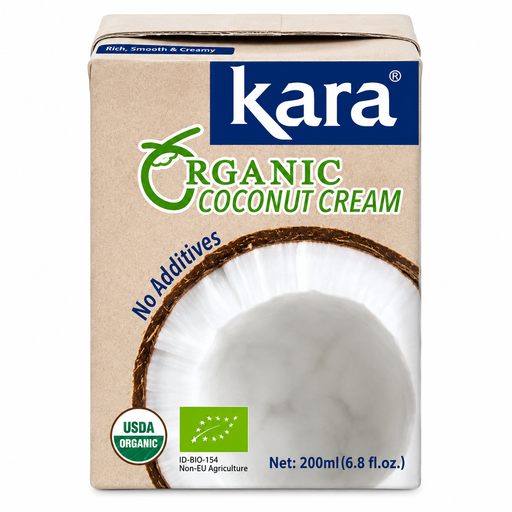 Image unavailable
This coconut cream could be used in small quantities in a recipe, but it should not replace your baby’s main milk.
The product name states 24% fat and a 200 ml pack size. Check the ingredients and allergens on the packaging.
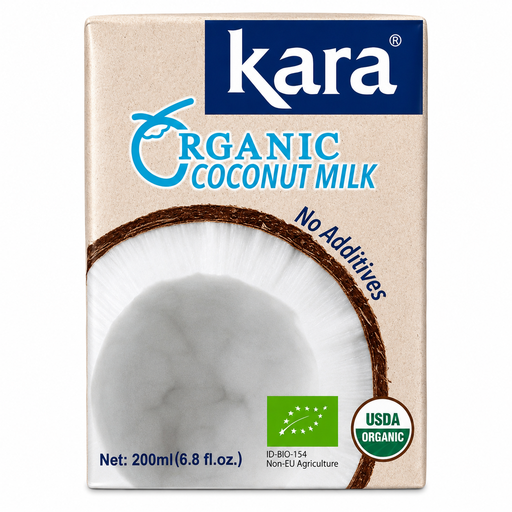 Image unavailable
This culinary coconut milk can be used in a weaning recipe once weaning has begun, but not as your baby’s main milk.
The product name states 17% fat and a 200 ml pack size. Check the ingredients for this product rather than those of another Kara product.
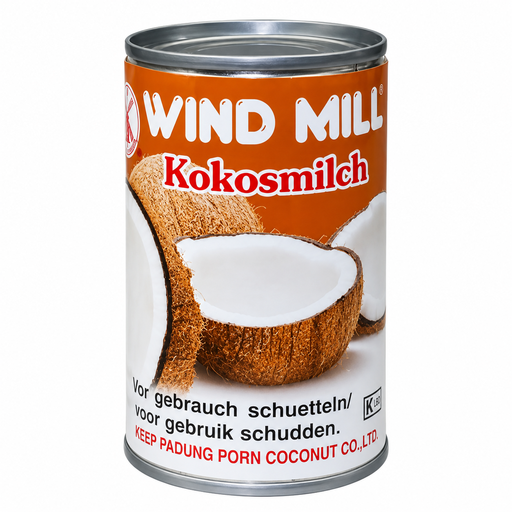 Image unavailable
The 165 ml pack may suit occasional culinary use, depending on how much your recipe calls for.
Check the full ingredients list and allergens if you’re looking for a product with no dairy ingredients.
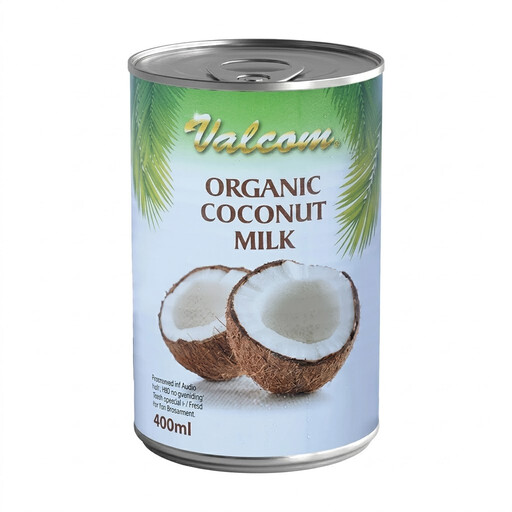 Image unavailable
If your recipe calls for culinary coconut milk, compare this 400 ml pack with the amount you plan to use.
Check the ingredients, allergens and storage instructions for the pack you choose.
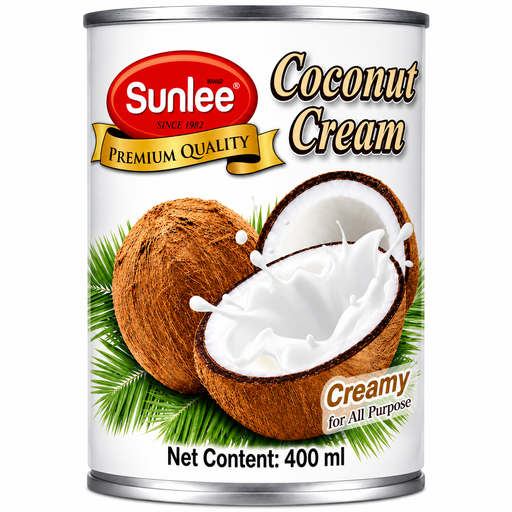 Image unavailable
This coconut cream is for cooking and is not a baby’s main milk.
The product name states 20–22% fat and a 400 ml pack size. Read the packaging to confirm the ingredients and allergens.
No. Before the age of one, culinary coconut milk or a plant-based coconut drink should not replace breast milk or suitable infant formula. Anses states that ordinary drinks, whether plant-based or animal-based, are not suitable substitutes. Culinary coconut milk may only be used as an ingredient in a recipe.
Read the ingredients list and allergen information on the packaging of the product you buy. Carrefour’s product pages for Real Thai and the 500 mL Kara organic coconut milk list coconut and water, with no dairy ingredients shown. This doesn’t apply to every coconut product.
Ask a doctor or your local maternal and child health service (PMI) for advice before changing your baby’s main milk. Santé publique France notes that diagnosing a food allergy is complex; a coconut drink is not a substitute infant formula.
Introduce new foods separately rather than adding several at once to a first recipe. This is the guidance from Manger Bouger for introducing foods between 4 and 6 months.