For a drink to pour over cereal or enjoy on its own, compare the carbohydrates and sugars per 100 ml in similar types of coconut drink, then take the serving size into account. For a sauce or curry, choose according to how you plan to cook with it and how much the recipe calls for, while also checking the fat and saturated fat content. A flavour described as mild or subtle does not tell you anything about these nutritional values.
Who are these options for?
People comparing the sugar content of coconut drinks
You’re looking for a drink to have at breakfast or with cereal, and want to check the “carbohydrates” and “of which sugars” figures per 100 ml rather than relying on how the product is described as tasting.
People who cook with coconut milk
You’re making a curry, soup or sauce and need to choose an amount that gives you the texture you’re after, while keeping the recipe’s fat content in mind.
Families who prefer a subtle coconut flavour
You’re looking for a mild coconut flavour for your household. If a child follows an individualised eating plan for diabetes, flavour is separate from choosing a portion size and checking the nutritional information for the exact product.
What should you check first?
Coconut drink
Choose it for: drinking or serving with cereal, comparing the carbohydrates and sugars in the products you’re considering.
Keep in mind: a plant-based drink may not give a coconut milk sauce the texture you’re looking for.
Coconut milk for cooking
Choose it for: a curry or sauce where the recipe calls for coconut milk.
Keep in mind: the Racines Bio and Kara cooking products list 9,4 g and 15 g of saturated fat per 100 ml respectively, according to their product pages published by Auchan. The amount you add therefore matters when comparing them.
| Factor |
What to check |
Who is it for? |
| Carbohydrates and sugars |
When comparing similar coconut drinks, check “carbohydrates” and “of which sugars” per 100 ml, then consider the amount you serve. Alpro France’s product page lists 0 g for both figures for Coco Sans Sucres. |
If I regularly pour coconut drink into a glass or over cereal, I want to know the carbohydrates and sugars in the amount I consume. Around 42% of consumers make this their top priority. |
| Fat content for cooking |
Compare the fat and saturated fat figures on the same basis, then consider how much coconut milk you add to the recipe. |
For a sauce, I want to get the texture I’m after without losing sight of how much I’m adding. Around 33% of consumers put managing this trade-off first. |
| Flavour and ingredients |
Look for a description of the flavour, then check the nutritional information, ingredients and allergens separately for the exact product. |
In my household, a subtle coconut flavour makes it easier to choose a drink everyone is happy to try; it tells me nothing about its carbohydrate content. Around 25% of consumers make this their top priority. |
Which common mix-ups should you avoid?
-
Confusing coconut drink with coconut milk for cooking
These products are designed for different uses: a drink for a glass or cereal is not directly comparable with an ingredient chosen to give a sauce its texture.
Start by deciding how you’ll use it, then compare nutritional values across products of the same type and for the amount you’ll actually use.
-
Taking “mild” to mean low in sugars
The Bjorg product page published by Auchan describes its flavour as subtle, but this taste description doesn’t tell you its carbohydrate or sugar content.
Use the flavour description to compare tastes, and check the “carbohydrates” and “of which sugars” figures on the label when comparing drinks.
-
Looking only at the sugars in coconut milk for cooking
The Racines Bio and Kara cooking coconut milks list 9,4 g and 15 g of saturated fat per 100 ml respectively, according to their product pages published by Auchan.
For a curry or sauce, check the fat and saturated fat content too, then consider how much will go into each serving of the recipe.
-
Choosing a different product because it’s from the same brand
Joybuy’s product page for Alpro Barista Coconut Drink lists 3,3 g of sugars per 100 ml and includes soy. This isn’t the same product as Alpro Coco Sans Sucres, which Alpro France lists as containing 0 g of sugars per 100 ml.
Before buying, check the full product name, ingredients, allergens and nutritional values on that product’s own page.
Brands and ranges to know
Alpro
Alpro Coco Sans Sucres is a plant-based drink for enjoying on its own or at breakfast.
- Alpro France’s product page lists 0 g of carbohydrates and 0 g of sugars per 100 ml.
- It’s a drink, not concentrated coconut milk for cooking. Check the allergen information for the product you buy.
Auchan Bio
The range includes a 1 L organic, sugar-free coconut drink.
- According to Auchan’s product page, it contains less than 0,5 g of carbohydrates and less than 0,5 g of sugars per 100 ml.
- The same page lists 1,7 g of saturated fat per 100 ml and says to keep it refrigerated and consume it within five days of opening.
Bjorg
The organic, sugar-free Bjorg coconut drink is described as having a subtle flavour on its product page published by Auchan.
- This description can help you identify an option to try if you’re looking for a subtle coconut flavour.
- The flavour description doesn’t replace checking the carbohydrates, sugars and ingredients.
Racines Bio
Racines Bio offers organic coconut milk for cooking in a 40 cl pack.
- The product page published by Auchan lists 44% coconut extract.
- It also lists 11 g of fat, including 9,4 g of saturated fat, per 100 ml, so bear in mind how much you’ll use in the recipe.
Kara
Kara organic coconut milk is presented as an ingredient for sauces, curries and desserts.
- According to the product page published by Auchan, it contains 64% organic coconut extract and water.
- The product page lists 16 g of fat, including 15 g of saturated fat, per 100 ml, and recommends keeping it refrigerated and consuming it within three days of opening.
Coconut milk for cooking on Joybuy
These two products are intended for cooking with coconut milk. If you’re looking for a drink to pour over cereal, don’t treat them as equivalent to a sugar-free coconut drink; compare the product variant and nutritional information that match how you plan to use it.
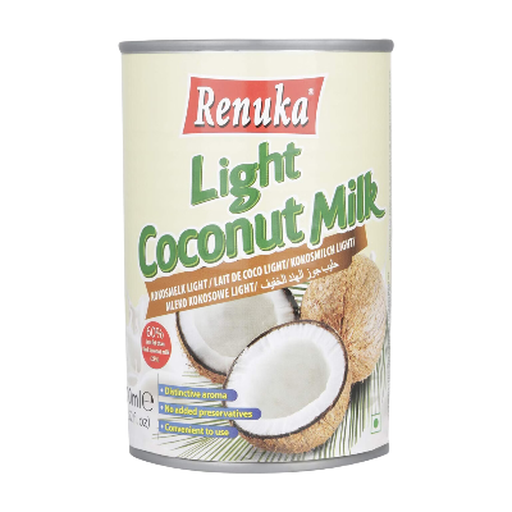 Image unavailable
Renuka Coconut Milk Light 9 %, 400 ml tin
Worth considering for a recipe that calls for coconut milk. Decide how much to add to the dish.
The word “Light” in the name doesn’t mean the flavour will be subtle. Check the nutritional information for this variant and bear in mind the saturated fat content for the amount you use.
View on Joybuy
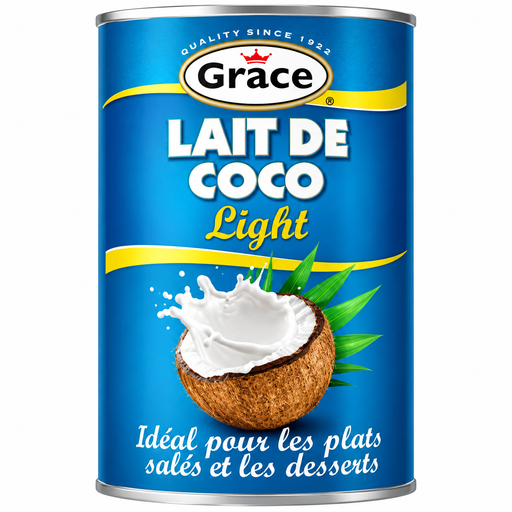 Image unavailable
Grace Light Coconut Milk, 400 ml
Worth considering if you’re looking for coconut milk to cook with rather than a sugar-free coconut drink.
To compare its fat content with another product, check the values and units on the exact packaging. The word “Light” doesn’t tell you what it tastes like.
View on Joybuy
Frequently asked questions
Is “sugar-free” enough to help you choose a coconut drink?
No: it doesn’t replace checking all the nutritional information for the exact product. In particular, compare carbohydrates and sugars per 100 ml, then consider the serving size. Assurance Maladie notes that information given per 100 ml helps you compare products.
Can you use coconut milk for cooking as a breakfast coconut drink?
Coconut milk for cooking and coconut drink aren’t interchangeable when comparing nutritional information: their uses and compositions may differ. If you’re thinking of drinking coconut milk intended for cooking, check the values on its own label for the amount you plan to have rather than using figures for a coconut drink.
How should you store coconut drink or coconut milk after opening?
Follow the instructions for the product you’ve bought. Product pages published by Auchan say to keep the Auchan Bio drink refrigerated and consume it within five days of opening, compared with three days for Kara coconut milk. These timeframes don’t apply to every product.
Is a mild coconut flavour enough to choose a drink for a child with diabetes?
No: “mild” or “subtle” describes the flavour, not whether the drink is suitable for an individual eating plan. For the product you’re considering, check the carbohydrates in the serving and the ingredients, then follow the plan agreed with the team caring for your child.


