For a drink to have with an afternoon snack, choose a plant-based coconut drink rather than coconut milk intended for cooking: they’re made for different uses and have different ingredients. Then compare the drinks by checking the sugar information, whether calcium and vitamins have been added, and the child’s dietary restrictions. The word ‘plant-based’ alone doesn’t prove that a product is certified vegan or suitable for someone with an allergy.
Who is this choice for?
Parents who need to follow dietary restrictions
For a snack at school or in after-school care, check the ingredients and highlighted allergens against the child’s specific restriction. French National Health Insurance says an individualised care plan (PAI) can set out a child’s dietary restrictions.
Parents keeping an eye on sugar
If added sugars are an important factor in your choice, distinguish the ‘no added sugars’ claim from the amount of sugars listed per 100 ml. The ingredients list can also help you compare recipes.
Parents comparing drinks with added calcium
If you’re looking for calcium or specific vitamins on the label, check each product individually. The coconut drinks listed by Carrefour France, E.Leclerc and Auchan don’t all contain the same additions.
What should you check?
First, decide whether the product is meant to be served as a drink or used in a recipe. For a drink to have with an afternoon snack, start by considering any dietary restrictions the child may have and the factor that matters most to you.
| Criterion |
What to check |
Who is it for? |
| Dietary restrictions |
Ingredients and highlighted allergens on the packaging; an explicit claim if vegan certification is required. |
When a snack must meet a strict dietary restriction, whether the exact product is suitable matters more than its name. Around 31% of consumers would put this check first. |
| Sugars |
Claims about sugars, the ingredients list and the ‘of which sugars’ figure per 100 ml. |
If you’re looking for a drink with no added sugars, you’ll want to distinguish this claim from the total sugar content. This would be the main criterion for around 31% of consumers. |
| Nutritional composition |
Clearly stated calcium and vitamins; compare nutritional values on the same basis, per 100 ml. |
If you’re looking for a drink with added calcium, check the specific product rather than relying on the general ‘coconut drink’ category. Around 23% of consumers would prioritise the nutritional information shown. |
| Format and intended use |
Product name, format and intended use: a drink to serve or coconut milk for cooking. |
If the product is meant to be drunk with an afternoon snack, you won’t want to confuse it with a more concentrated cooking ingredient. This would be the main selection criterion for around 15% of consumers. |
Common mix-ups to avoid
-
Confusing coconut milk for cooking with a coconut drink
The names may sound similar, but the products have different uses and compositions. The ECO+ coconut milk listed by E.Leclerc contains 51.8% coconut extract and 14 g of fat per 100 ml.
Choose a product based on how you plan to use it, then read the nutritional information and preparation instructions on the packaging.
-
Assuming ‘no added sugars’ tells you everything about the recipe
This claim doesn’t tell you, on its own, what other ingredients are used or whether calcium and vitamins have been added.
Also read the ingredients list and nutritional information per 100 ml. If fortification matters to you, look for it explicitly on the product you choose.
-
Assuming a product is suitable for an allergy because it says ‘coconut’
The product name is no substitute for checking the ingredients and allergens. France’s consumer protection agency, the DGCCRF, says that allergens must be clearly highlighted in the ingredients list of relevant foods.
If a child has a diagnosed dietary restriction, check the packaging of the product you buy and follow the child’s specific guidance, including their PAI if they have one.
-
Replacing infant formula with a coconut drink
Warnings shown by E.Leclerc for Bio Village and by Auchan state that the drinks concerned are not a substitute for breast milk or infant formula for babies.
For an infant, don’t make this substitution based solely on the term ‘plant-based drink’. Ask the healthcare professional looking after the child for advice.
Brands to consider
These product range examples can help you spot differences in labelling. The details mentioned apply to the specific products listed, not every product from each brand.
Alpro
Coconut plant-based drinks in cartons, including a ‘no sugars’ product listed by Carrefour France.
- The ‘no sugars’ product listed by Carrefour France states that it contains calcium and vitamins B12 and D2; another coconut product lists calcium and vitamin B12.
- If vegan certification is required, look for an explicit claim on the product you choose.
Carrefour Bio
Organic plant-based coconut drink in a 1 L carton, labelled ‘no added sugars’.
- The ingredients list published by Carrefour France includes coconut extract, rice starch and pea protein. It also states that the product contains naturally occurring sugars.
- Check separately for any fortification or certification you require.
Bio Village
Organic rice and coconut drink labelled ‘no added sugars’, listed by E.Leclerc.
- The label shown by E.Leclerc lists 4.2 g of sugars and 0.6 g of protein per 100 ml.
- This is a rice and coconut recipe, not a drink made exclusively with coconut. Its warning states that it is not a substitute for breast milk or infant formula for babies under one year old.
Auchan
Plant-based coconut drink in a 1 L carton.
- The Auchan product details list calcium, along with 1.7 g of sugars and less than 0.5 g of protein per 100 ml.
- The recipe shown contains rice syrup. Auchan also warns that this drink must not be used as the sole food for an infant under 12 months unless prescribed by a paediatrician.
A coconut drink on Joybuy
This Alpro Coconut Barista product is a 1 L drink. For a child’s afternoon snack, check that its recipe, which is intended for barista use, suits the intended use and the child’s dietary restrictions.
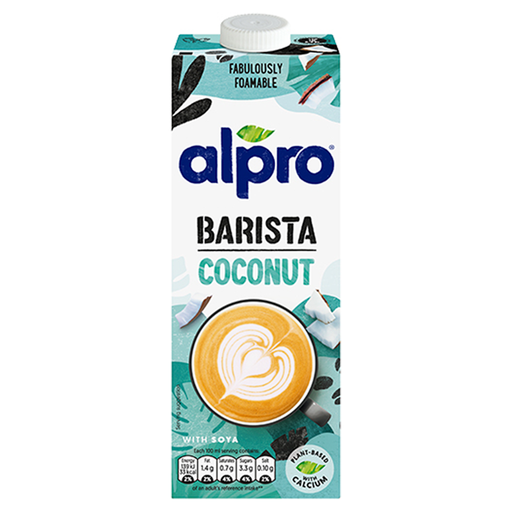 Image unavailable
Alpro Coconut Barista, 1 L
If you’re choosing a drink for an afternoon snack, check that this Barista recipe is suitable for the intended use. It contains soya, so compare the label with the child’s dietary restrictions. If vegan certification is essential, look for an explicit claim on the packaging.
Format: 1 L.
View on Joybuy
Frequently asked questions
What should you check if your child has an allergy and is having a snack at school?
Follow the child’s specific dietary restriction and the arrangements in their PAI, if they have one, then check the label on the product you buy. French National Health Insurance says a PAI can set out dietary restrictions at school or in after-school care. The DGCCRF also says that allergens must be clearly highlighted in the ingredients list of relevant foods.
How can you compare two coconut drinks for an afternoon snack?
Compare their nutritional values on the same basis, including sugars, fat and protein per 100 ml. Then read the ingredients and check whether calcium or vitamins have been added. The DGCCRF says nutritional information is given per 100 g or 100 ml, so make sure you don’t compare figures shown in different units.
Can you choose coconut milk for cooking as a drink for an afternoon snack?
Not without checking its intended use and composition: coconut milk for cooking isn’t interchangeable with a ready-to-drink plant-based coconut drink. For example, E.Leclerc states that its ECO+ coconut milk contains 51.8% coconut extract and 14 g of fat per 100 ml. Read the label of the product you’re considering before deciding how to serve it.


