If you’re looking for an alternative to milk in an evening tea or coffee, start by comparing coconut drinks in cartons: ingredients and sugar content vary from one recipe to another. If you’re mainly after a thicker texture, consider concentrated coconut milk for cooking instead, and adjust the amount to suit your mug. A ‘no added sugar’ or ‘lactose-free’ label doesn’t guarantee that a product is suitable for every allergy. Check the exact packaging for any allergen or cross-contamination warnings.
Who are these options for?
People avoiding milk or certain ingredients
If you need to avoid a particular ingredient, check the ingredients in each coconut recipe: it may also contain rice, pea or flavourings. If you have a diagnosed allergy, check the allergens and any cross-contamination warnings on the exact packaging.
People keeping an eye on the sugar in their evening drink
When choosing something to flavour tea or coffee, compare the ‘sugar-free’ or ‘no added sugar’ claim with the ‘of which sugars’ line in the nutritional information. The two claims don’t mean the same thing.
People looking for a thicker coconut texture
Concentrated coconut milk for cooking could suit you if you prefer a thicker texture, as long as you adjust the amount in your mug. The Bio Village and Tables du Monde products featured by E.Leclerc differ from coconut drinks in cartons because they contain a higher proportion of coconut extract.
What should you check before buying?
For an evening drink, first choose between a plant-based drink you can pour and coconut milk for cooking that you can measure out. Then compare the ingredients based on what matters most to you: a particular ingredient, sugar content or texture.
| What to consider |
What to check |
Who is this for? |
| Ingredients to avoid |
The ingredients in the exact product and, if you have an allergy, the listed allergens and any cross-contamination warnings. |
If I need to avoid a particular ingredient, the word ‘plant-based’ isn’t enough to help me decide. Around 33% of consumers would put this check at the top of their list. |
| Sugars |
The ‘sugar-free’ or ‘no added sugar’ claim, followed by the ‘of which sugars’ line per 100 ml. |
For my evening drink, I want to know how much sugar it contains, even when none has been added. This would be a priority for around 25% of consumers. |
| How to use it in your drink |
The ‘plant-based drink’ description and any instructions for using it in tea or coffee, if shown on the product. |
I’d like to pour a coconut drink into my mug without starting with a concentrated cooking ingredient. Around 25% of consumers would prioritise this use above all else. |
| Coconut texture |
The proportion of coconut and the fat content per 100 ml; allow for the amount you’ll need if the product is concentrated. |
I prefer a thicker texture and am happy to adjust the amount of coconut milk. Around 17% of consumers would prioritise this creamier texture. |
Common mix-ups to avoid
-
Confusing plant-based drinks with coconut milk for cooking
The Bio Village and Tables du Monde coconut milks for cooking listed by E.Leclerc contain 47% and 63% coconut extract respectively. They’re different recipes from coconut drinks in cartons, which are designed to be poured into a mug.
For tea or coffee, start by looking at plant-based drinks. If you prefer concentrated coconut milk, adjust the amount to get the texture you want.
-
Assuming ‘no added sugar’ means ‘sugar-free’
Carrefour Bio’s coconut drink is described as having ‘no added sugar’, but it still contains naturally occurring sugars. Other recipes may contain a sweetening ingredient, such as the rice syrup in Auchan’s coconut drink.
Read the exact claim, the ingredients list and the ‘of which sugars’ line in the nutritional information per 100 ml.
-
Assuming ‘plant-based’ means it’s suitable for allergies
Coconut recipes may also contain rice or pea protein. The product description alone won’t tell you whether it’s suitable if you need to avoid a particular ingredient.
If you have a diagnosed allergy, check the packaging of the product you buy, including any cross-contamination warnings. Ask a healthcare professional for advice if needed.
-
Choosing a pack size without checking storage instructions
Auchan’s coconut drink product page says to refrigerate it after opening and consume it within five days. Storage instructions vary by product.
Check the guidance on your pack and choose a size that suits how often you have an evening drink.
A carton that’s too large for your needs may not be finished within the recommended time.
Brands to know
Alpro
Carrefour features an Alpro coconut drink in a carton labelled ‘sugar-free’.
- This wording sets it apart from a recipe that simply claims to have ‘no added sugar’.
- If you need to avoid an allergen, check the ingredients and any cross-contamination warnings for the exact product.
Carrefour Bio
Carrefour’s organic plant-based coconut drink in a carton is labelled ‘no added sugar’.
- The ingredients list states that it contains 3.8% coconut extract and naturally occurring sugars.
- It also contains rice starch and pea protein, which may matter if you need to avoid specific ingredients.
Bjorg
Auchan describes Bjorg’s organic coconut drink as a way to add a hint of coconut to tea or coffee.
- The product featured by Auchan is specifically described as suitable for adding to a drink.
- Compare recipes before choosing: Carrefour’s ‘sugar-free’ Bjorg product is different from the standard recipe featured by Auchan, which contains cane sugar.
Auchan
The retailer features a one-litre carton of plant-based coconut drink.
- The ingredients list shown by Auchan includes coconut and rice syrup.
- After opening, the product page says to keep the drink in the fridge and consume it within five days.
Bio Village / Tables du Monde
These brands featured by E.Leclerc offer coconut milks for cooking in small packs. They’re different from plant-based coconut drinks.
- The products featured contain 47% coconut extract for Bio Village and 63% for Tables du Monde.
- For a mug, compare the fat content per 100 ml and measure out the amount you need to get the texture you want.
Products for these uses on Joybuy
These two products suit different needs: a Barista coconut drink to consider for hot drinks, and a small pack of coconut milk if you’d rather measure out a more concentrated base. If you need to avoid a particular ingredient, always check the packaging of the exact product.
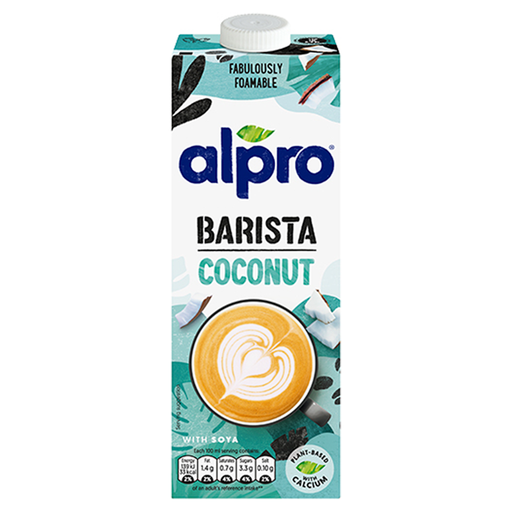 Image unavailable
Alpro Coconut Barista, 1 L
Worth considering if you’d like to add a coconut drink to a hot beverage. The pack contains 1 L. If you avoid soya or are looking for a sugar-free drink, check the ingredients and nutritional information for the exact product. If you have an allergy, also check for any cross-contamination warnings.
View on Joybuy
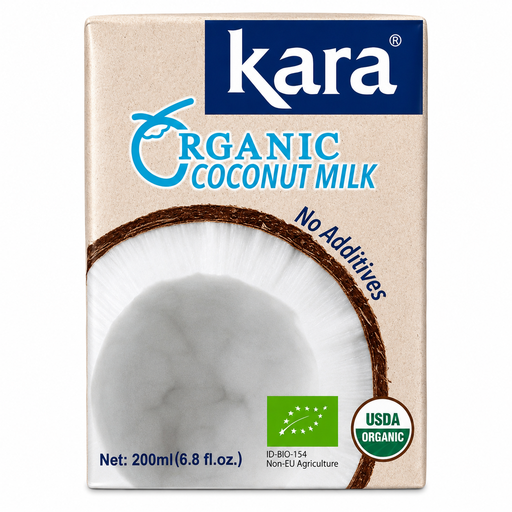 Image unavailable
Kara Organic Coconut Milk UHT 17% Fat, 200 ml
This 200 ml pack of coconut milk could suit you if you’d prefer to measure out a small amount for your drink. Check the fat content on the packaging, along with any instructions for using it in a hot drink. If you need to avoid a particular ingredient, also check the ingredients and any cross-contamination warnings.
View on Joybuy
Frequently asked questions
Are plant-based coconut drinks always lactose-free?
No. Don’t assume that a claim on one product applies to all coconut drinks. If you need to avoid lactose, check the claim and ingredients list for the exact product. If you need to avoid milk proteins because of an allergy, also check the precautions on the packaging.
Does ‘no added sugar’ mean ‘sugar-free’?
No. Carrefour Bio’s product page says its coconut drink, labelled ‘no added sugar’, contains naturally occurring sugars. To compare two recipes, also check the ‘of which sugars’ line per 100 ml.
Should you choose concentrated coconut milk for tea or coffee?
Choose it if you’re looking for a thicker texture and would like to adjust the amount. If you want something to pour straight into your mug, start by looking at plant-based coconut drinks instead. The Bjorg product featured by Auchan is specifically described as suitable for tea or coffee.
Can a rice and coconut drink replace infant formula?
No. The warning shown by E.Leclerc for Bio Village’s rice and coconut drink says it isn’t suitable as a replacement for breast milk or infant formula for babies under one. Don’t choose a plant-based drink from this range as a substitute for their infant feeding products.


