For a regular cuppa with no added sugars
You add an organic plant drink to your tea, coffee or chicory and prefer a recipe labelled ‘no added sugars’. The Carrefour Bio and Auchan Bio product pages feature coconut drinks of this kind.


For an evening cup of tea, coffee or chicory, a carton of coconut-based plant drink is a good starting point if you want something you can pour straight in. Culinary coconut milk is better suited to adding a small amount to a richer recipe: the Carrefour Bio products featured here contain 1.8 g and 17 g of fat per 100 ml respectively. Then check the organic label, ingredients and nutritional information for your chosen product, particularly if avoiding added sugars is important to you.
You add an organic plant drink to your tea, coffee or chicory and prefer a recipe labelled ‘no added sugars’. The Carrefour Bio and Auchan Bio product pages feature coconut drinks of this kind.
You’re mainly looking for coconut flavour in your cup. The Bjorg organic drink product page recommends it for this use, but the recipe contains unrefined cane sugar.
You’d rather add a small amount of concentrated coconut milk to a drink or recipe than fill your cup with a carton of plant drink. The Carrefour Bio and Valcom culinary coconut milks illustrate the difference in composition.
Start by distinguishing between a ‘coconut-based plant drink’ and culinary ‘coconut milk’. To check whether a product is organic, look for the European ‘Euro-leaf’ logo, which the Ministry of Agriculture describes as an indicator of organic production. Then compare the recipe and nutritional values per 100 ml.
| Criteria | What to check | Who is it for? |
|---|---|---|
| Added sugars | The ‘no added sugars’ claim, the ingredients list and the ‘sugars’ figure per 100 ml. Organic does not mean no added sugar: the Bjorg organic drink contains cane sugar. | If I often make an evening cuppa, I want to choose a recipe with no added sugars; around 40% of consumers rank this as a priority. |
| Coconut flavour | Whether the product page or packaging recommends it for tea or coffee, and whether it contains coconut-based ingredients. The Bjorg product page specifically mentions tea and coffee. | In my tea or coffee, I mainly want to taste the coconut, even if that means considering a recipe with sugar; flavour is a priority for around 30% of consumers. |
| Richness | The product description, its coconut content and the fat per 100 ml. Carrefour Bio lists 17 g for its culinary coconut milk, compared with 1.8 g for its coconut drink with no added sugars. | For an occasional recipe, I’d rather have a richer texture than a large, light cuppa; around 30% of consumers prioritise this result. |
The two Carrefour Bio products are intended for different uses: they contain 17 g and 1.8 g of fat per 100 ml respectively.
Decide whether you want to fill a cup or add a small amount to a recipe, then compare the fat content and coconut percentage on the packaging.
Organic refers to how a product is made, not whether its recipe contains sugar. The Bjorg organic drink contains unrefined cane sugar, while the Carrefour Bio drink featured here is labelled ‘no added sugars’.
If this distinction matters to you, check both the claim on the front of the pack and the ingredients list.
E.Leclerc advises checking local availability for its Bio Village organic rice and coconut drink; the Aldi product page we viewed lists its organic coconut milk as unavailable.
Check the product at the shop or collection service you plan to use before making it your regular purchase.
Storage instructions vary: Auchan Bio says to consume within five days of opening, while the Valcom organic coconut milk featured by Joybuy France should be used within three days.
Make a note of when you opened it and follow the storage instructions for the product you’ve bought.
Carrefour France lists a 1 L carton of organic coconut plant drink with no added sugars, as well as 330 ml of organic culinary coconut milk.
E.Leclerc lists a 1 L carton of organic rice and coconut drink with no added sugars.
The Bjorg organic coconut plant drink product page recommends using it in tea or coffee.
Auchan France lists a 1 L carton of organic coconut drink labelled ‘sugar-free’.
Alpro describes its Barista range of plant drinks, including coconut-based varieties, as suitable for coffee-based drinks.
These three products are concentrated coconut milks or cream to consider using in small amounts for an occasional recipe. If you’re making tea or coffee, check the recommended use on each pack; these products are not the carton coconut plant drinks mentioned above.
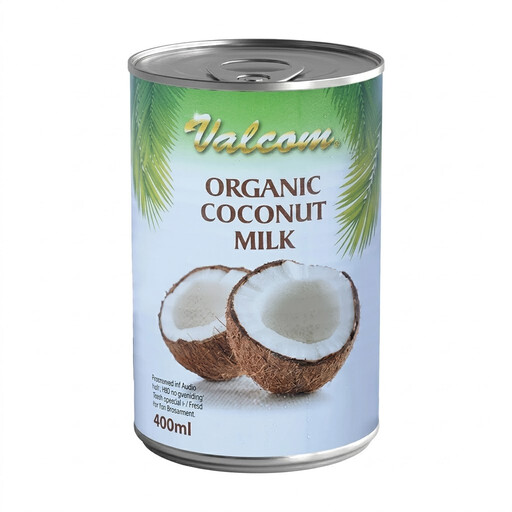 Image unavailable
Worth considering in small amounts if you’re making a richer recipe now and then. The Joybuy France product page states that it contains 68% coconut extract; compare the fat content on the label and check the recommended uses before adding it to a hot drink.
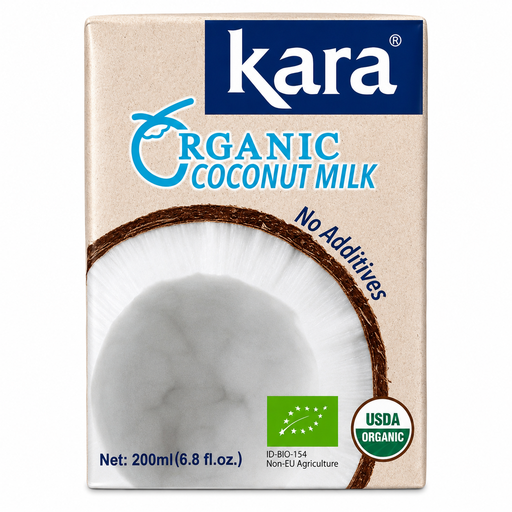 Image unavailable
The 200 ml pack may suit you if you want to measure out coconut milk for a small recipe. The product title states that it contains 17% fat; check the figure on the packaging, along with the organic logo and guidance on using it in a hot drink.
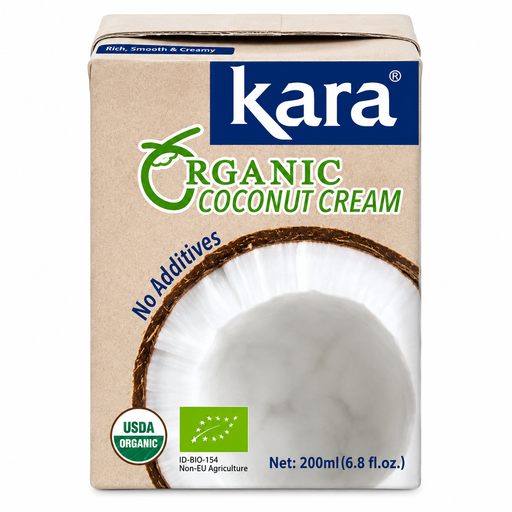 Image unavailable
This 200 ml carton of coconut cream is better suited to an occasional recipe than to pouring into a large cup like a plant drink. The product title states that it contains 24% fat; check the label, organic logo and preparation advice if you’d like to use it in a hot drink.
Look for the European ‘Euro-leaf’ logo on the packaging of the specific product. According to the Ministry of Agriculture, this logo identifies products that comply with European organic production rules; on its own, it doesn’t tell you how much sugar or fat the recipe contains.
Not necessarily. Start by reading the product description and ingredients before measuring it into a cup. Carrefour France lists 1.8 g of fat per 100 ml for its organic coconut drink with no added sugars, compared with 17 g per 100 ml for its organic culinary coconut milk.
First compare the product description and ingredients list, then check the sugar and fat content per 100 ml. If you plan to add it to tea or coffee, also look at the usage advice and storage instructions after opening.
Follow the instructions on the product you’re using. Auchan France says its organic coconut drink can be kept in the fridge at a maximum of +6 °C for up to five days, while the Joybuy France product page for Valcom organic coconut milk says to use it within three days of opening.
Bio Village rice and coconut drink is not suitable as a replacement for breast milk or infant formula for a baby under one, as stated on its E.Leclerc product page. Don’t choose a plant drink intended for adults as a substitute for your baby’s infant feed.