
Livraison le jour même ou le lendemain

Qualité garantie

Débloquez vos offres de bienvenue: Livraison GRATUITE | Jusqu'à -80 % | 30 jours d'essai gratuits à JoyPlus
Téléchargez l'application
A few spoonfuls of coconut cream are enough to transform a curry, a soup or a dessert. But from one product to the next, the result can change completely. A tin that's too watery, an oversized pack or an endless list of ingredients can also lead to waste and throw your recipe off balance.
Before buying a coconut cream in a tin, a UHT version or a professional pack, here are the three pitfalls to avoid.
The texture can also change naturally inside the packaging. Remember to shake the bottle or carton before use to mix the fatty layer and the watery part thoroughly.
For a coconut milk for curry or a sauce that needs to stay nicely coating, a fat content of between 20 and 24% generally gives a richer, thicker base than lighter coconut drinks or milks. For a soup, a cocktail or a smoothie, a lower percentage can work perfectly well though.
The fat content alone isn't enough to judge the taste or concentration. Also look at the proportion of coconut extract: a product containing 88%, 90%, 95% or 99.9% extract won't give the same result in cooking.
A short ingredient list makes the choice clearer, but the presence of stabilisers isn't necessarily a bad sign. Xanthan gum, guar gum or certain emulsifiers help maintain a smooth texture, especially after cooking.
If you're looking for a vegan coconut cream or lactose-free coconut cream, check the label and allergen information carefully. The products shown here are made from coconut and water, with differences in formulation between references. Coconut must still be taken into account in your own allergen checks.
To choose an organic coconut cream, look for a certification and a logo clearly displayed on the packaging. Simply saying 'natural' is not the same as organic certification.
Before opening, UHT coconut cream is generally stored at room temperature, in a dry place away from light. After opening, always follow the manufacturer's instructions. If the label recommends it, transfer the contents of the tin to a suitable container before placing it in the fridge.
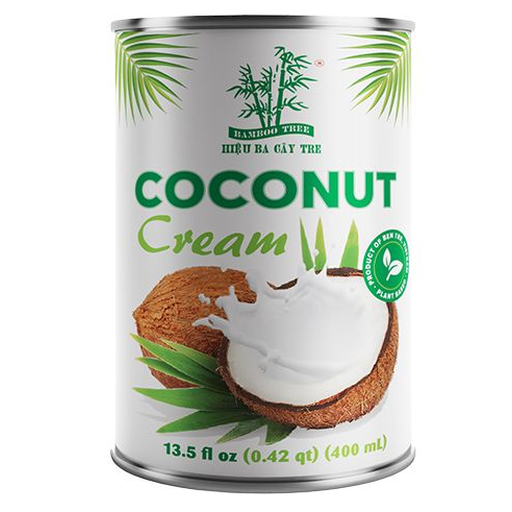
Why this choice suits this profile: At 400 ml, this size is ideal for a first family recipe without forcing you to buy a large quantity.
The stated content of 20 to 22% makes it easy to distinguish from a thinner coconut milk.
With 88% coconut extract and no declared preservatives, it works well in curries, desserts, soups and sauces alike.
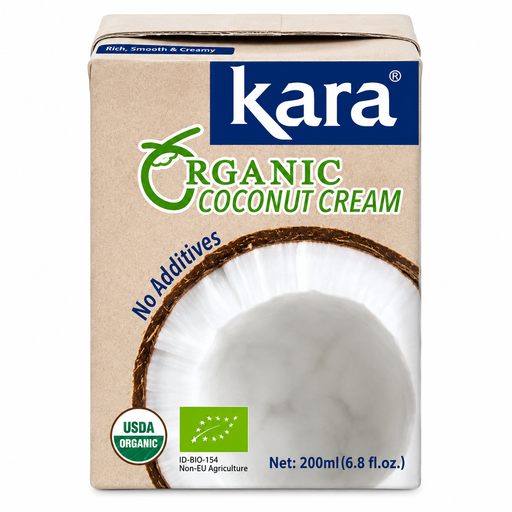
Why this choice suits this profile: This small UHT carton makes measuring easy and avoids having leftover product sitting in the fridge.
The 24% fat content and the stated composition of organic coconut extract and water make comparison much simpler.
A 200 ml format, UHT treatment and no declared stabilisers or preservatives according to the product listing.
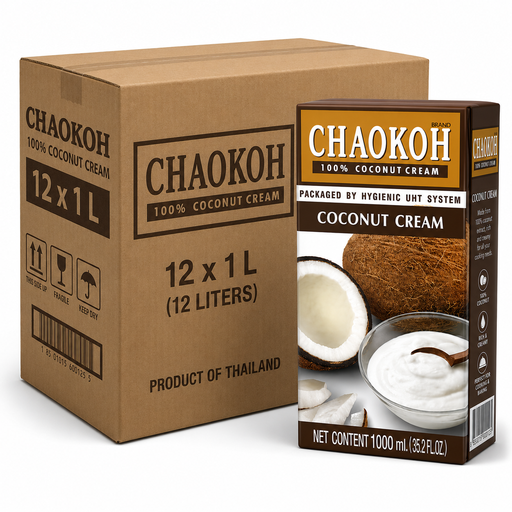
Why this choice suits this profile: This case of 12 one-litre bottles is clearly aimed at restaurants, caterers and kitchens that regularly prepare large volumes.
The one-litre bottles avoid accumulating small units during a busy service, while still allowing you to adjust quantities easily.
23% fat content, one-litre bottles and a case of 12 units, with refrigeration required after opening.
We've put together a complete selection, updated in real time, of products that meet these exacting criteria and European safety regulations.
For a curry, add the coconut cream gradually after the spice paste, then simmer on a low heat. Prolonged boiling can alter its texture. In a soup, stir it in at the end of cooking to preserve its creaminess.
For a coconut cream for desserts, choose a product with around 22 to 24% fat if you want a thick consistency. It can be used to make a cream, sticky rice, a vegan ganache or homemade ice cream. For a cocktail or a drink, start by shaking the pack, then adjust the texture with water, juice or a plant-based drink.
A cream made from coconut and water generally does not contain lactose. However, always check the ingredient list and allergens stated on each pack, especially if you have an allergy or intolerance.
It depends on the product. Some listings recommend using it within 24 hours, while others state 3 to 5 days in the fridge. Transfer the product to a clean, sealed container and follow the instructions on the packaging as a priority.
For occasional cooking, 200 ml or 400 ml formats are usually the easiest to use up in one go. One-litre cartons and bulk cases are better suited to households that cook often, professionals and recipes that need multiple portions.