
Livraison le jour même ou le lendemain

Qualité garantie

Débloquez vos offres de bienvenue: Livraison GRATUITE | Jusqu'à -80 % | 30 jours d'essai gratuits à JoyPlus
Téléchargez l'application
A cluttered hallway quickly feels chaotic: coats piled on a chair, bags on the floor, scarves nowhere to be found when you’re about to leave. Yet choosing a coat rack for the hallway isn’t just about comparing styles. The type of fixing, the weight it can hold and the space available all directly affect how durable and safe your storage will be.
Here are the main pitfalls to avoid, the criteria to check and a selection of solutions suited to different homes in the UK.
A coat rack with 6 hooks might seem roomy enough. However, not every hook is necessarily designed to hold a thick coat or a heavy bag. Some models state a maximum overall weight, while others specify a maximum weight per hook. These two figures are not interchangeable.
For a family, make sure to check:
A hook fixed into concrete, a plasterboard partition or a tiled wall all require different fittings. The wrong wall plugs can cause the fixture to pull out, even if the hook itself looks robust.
Screws and wall plugs are not always supplied. You need to choose a fixing that is compatible with the surface, then check the tightness regularly. In a rented property, a coat rack without drilling can save you from making lots of holes. However, adhesive solutions are generally only suitable for lightweight items.
Wood, black metal or vintage finishes: these styles fit easily into a hallway, but their appearance alone tells you nothing about their stability. A freestanding coat rack that is too light can tip over if several bags are hung on one side. Similarly, a wall-mounted structure must remain perfectly level and be securely anchored.
A wall-mounted coat rack frees up floor space and is particularly suited to narrow hallways. However, it does require careful marking of drilling points and a fixing suitable for the wall. A wall hook is ideal for fitting out a small area, the back of a door or a bathroom.
A freestanding coat rack can be moved easily and requires no drilling. You then need to consider:
Adhesive models are handy for hanging keys, lightweight towels, hats or small bags. Before applying, the surface must be clean, dry, smooth and completely grease-free. Wallpaper, rough walls and delicate surfaces are generally best avoided.
A wooden coat rack brings a warm touch to the hallway. When some product listings mention FSC-certified wood, it means the wood comes from forests managed according to the certification scheme’s criteria. It’s best to avoid prolonged dampness and abrasive cleaning products.
Painted steel and aluminium alloys are suitable for frequent use, provided their surfaces are properly protected. In a bathroom, choose a finish that resists moisture and wipe away water marks regularly.
Measure the available width before ordering. In a narrow hallway, a bar of 60 to 65 cm or several separate hooks often fit more easily than a bulky piece of furniture. If you’re looking for cloakroom storage, a model with shelves offers extra space for baskets, hats and accessories.
Also think about the height at which you install things. Hooks intended for children should be within reach, without encouraging them to climb. Heavy items should be spread out rather than concentrated on a single point.
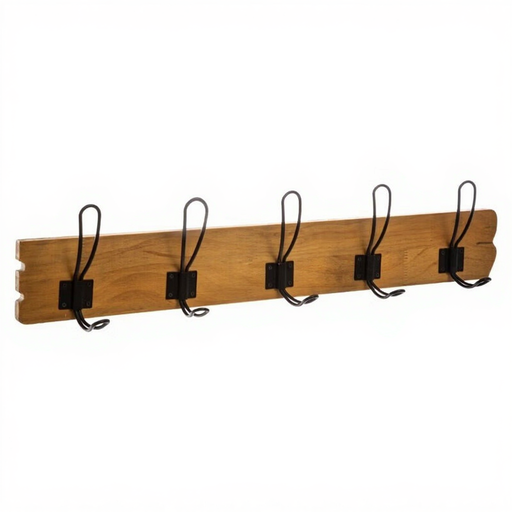
Why this choice suits the profile: With its 5 double hooks and dimensions of approximately 63.6 × 14 cm, this model works for a family hallway without cluttering the floor.
The listing specifies the number of double hooks and reminds you to use fixings suitable for your wall, rather than suggesting a simple screw will do.
A pine frame and cast iron hooks, designed for wall mounting and suitable for coats, jackets, bags and scarves.

Why this choice suits the profile: Its 6 hooks, 5 shelves, 360° rotating base and removable mirror meet the needs of a family or a multi-purpose space.
The different storage areas are detailed separately, with a stated maximum load of 44 lb, approximately 20 kg. The unit must still be placed on a level floor and items distributed evenly.
Tool-free assembly is promised, and the structure combines rubberwood and painted steel. Clean with a slightly damp soft cloth.

Why this choice suits the profile: This coat rack for the hallway is ideal for households that want to hang coats, bags, hats or towels on a wall-mounted structure.
The stated load capacity reaches 66 lb, approximately 30 kg, but only with suitable wall plugs or anchors. Where possible, fixing into a stud is preferable.
A rubberwood bar and aluminium alloy hooks, with rounded edges and a finish that is said to resist moisture and rust.
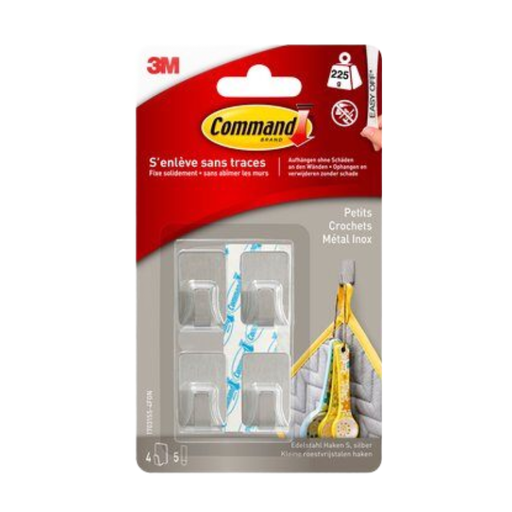
Why this choice suits the profile: This compact hook goes up without screws or tools on a smooth indoor surface. It’s suitable for keys, small accessories and lightweight items.
The stated load capacity is limited to approximately 225 g. This indication stops you from mistakenly using it for a heavy coat or a full bag.
A stainless steel finish, no-drill application and removal that is said to leave no holes or residue on compatible surfaces, when the instructions are followed.
We’ve put together an updated selection of products that meet these criteria for organising a hallway, bedroom, bathroom or office.
To install a wall-mounted coat hook, start by checking for any pipes and cables. Use a spirit level, choose wall plugs according to the type of wall and tighten without forcing. Once items are hung, be careful not to exceed the load stated on the product listing.
For an adhesive wall hook:
A soft cloth is usually enough to care for wood and metal. Solvents and abrasive sponges can damage the varnish or paint. Check the screws, base and joints regularly, especially in a busy hallway.
A wall-mounted coat rack or a series of separate hooks keeps the floor clear. Measure the width of the wall and check the depth taken up by hanging coats. For a few lightweight accessories, an adhesive model may be enough if the surface is compatible.
It depends on the stated load capacity, the adhesive system and the type of surface. The hooks shown here are intended for lightweight items when their listing clearly limits the capacity. For several winter coats or heavy bags, a screwed fixing is generally preferable.
Allow at least one spot per person, then add a few hooks for bags, hats and guests. A coat rack with 6 hooks suits a medium-sized household, while a model with shelves provides extra space for accessories.