
Livraison le jour même ou le lendemain

Qualité garantie

Débloquez vos offres de bienvenue: Livraison GRATUITE | Jusqu'à -80 % | 30 jours d'essai gratuits à JoyPlus
Téléchargez l'application
A clumping plant-based cat litter can make bags lighter, simplify cleaning and meet the needs of households looking to reduce their use of mineral litter. However, not all formulas are created equal. From tofu, tapioca and wheat to bentonite-based blends, some marketing claims deserve closer scrutiny.
Plant-based material is not automatically compostable, whatever the conditions. Soiled clumps, faeces and any additives may be subject to different requirements depending on your local authority. Even when litter is marketed as compostable cat litter or flushable, check the packaging and local regulations. If in doubt, place the waste in a sealed bag with your household rubbish.
Granule size, transport and moisture affect the amount of fine particles. Litter advertised as dust-free or low-dust may still produce some dust when poured. Open the bag gradually, avoid shaking it and store it in a dry place.
A clump that forms quickly is only genuinely useful if it remains compact and does not stick to the bottom of the tray. A highly absorbent formula may also require more frequent topping up if the layer is too thin. The real cost therefore depends on the amount used, how often waste is removed and how many cats you have.
Fine granules are often popular with cats used to sand, but they are more easily scattered under their paws. Larger granules can sometimes reduce the amount of litter carried around the home, although some cats may find the transition less straightforward.
Look for concrete information: net weight, recommended depth and removal method. A layer of 5 to 7 cm is often recommended for the plant-based formulas featured here, while some products recommend up to 8 cm. Remove clumps every day to keep the clean area fresh and limit odours.
Fast-clumping litter is convenient for busy households, but also check how well the clumps hold together when scooped. A clump that breaks apart increases consumption and leaves more residue in the tray.
Claims such as “odour control”, “activated charcoal”, “plant fibres” or “bicarbonate” describe a formulation, not a guarantee of identical results in every home. The number of cats, ventilation and how often the tray is cleaned all play a major role.
For refillable cat litter, choose packaging that suits your storage space. Keep bags sealed, dry and out of direct sunlight. Damp litter can clump before it is even used and become less comfortable for your cat.
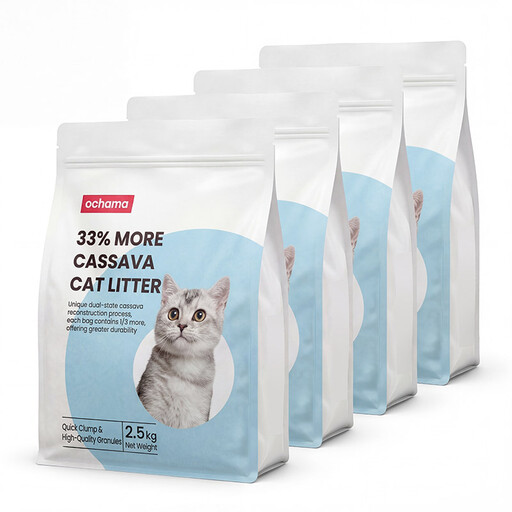
Why this choice suits this profile : This pack of four bags lets you build up a reserve without placing multiple orders, which is convenient when making the switch to plant-based litter for the first time.
The description mentions cassava and corn granules, with no fragrance or colouring, as well as a formula presented as low-dust. This makes the marketing claims relatively easy to assess.
Clumps advertised as compact and non-sticky, 2,5 kg × 4 packaging and a fragrance-free formula.
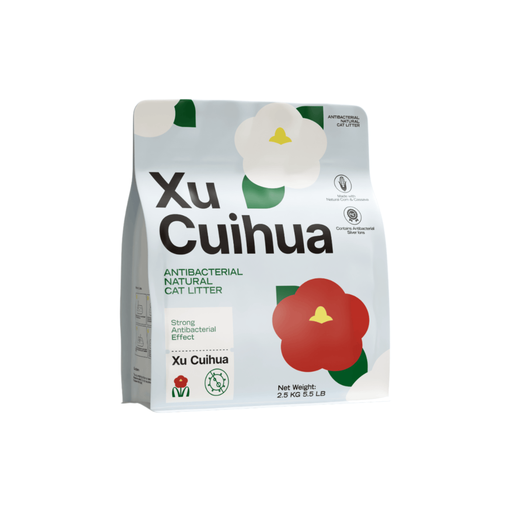
Why this choice suits this profile : Its individual pack size and plant-based composition are suitable for households focused on daily maintenance and odour control.
The product details specify a depth of 5 to 7 cm, daily removal of clumps and dry storage. These instructions make everyday use more predictable.
Plant-based materials, advertised fast clumping and a silver-ion technology that the manufacturer presents as a way to limit odour-causing bacteria.
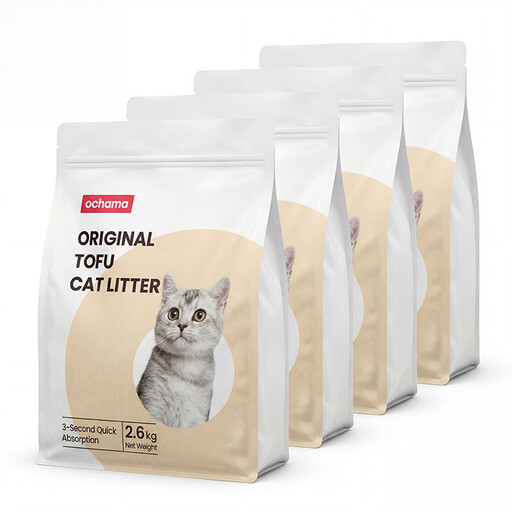
Why this choice suits this profile : This 10,4 kg pack is suitable for households with several cats or for anyone wanting to buy less frequently.
The stated 2,0 mm diameter and fragrance-free tofu formula provide concrete details rather than a general promise of comfort.
Tofu, advertised absorption and clumping, four 2,6 kg bags, and flushing down the toilet only where permitted by local regulations and the plumbing system.
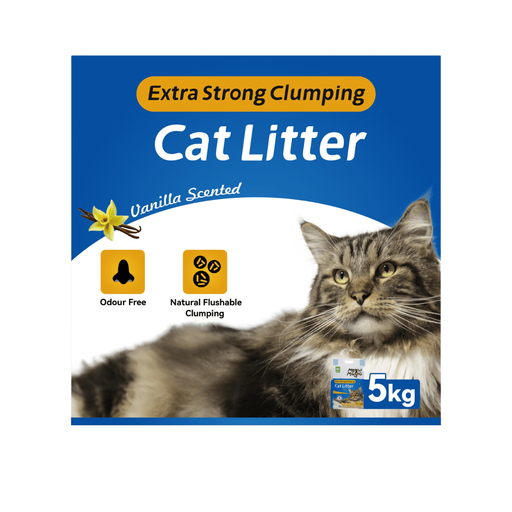
Why this choice suits this profile : This formula is designed for owners looking for litter suitable for both kittens and adult cats, with a plant-based texture and straightforward regular maintenance.
The product details specify a layer of 5 to 7 cm, daily removal and a transition that should be monitored. However, any claim that it is “compostable” or “flushable” should be checked against local requirements.
Tofu fibres, advertised low dust emission, reinforced clumps and a 5 kg pack size.
We have put together a complete, real-time updated list of products that meet these strict selection criteria and European safety regulations.
A layer of 5 to 8 cm is a useful guide, adjusted according to the size of the tray, the number of cats and the manufacturer's recommendations. A layer that is too thin quickly reaches the bottom and may cause clumps to stick.
How long it lasts varies according to the number of cats, the tray size and how often waste is removed. Daily cleaning helps keep the clean litter usable for longer. Replace all the litter when odours persist despite cleaning or when the granules become damp.
Not always. Some products are marketed as flushable, but large clumps can cause blockages. Check the instructions, your local authority's guidance and the type of drainage system. If in doubt, dispose of the litter with household rubbish in accordance with local regulations.