
Livraison le jour même ou le lendemain

Qualité garantie

Débloquez vos offres de bienvenue: Livraison GRATUITE | Jusqu'à -80 % | 30 jours d'essai gratuits à JoyPlus
Téléchargez l'application
Choosing the right litter for your cat is not a trivial decision. It's a choice that impacts their well-being, the cleanliness of your home, and even your ecological footprint. Faced with a jungle of options on the shelves, it can be hard to know where to start. Clumping plant-based litter stands out as a smart solution that ticks the boxes for both practicality and environmental respect.
Our goal? To guide you step-by-step in finding that hidden gem—the one that suits both your feline friend and your standards, all without the marketing fluff.
Before diving into our top picks, let's review the key factors that make all the difference.
Plant-based litters utilise various renewable raw materials. These mainly include wood fibres, corn, barley, soy, or recycled paper. Each material has its own strengths:
Ideally, a good biodegradable litter can be composted (be sure to check your local regulations!) or disposed of in household waste with minimal environmental impact.
The litter's texture is a crucial factor. Most cats prefer fine, soft granules that don't stick to their paws. A low-dust litter is essential for protecting your cat's respiratory system (and yours!), especially if anyone in the household is prone to allergies.
Some innovations go even further by offering preventative health monitoring. A health-monitoring cat litter, for example, can integrate colour-changing indicators that react to certain urinary abnormalities. It's a simple way to be alerted to the earliest signs of a urinary issue.
A good odour-control litter does more than just mask smells with perfume. Quality plant-based litters trap ammonia thanks to the porosity of their fibres. For enhanced effectiveness, some formulas include natural ingredients like activated charcoal, which is renowned for neutralising odours without harsh chemicals.
We've selected a few standout gems, each catering to specific needs.
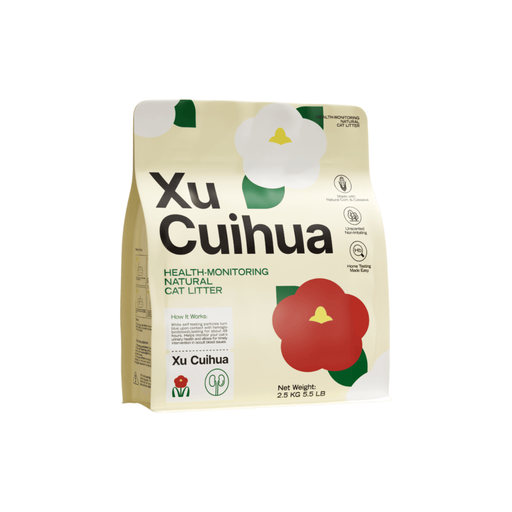
Why it stands out: This litter doesn't just keep things clean; it also watches over your cat's health. It contains particles that react to traces of blood in the urine, a potential indicator of urinary problems.
Advantages:
Who is it for? Ideal for owners of senior cats, cats with a history of urinary problems (cystitis, stones), or anyone who wants to keep a close eye on their companion's health at home.
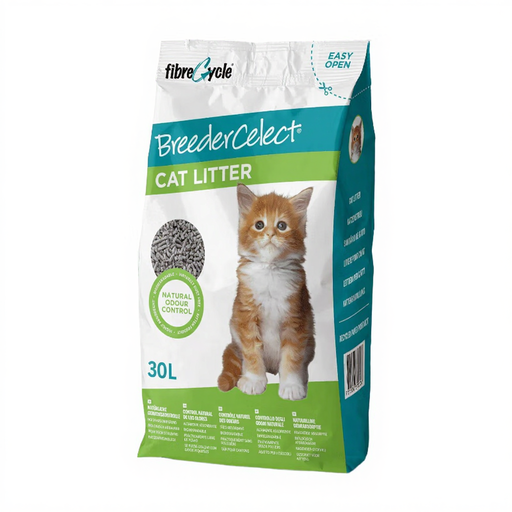
Why it stands out: Its key strength? An uncompromising commitment to eco-friendliness. Made exclusively from recycled newspaper, it is fully biodegradable and compostable. Although it comes in pellet form (rather than fine, clumping granules), its absorbency is impressive.
Advantages:
Who is it for? Perfect for owners who prioritise ecology above all, as well as for households with allergic people or pets.
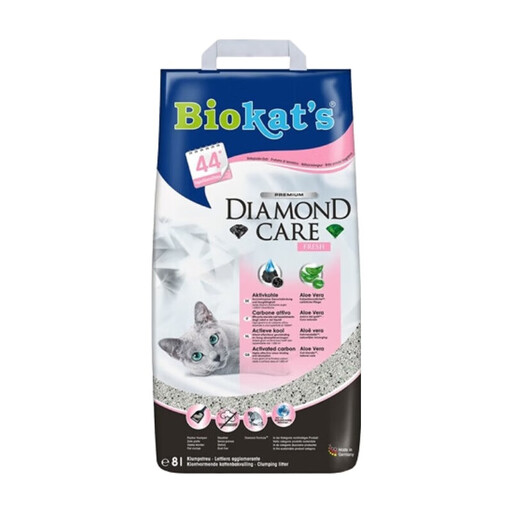
Why it stands out: This litter focuses on top-tier odour control performance. Although its base is natural clay, it incorporates plant-based components like activated charcoal from coconut shells for optimal odour neutralisation. Aloe vera is added to care for paw pads and ensure maximum softness.
Advantages:
Who is it for? The top choice for apartments, multi-cat households, or anyone who demands impeccable odour control.
If recycled paper ticks all your boxes (eco-friendliness, cat comfort), know that there are many other options available. Discover different textures and formats by exploring our full selection.
Discover Our Full Range of Paper Cat Litter
To help your cat adjust gently, gradually mix the new litter with the old one over one to two weeks. Start with a 25% mix of the new litter, then increase the amount every two to three days until you've made a complete switch.
Yes, as long as you choose the right one. Plant fibres have a porous structure that naturally absorbs and traps ammonia. Good clumping action allows you to remove urine daily, thus eliminating the source of bad odours. For maximum effectiveness, formulas enriched with activated charcoal are incredibly potent.
This is strongly discouraged, even for biodegradable litter. Although it can break down, it risks clogging your pipes or disrupting the operation of sewage treatment plants and septic systems. The safest option is to dispose of it in your household waste or compost it, if permitted by your local council.