
Livraison le jour même ou le lendemain

Qualité garantie

Débloquez vos offres de bienvenue: Livraison GRATUITE | Jusqu'à -80 % | 30 jours d'essai gratuits à JoyPlus
Téléchargez l'application
A clumping plant-based cat litter makes cleaning the tray easier while meeting the expectations of households that want to reduce dust and favour plant-based materials. However, not all products are equal when it comes to absorption, clump formation or odour control.
Marketing claims can also cause confusion. A litter advertised as biodegradable isn't necessarily home-compostable, while a formula presented as flushable may still be discouraged by its manufacturer. Here are the points to check before placing your order.
The term biodegradable cat litter means that some or all of the materials can break down under certain conditions. That doesn't mean the clumps can be safely placed in a home compost bin.
The word "flushable" also deserves caution. Drainage systems, individual wastewater treatment plants and local regulations vary across the UK. Several products in this selection recommend disposing of waste in a sealed bag, even when their description mentions flushing in small quantities.
Effectiveness against odours depends on several factors: absorbency, how quickly clumps form, how often you scoop and the ventilation around the tray. A natural fragrance or the addition of activated charcoal can help, but nothing replaces daily cleaning.
Litter with activated charcoal is often appreciated for its adsorption capacity. However, check its composition and whether any fragrance has been added, especially if your cat turns its nose up at scented litters.
A very fine texture can feel nice under the paws, but it also tends to scatter around the tray. Larger granules sometimes reduce tracking under the paws, at the cost of a less familiar feel for a cat used to very fine mineral litter.
Even a formula described as dust-free cat litter or low-dust should be poured slowly in a well-ventilated room. During the transition, watch your pet's reaction and make the change gradually.
To choose a cat litter that's easy to clean, look for descriptions that mention compact, crumble-resistant clumps that don't stick to the bottom of the tray. Well-formed clumps let you remove only the wet area, without wasting the rest of the litter.
The recommended depth is usually between 5 and 8 cm, depending on the product. Follow the instructions on the packaging: a layer that's too thin reduces absorption, while an overfilled tray encourages scattering.
Tofu cat litter is made from plant fibres derived from soya or tofu. Tapioca cat litter is based on cassava starch, sometimes supplemented with corn, plant fibres or a binding agent.
Wheat is another plant-based option. Brands like CATSAN Natural state they use wheat derivatives and form clumps designed to make scooping easier. In every case, compare the net weight, the stated volume and the absorbency described by the manufacturer. Weight alone isn't enough to choose between two litters.
Don't automatically flush clumps down the toilet. Follow the product's instructions as well as your local council's rules and your home's drainage system. To avoid blockages, disposing of waste in a sealed bag with your household rubbish is often the safest option.
A product described as compostable should also specify the conditions under which it can be composted. Animal waste can make compost unsuitable for certain uses, particularly for plants grown for food.
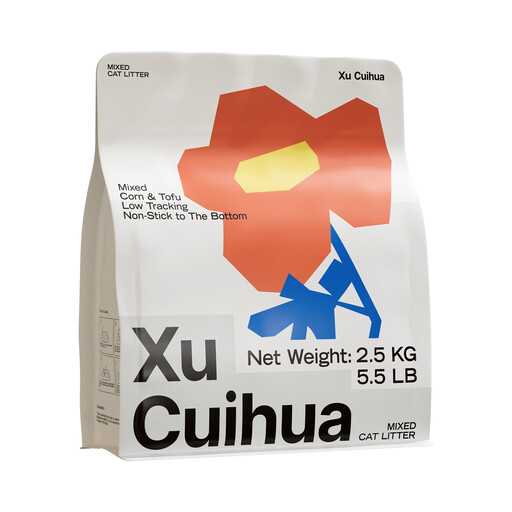
Why this suits this profile: At 2.5 kg, this pack lets you try a tofu-based, plant-derived litter without committing to a large bag straight away. The description mentions a fine texture, low dust and firm clumps.
The description states that only the wet area should harden, which limits waste when scooping. However, the manufacturer recommends not flushing the clumps down the toilet.
A blend of tofu and plant materials, clumps described as solid, a low-stick texture and fine granules.
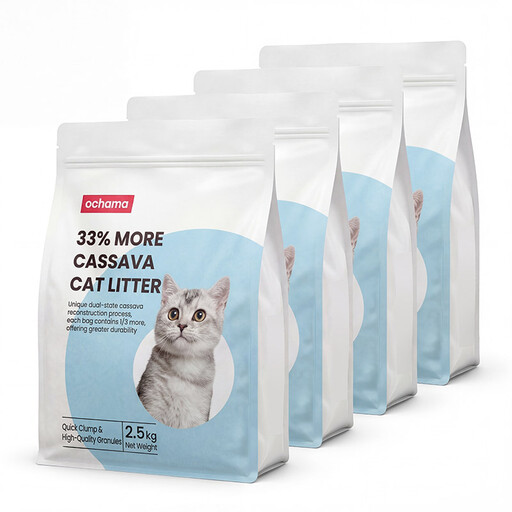
Why this suits this profile: The four-bag pack suits people who want to keep the tray topped up and have a reserve stored away from moisture.
The ingredients are clearly listed: cassava starch, corn starch, plant fibres, guar gum and bicarbonate. The description states it's free from fragrance and colourants.
Granules described as low-dust, tight clumping and odour control provided by plant fibres and formulation agents.
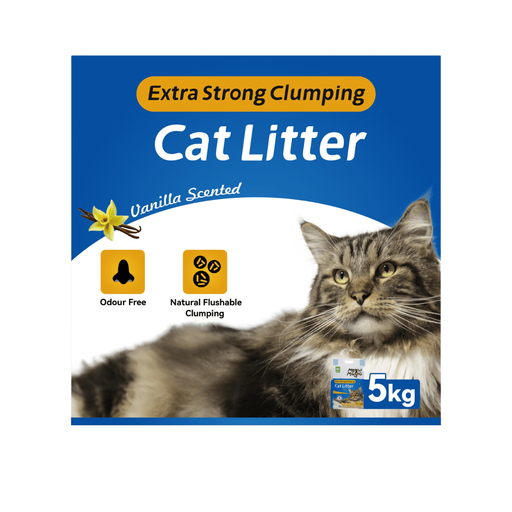
Why this suits this profile: Its 5 kg bag and tofu-fibre formula suit a household that refreshes the tray often or lives with multiple cats.
The description distinguishes between daily scooping, topping up and a full change. It recommends checking local rules before any disposal.
Plant-based tofu fibres, reinforced clumping as stated, low dust and odour control highlighted by the manufacturer.
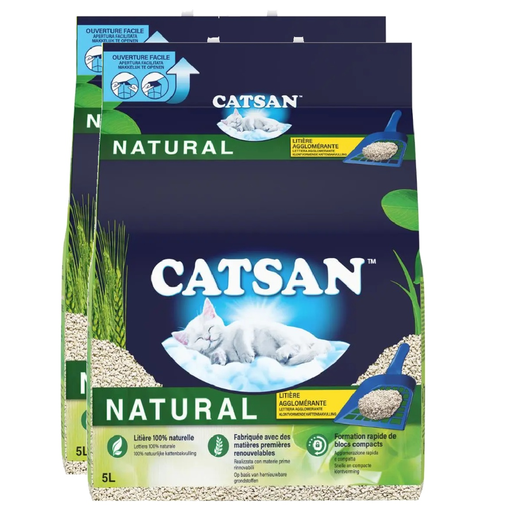
Why this suits this profile: At 10 L, this pack reduces the number of orders for households with a dry storage space that use plant-based litter every day.
The instructions recommend disposing of the litter with household waste and advise against flushing it down the toilet, despite its plant-based origin.
Wheat derivatives, clumps described as compact, enhanced absorption and a 10 L format.
We've put together a comprehensive, real-time selection of products that meet these demanding criteria, while also taking European safety regulations into account.
Most manufacturers recommend a layer of 5 to 8 cm, sometimes up to 10 cm depending on the material. Check the instructions, then maintain this level by adding litter after each scoop. Faeces and wet clumps should be removed every day.
It depends on the number of cats, the size of the tray, the amount used and how well the litter clumps. For a single cat, you can usually top up the level regularly and do a full change every two to four weeks, depending on the condition of the tray. With multiple cats, maintenance often needs to be more frequent.
Not automatically. Even when a product is described as flushable or compostable, check its label and your local regulations. The products in this selection don't all have the same instructions: some explicitly ask you to dispose of waste with household rubbish. When in doubt, place clumps and waste in a sealed bag.