
Livraison le jour même ou le lendemain

Qualité garantie

Débloquez vos offres de bienvenue: Livraison GRATUITE | Jusqu'à -80 % | 30 jours d'essai gratuits à JoyPlus
Téléchargez l'application
A clumping plant-based cat litter can reduce waste, simplify cleaning and limit dust in your home. But not all products are created equal. Between promises of biodegradability, odour control or flushable litter, certain details can lead to unnecessary expense — or even a poor experience for your cat.
Here are the points to check before you buy, along with a selection of products suited to different needs.
A litter made from tofu, tapioca, cassava or wheat may be marketed as a natural cat litter or compostable litter. That doesn't mean the clumps can go into a home compost bin or be flushed down the toilet.
Compatibility depends on the product's composition, your plumbing and local regulations. Even when a manufacturer states that its litter is "flushable", it's best to follow the precautions on the packaging, only flush small amounts and avoid this method with a septic tank unless you've checked first.
A dust-free cat litter can still release particles during transport, when you fill the tray or when your cat moves around. The size and density of the granules, as well as the condition of the bag, matter just as much as the label.
For a kitten, an older cat or a sensitive animal, pour the litter gently into a clean tray and watch their reaction. A gradual transition from the old litter can also help prevent rejection.
An anti-odour cat litter doesn't replace daily removal of stools and clumps, or regular cleaning of the tray. Scents can also put some cats off. Unscented formulas that rely on absorption, activated charcoal or plant fibres are often easier to judge day-to-day.
The clump should form around the wet area without sticking excessively to the bottom of the tray. Compact blocks make removal easier and stop you throwing away a large amount of clean litter.
Check the recommended depth, usually between 5 and 8 cm depending on the product. Remove clumps every day and top up with fresh litter when the level drops. A tofu or tapioca litter may be light, but it needs to hold together well after absorption.
Tofu fibres, tapioca, cassava, corn and wheat derivatives are commonly used plant materials. Also check for any added perfumes, dyes, binders or minerals.
In a multi-cat household, compare the net weight, volume, how often you need to replace it and how easy it is to store. A large pack can reduce the risk of running out, but it must stay perfectly dry to prevent premature clumping inside the bag.
Activated charcoal is designed to adsorb certain molecules that cause bad smells. However, it doesn't replace good ventilation or regular tray cleaning. The ochama Activated Carbon Mixed Deodorizing Cat Litter claims a formula combining tofu, bentonite, deodoriser and activated charcoal. It's therefore aimed at those looking for a mixed litter rather than a purely plant-based one.
Occult blood detection in urine calls for particular caution. The indicator particles can draw your attention to a colour change, but they are only a screening tool. Any unusual colouring, a lack of urine or repeated straining in the tray should be reported to a vet. The litter is not a substitute for a medical diagnosis.
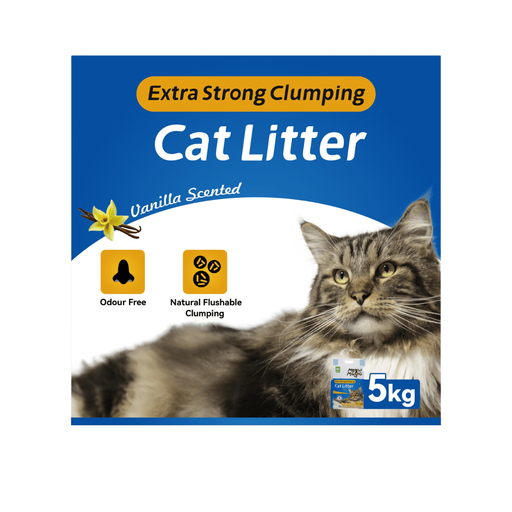
Why this suits this profile: Its 5 kg bag is ideal for a first transition to a plant-based litter. The formula is said to be clumping, low-dust and suitable for both kittens and adult cats.
Its tofu fibre composition and care instructions let you assess clumping quality in practice, rather than relying solely on an eco-friendly promise.
Plant-based tofu fibres, claimed reinforced clumping, odour control and a 5 kg format.
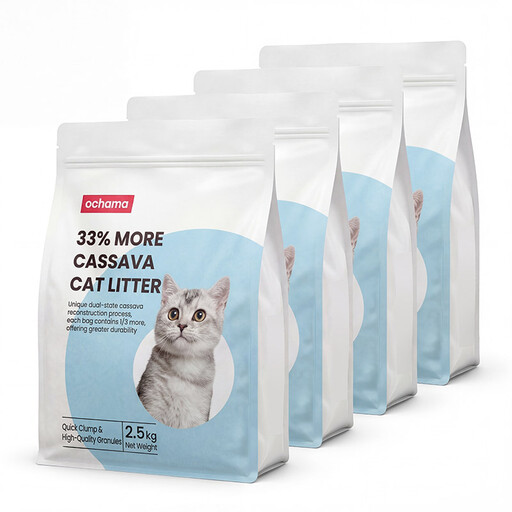
Why this suits this profile: Its multi-pack format and tapioca granules, claimed to be low-dust, suit households that want to reduce how often they handle the litter.
The product states it is free from perfume and dye, and recommends disposing of clumps with household waste. A precaution that avoids generalising toilet disposal.
Tapioca and plant fibres, claimed low-dust granules, compact clumping and four 2.5 kg bags.
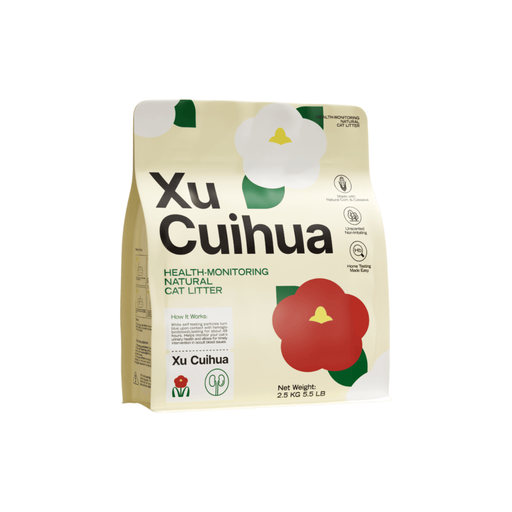
Why this suits this profile: Owners of older cats or those who have had urinary issues before can monitor the colour of clumps more closely during daily cleaning.
The colour detection is presented as a simple screening indicator. It does not replace a veterinary analysis or professional advice.
Plant fibres, firm clumping, claimed low dust level and integrated colour indicator.
For a wheat-based formula, the CATSAN NATURAL Agglomerating Plant-Based Cat Litter is also claimed to be biodegradable and clumping. However, the manufacturer recommends disposing of clumps with household waste, not in the toilet. Some tapioca or tofu litters, on the other hand, state that small amounts can be flushed. Always check the label and your local council's guidelines.
We've put together a comprehensive, real-time list of products that meet these demanding selection criteria and European safety requirements.
A layer of 5 to 8 cm is generally recommended. This allows liquid to clump before it reaches the bottom of the tray. Adjust the depth if your cat likes to dig or if the tray is particularly large.
How long it lasts depends on the number of cats, the size of the tray and how often you remove waste. Remove clumps and stools every day, top up with fresh litter if needed and replace the entire contents every two to four weeks, depending on the condition of the tray.
Not always. Some products allow it under certain conditions, while others clearly forbid it. Even with a litter marketed as soluble, avoid flushing large amounts and check your local sanitation rules. When in doubt, disposing of it in a sealed bag with household waste remains the safest option.