
Livraison le jour même ou le lendemain

Qualité garantie

Débloquez vos offres de bienvenue: Livraison GRATUITE | Jusqu'à -80 % | 30 jours d'essai gratuits à JoyPlus
Téléchargez l'application
Well-chosen clothing storage must meet three very practical requirements: available space, the weight of your garments and how frequently you use them. In a student bedroom, a narrow hallway or a family dressing area, a piece of furniture that looks attractive in photos can quickly prove bulky, unstable or difficult to maintain.
Before buying, start by identifying your needs: frequently worn clothing, seasonal coats, folded laundry, shoes or items to store under the bed. This approach makes it easier to compare a clothes rack, a fabric wardrobe, vacuum storage bags or an entryway unit with a coat rack based on how they will actually be used.
A wardrobe with several shelves may appear spacious, but each level often has a different maximum load. Stacks of jeans, coats or household linens place considerable pressure on the structure. Check the maximum supported load for every shelf as well as the hanging rail, rather than relying solely on the number of compartments.
A multifunctional storage unit may seem suitable on paper, only to block a door, restrict movement or protrude from a recess. Measure the available width, depth and height, while also allowing enough room to open doors or move a wheeled clothes rack.
In an entryway, think about everyday circulation: a unit that is too deep will make coats and shoes harder to reach. In a bedroom, also check the distance from the bed, window and electrical outlets.
A fabric cover or compression bag limits exposure to dust, but it cannot replace a dry, well-ventilated room. Clothing stored while still damp can develop odours and become damaged. Before any long-term storage, wash the items, dry them completely and fold them without compressing them excessively.
For a bedroom wardrobe, a rail measuring around 90 to 100 cm may be sufficient for one person with moderate storage needs. A family will generally require several hanging areas and dedicated space for folded laundry. Compare the advertised dimensions with those of your longest garments: coats, dresses and jackets do not store in the same way as T-shirts.
Compartments are useful for separating different categories, but their number is not everything. Examine their height, accessibility and whether they include dedicated space for shoe storage or accessories.
A metal frame can be perfectly suitable for a dismantlable clothes rack, provided the connectors are properly secured and the floor is level. A fabric wardrobe generally combines tubes, connectors and non-woven fabric: lightweight and practical in a rental property, it must nevertheless be assembled carefully and not overloaded.
For a larger entryway unit, check the panel material, total weight and fixing instructions. A bench or shelf should only be used within the maximum load specified by the manufacturer.
A fully enclosed cover provides effective protection against everyday dust. However, it is not necessarily waterproof. For seasonal clothing, vacuum storage bags help reduce volume, but check the closures regularly and avoid storing items that do not tolerate prolonged compression well.
Maintenance is straightforward: use a lightly damp cloth on rigid surfaces, dry-clean or wash covers according to their care labels, and store everything in a dry place.
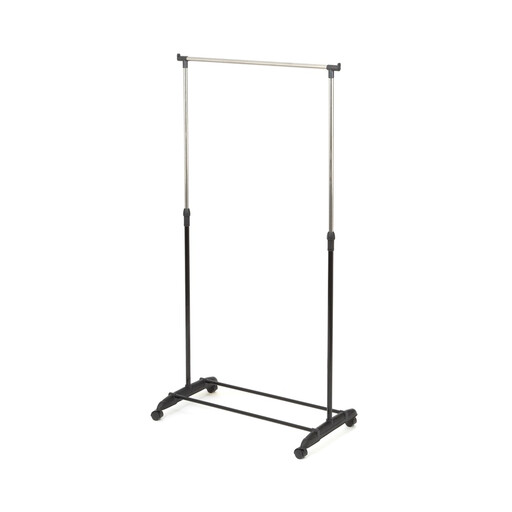
Why it is a good match: This clothes rack is ideal for students, renters and anyone who wants to hang clothing without installing a bulky wardrobe.
Its adjustable height of 85 to 165 cm allows the space to be adapted for jackets, shirts and longer garments. Its 78 × 42 cm base makes it easier to check the footprint before buying.
Metal and plastic construction, adjustable height, dismantlable design and easy relocation thanks to the castors listed in the product details.
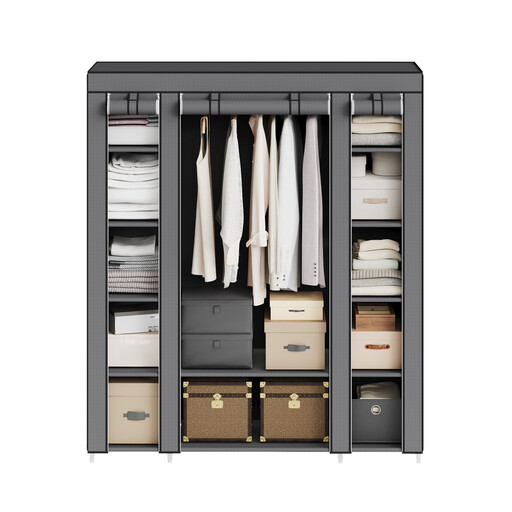
Why it is a good match: Its numerous compartments meet the needs of a family bedroom or a home without a built-in dressing area.
The stated load ratings distinguish between the shelves, supporting up to 5 kg each, and the hanging rail, supporting up to 15 kg. This makes it easier to distribute clothing rather than overload a single level.
Dimensions of 45 × 150 × 175 cm, 12 compartments, a 120 g/m² non-woven fabric cover and 16 mm metal tubes.
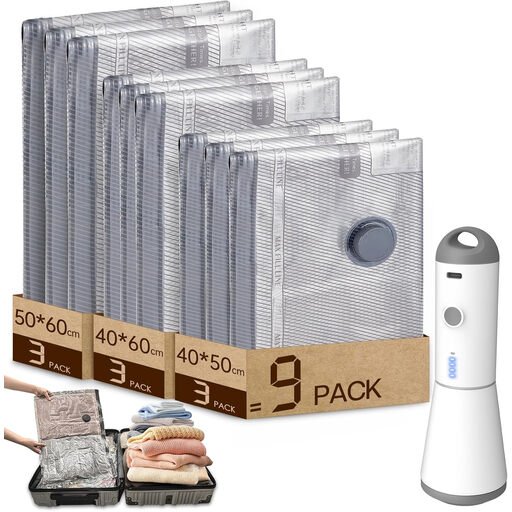
Why it is a good match: This solution is designed for households that need to store coats, duvets or travel clothing in a wardrobe or under the bed.
The three sizes allow you to match the volume to the items being stored. To maintain compression, however, the double-zip closure and valve must be sealed completely.
Set of 9 bags, sizes from 40 × 50 to 50 × 60 cm, cordless pump included and materials listed as polyamide and polyethylene.
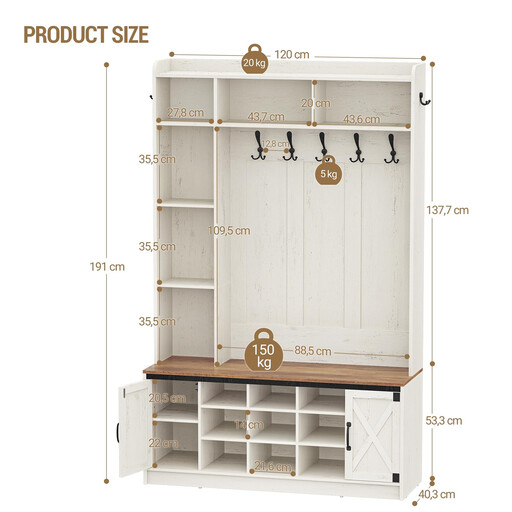
Why it is a good match: Its vertical design brings together clothing, shoes, bags and accessories in a family entryway or rental apartment.
Its dimensions of 40.8 × 120.5 × 191.5 cm must be checked before purchase. The adjustable shelves can then be configured to create space for boots, boxes or shoes.
15 open compartments, 7 hooks, colour-adjustable ambient lighting and a bench rated for a maximum load of 150 kg.
Explore an up-to-date selection of solutions for organising clothing, accessories and shoes to suit the space available.
Start by sorting your clothing into four categories: garments to hang, folded items, shoes and seasonal clothing. Keep the pieces you wear every week at eye level. Less frequently used clothing can go on upper shelves or into vacuum storage bags, provided it has been dried completely first.
In a small bedroom, pair a clothes rack for everyday items with boxes stored under the bed. In an entryway, choose a vertical unit with hooks and dedicated shoe storage. With a fabric wardrobe, leave a few centimetres of clearance around the structure to make it easier to open the cover and allow air to circulate.
A fabric wardrobe is suitable if you want to protect your clothing more effectively from dust and have enclosed shelving. A clothes rack offers more direct access and is generally easier to move. The right choice therefore depends on how frequently you use the items and the level of protection you require.
No. Check the care label and avoid compressing delicate, structured or bulky items for long periods, as they may lose their shape. Vacuum storage bags are better reserved for seasonal clothing, and you should check the condition of the closures regularly.
It depends on the humidity, textile cleanliness and ventilation in the room. For storage lasting several months, wash and dry clothing thoroughly, avoid filling the unit completely and air the space regularly.