
Livraison le jour même ou le lendemain

Qualité garantie

Débloquez vos offres de bienvenue: Livraison GRATUITE | Jusqu'à -80 % | 30 jours d'essai gratuits à JoyPlus
Téléchargez l'application
Whether you're furnishing a student bedroom, a compact Parisian flat, a family home or a narrow hallway, clothing storage solutions have to work with very real constraints: limited space, easy assembly, dust protection and quick access to your belongings. Yet some purchases prove disappointing after just a few weeks, often because certain features weren't checked before ordering.
A wardrobe might look spacious in a photo but turn out to be impractical day-to-day if the shelves are too close together or the hanging rail doesn't allow you to hang coats properly. The genuinely usable capacity depends on the available width, the height of your clothes and the balance between hangers, folded items and accessories.
A lightweight fabric wardrobe is easy to move, but it doesn't bear weight like a rigid piece of furniture. Check the maximum load each shelf can take, as well as the rail. If placed on an uneven floor or overfilled, the structure can become unstable.
Vacuum bags significantly reduce the volume of your clothes, but they don't replace a clean, dry storage space. They are particularly suited to seasonal clothing, duvets and infrequently used linen, rather than items you wear every week. Also, avoid filling them to the brim so the seal stays effective.
Measure the available width, depth and height, while leaving enough space to open a door or walk past the furniture. A portable clothes rail that is 45 cm deep can work in a bedroom, whereas a 35 cm hallway unit will be easier to fit in a corridor.
For under-bed storage, measure the clearance between the floor and the bed base. A bag that is too thick may not slide properly, even if the product description says it compresses down to a compact size.
A structure made from metal tubes and plastic connectors can be lightweight and simple to assemble. But you still need to distinguish the maximum load of a shelf from that of the rail. So, if a wardrobe is rated at 5 kg per shelf and 15 kg on the rail, you must fill it within these limits, without concentrating all the weight in one compartment.
For a wardrobe with a cover, also examine the cover material, the fastening system and ventilation. A non-woven fabric cover limits dust build-up, but it doesn't make the wardrobe moisture-proof.
A clothes organiser should stay easy to open and clean. For compression bags, choose a double zip closure, a valve that works with the pump and dimensions suited to the items you want to store.
A cordless vacuum pump runs on battery power: its battery life, weight and size matter just as much as the advertised extraction speed. Keep electrical components away from water and heat. After use, wipe the pump with a dry cloth and store the bags clean and completely dry.
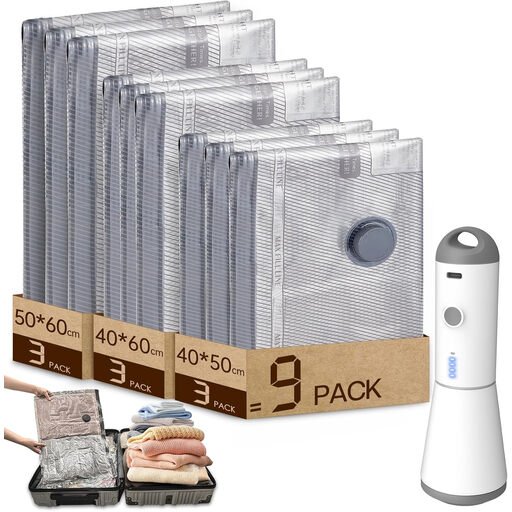
Why this choice suits this profile: This set is ideal for a first seasonal sort-out, a house move or a trip. It includes three bag sizes and a cordless pump.
The three sizes stop you putting a small item in an oversized bag. The double zip and valve are designed to minimise air loss during storage.
9 reusable bags in 40 × 50, 40 × 60 and 50 × 60 cm, pump included, stated weight 810 g.
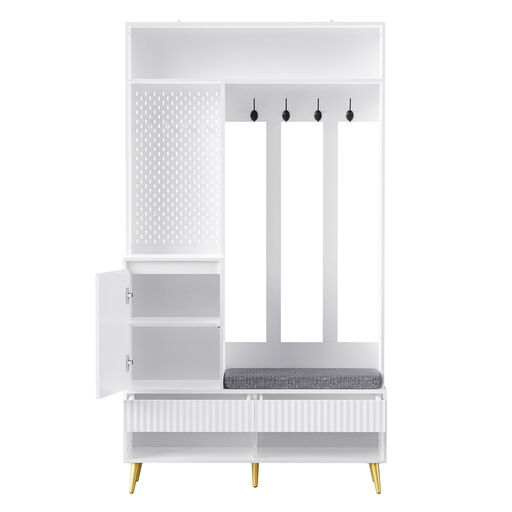
Why this choice suits this profile: To organise an entrance, this set brings together coats, shoes and small accessories in a single unit measuring 100 × 35 × 180 cm, according to the stated dimensions.
It stops you cluttering a narrow passage with multiple extra pieces of furniture by combining a coat rack, a door, two drawers and an integrated bench.
Multi-functional organisation, 35 cm depth and a practical shoe bench for everyday use.
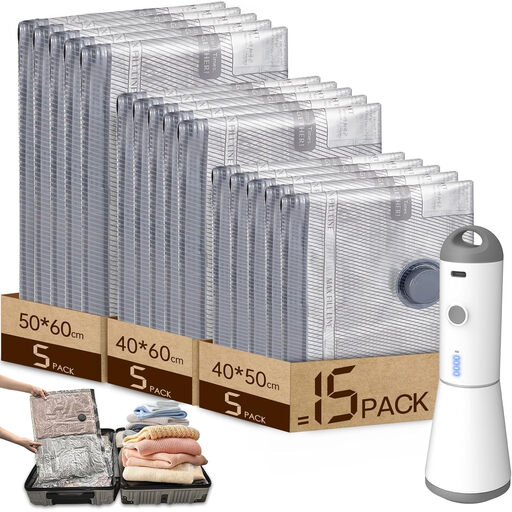
Why this choice suits this profile: This format works well for families, frequent travellers and anyone who regularly stores clothes, duvets or household linen.
The three sizes minimise wasted space, while the pack of 15 bags makes it easy to rotate between wardrobe, suitcases and under-bed storage.
15 bags, cordless pump, double zip closure, sizes 40 × 50, 40 × 60 and 50 × 60 cm.
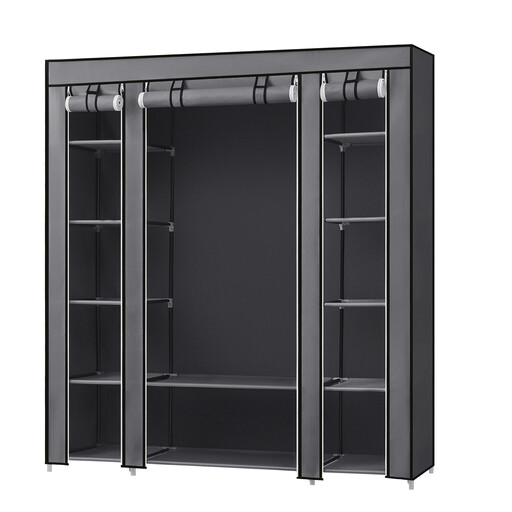
Why this choice suits this profile: With its 12 compartments, this covered wardrobe lets you separate clothes, shoes and accessories without any permanent drilling – a real advantage in a rental property.
The dimensions of 45 × 150 × 175 cm and the stated load limits let you check it will fit your room before buying, rather than relying on photos alone.
12 compartments, 16 mm metal tubes, 120 g/m² non-woven fabric cover and a rail rated at 15 kg.
These two solutions serve different needs. A fabric wardrobe is ideal for clothes you wear regularly: shirts, trousers, jackets and folded items. It keeps your belongings visible and avoids compressing fabrics.
Vacuum bags are perfect for space-saving storage: winter clothes, duvets, household linen or travel items. For long-term storage, place them in a chest, wardrobe or under the bed, in a dry spot away from high temperatures.
To organise an entire bedroom, you can pair a portable clothes rail for everyday wear with compression bags for seasonal items. In the hallway, a unit with a coat rack and shoe bench keeps everything together before you head out.
We've put together a full selection, updated in real time, of products that meet these demanding criteria as well as European safety standards.
Start by identifying unused spaces: under the bed, corners, wall height and the area behind a door. Reserve the hanging rail for clothes you wear often and use vacuum bags for seasonal items.
It depends on the fabric, the condition of the bag and the storage conditions. Before sealing the bag, clothes must be clean and completely dry. Check the seal regularly and air the items before wearing them again.
Yes, provided its maximum load, width and number of compartments match the actual volume of clothes. In a family home, distribute the weight across the shelves and avoid overloading the rail.