
Livraison le jour même ou le lendemain

Qualité garantie

Débloquez vos offres de bienvenue: Livraison GRATUITE | Jusqu'à -80 % | 30 jours d'essai gratuits à JoyPlus
Téléchargez l'application
Piles of clothes accumulating, closets overflowing, and the seasonal wardrobe change turning into a headache… A good storage system is the key to a calm and organised home. However, the market is flooded with solutions that look perfect in photos but prove disappointing in use. A poorly chosen clothing storage box can quickly become a source of frustration.
Before you invest, it's essential to know the most common pitfalls so you don't throw your money down the drain.
To make an informed choice, you need to focus on a few objective criteria that guarantee the product's functionality and durability.
A good closet organiser must meet specific needs. Here are the points to check to ensure your purchase will be a true everyday ally.
The material determines the durability and use of your box.
Before you decide on a set of storage boxes, measure the space where you plan to place them: the height, width, and depth of your shelves, your wardrobe, or the space under your bed. Compare these measurements with the exact dimensions of the product, not just its capacity in litres. Foldable storage boxes are an excellent choice for small spaces, as they can be stored flat when empty.
It's often the little things that make all the difference. Handles on multiple sides make them easier to handle. A well-fitting or zipped lid is essential to protect the contents. For optimised wardrobe storage, some boxes have a small transparent window or a label holder to identify the contents without having to open everything.
To help you visualise how these criteria apply, here are a few options suited to different needs and user profiles.
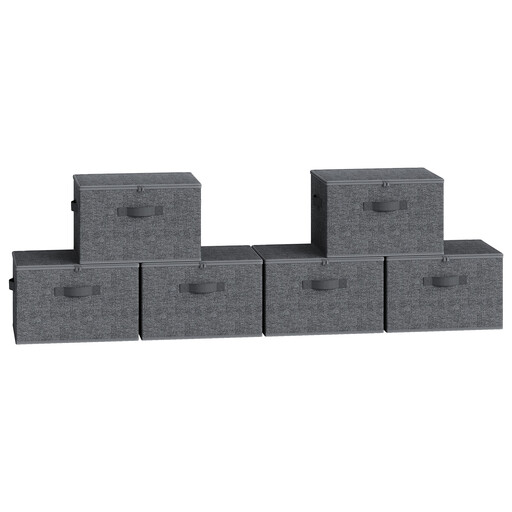
Ideal for: Perfect for families or major seasonal clear-outs, this set of six boxes helps to standardise and systematise closet organisation. Each 30L box is perfect for jumpers, linens, or children's clothes.
Unlike flimsy boxes that collapse, these feature a 2mm cardboard structure and reinforced handles. The zipped lid provides effective protection from dust, a clear advantage over simple lids that gape open.
An economical set of 6 boxes to organise everything. Being foldable, they free up maximum space when empty. Generous capacity of 30L per box.
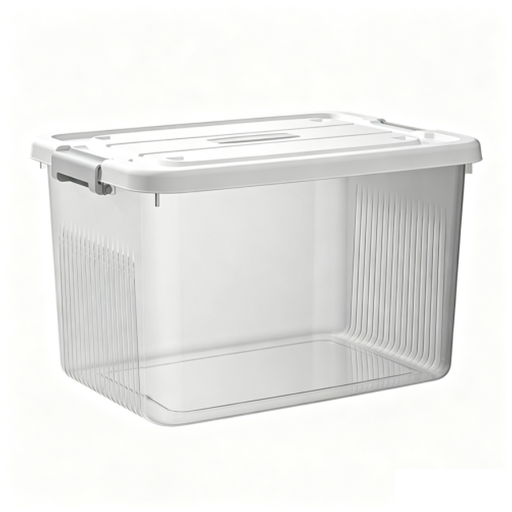
Ideal for: Perfect for areas like the basement, garage, or attic. Its thick PP plastic structure protects contents from moisture and impacts, which is essential for long-term storage.
This model solves the problem of boxes that deform under weight. Its design with reinforcing ribs and a non-slip base allows for stable and secure stacking, maximising vertical space without the risk of collapse.
Transparent plastic material to identify contents at a glance. Stackable and durable structure for heavy-duty use.
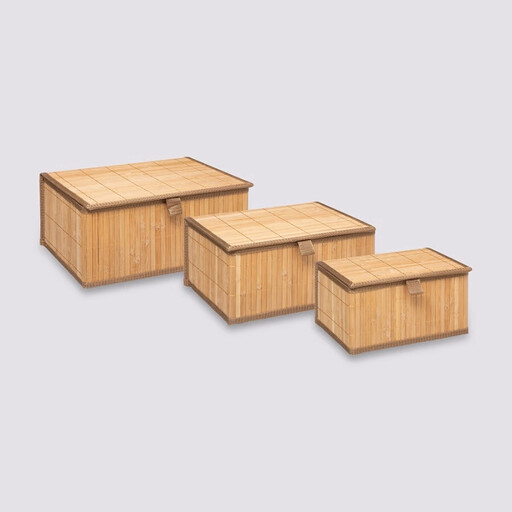
Ideal for: This option is designed for those who want their storage solutions to be an integral part of their decor. Ideal on a living room shelf, in a bookcase, or in a bathroom for a natural and tidy style.
No more plastic or fabric boxes you'd rather hide. The bamboo adds a warm and aesthetic touch. These boxes are designed to be seen, combining utility with style without compromise.
Natural and durable material (bamboo). Elegant design that complements your decor. Set of three sizes for greater flexibility.
We've curated a complete selection of products that meet our strictest quality and durability criteria.
For long-term storage, ensure clothes are perfectly clean and dry before packing them away. For areas prone to dampness like a basement, opt for plastic boxes with an airtight lid. You can also add desiccant packets (silica gel) inside to absorb any residual moisture.
The longevity of a fabric storage box with a lid depends on the quality of its materials and how it's used. A model with thick non-woven fabric (over 80 g/m?), reinforced seams, and a rigid cardboard structure will last several years with seasonal use. If you plan to move it often, check that the handles are securely stitched.
Yes, most good-quality foldable storage boxes are designed to be stacked, provided they have a rigid internal structure (base and walls). To ensure stability, it's advisable to fill them evenly and place the heaviest boxes at the bottom. Always check the manufacturer's recommendations regarding the maximum supported load.