
Livraison le jour même ou le lendemain

Qualité garantie

Débloquez vos offres de bienvenue: Livraison GRATUITE | Jusqu'à -80 % | 30 jours d'essai gratuits à JoyPlus
Téléchargez l'application
A cluttered bedroom cannot be tidied simply by adding more furniture. The choice of storage, its dimensions and where it is placed all have a direct impact on everyday convenience. A clothes storage box that is too deep soon becomes awkward to handle, while a poorly sealed vacuum bag can regain its volume within a few days.
When organising a dressing room, wardrobe or utility room, three mistakes come up time and again:
Here are the criteria to consider before choosing your clothes storage solution.
Measure the available space before placing your order:
For example, a 40 × 30 × 25 cm box will fit on many shelves. However, it should not be filled beyond its stated maximum static load. Heavy clothes, shoes and household linen require a sturdier structure than small accessories.
Non-woven fabric and reinforced cardboard have the advantage of being lightweight and easy to fold away. They are suitable for jumpers, bed linen and seasonal clothing stored in a dry room. However, these materials are generally not machine washable, so it is best to spot-clean them with a slightly damp cloth.
For regular use, choose reinforced handles, neat stitching and a lid that stays securely in place. In a utility room, make sure air can circulate and never store damp laundry in a closed box.
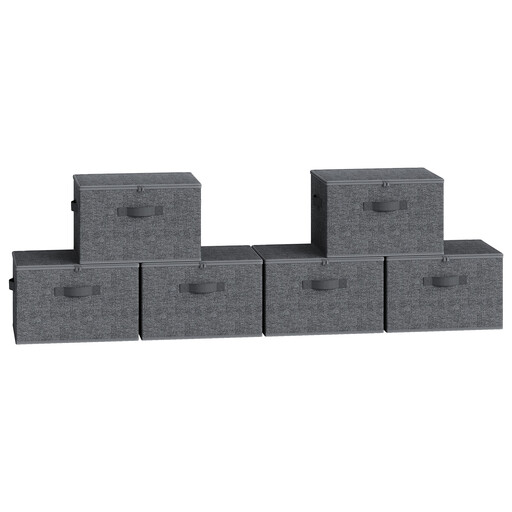
Why this choice suits this profile : This set of six 30 L boxes offers a simple solution for sorting jumpers, bed linen or children’s clothes in a wardrobe or on a shelf.
The dimensions of 40 × 30 × 25 cm are specified, as is the maximum static load of 3 kg per box. The zipped lid limits exposure to dust.
The three handles make the boxes easy to carry, and they fold flat when not in use.
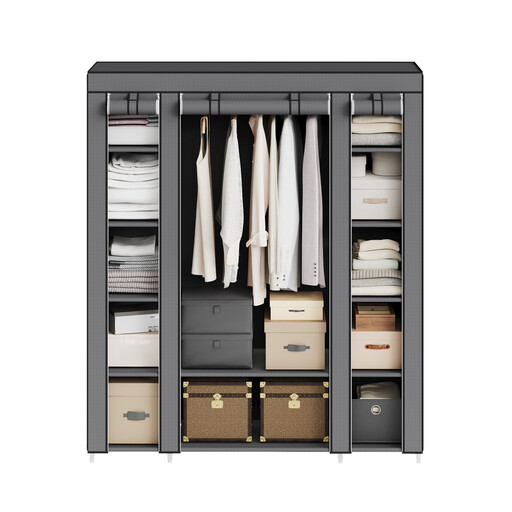
Why this choice suits this profile : This fabric wardrobe is designed for households that want to keep clothes, shoes and accessories together in one vertical unit.
The unit has 12 compartments, a hanging rail that can support up to 15 kg and shelves limited to 5 kg each. These specifications make it easier to distribute the load correctly.
Measuring 45 × 150 × 175 cm and fitted with a cover, it reduces visual clutter while protecting your belongings from dust.
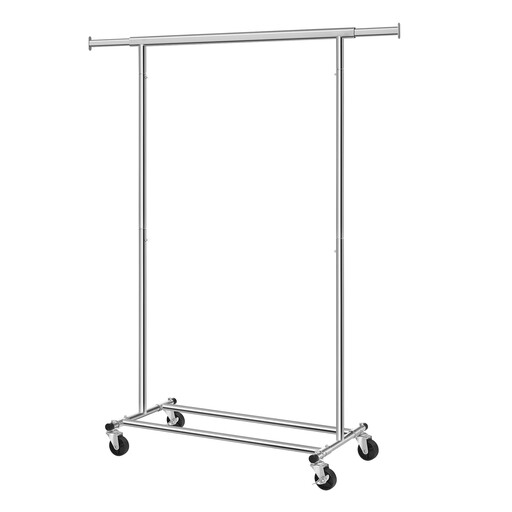
Why this choice suits this profile : This clothes rail is suitable for moving house, shared bedrooms and anyone who regularly moves their wardrobe.
The four castors, two of which have brakes, mean you do not need to lift the rail. The stated maximum load is 100 kg, to be distributed according to the clothes stored.
The width can be adjusted from 92 to 132 cm. With two lower bars and tool-free assembly, it can be easily adapted to the room.
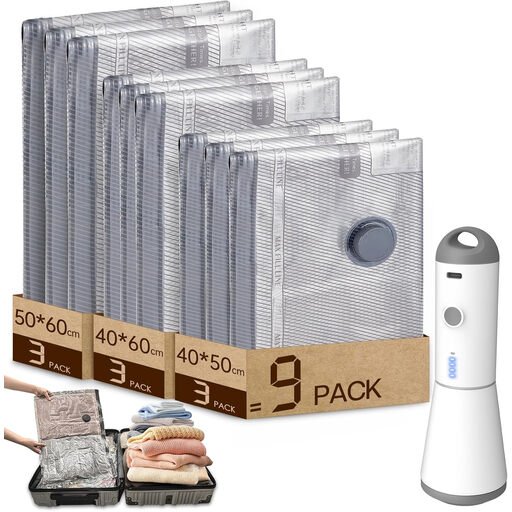
Why this choice suits this profile : This set is suitable for storing duvets, jackets and out-of-season clothing under a bed or in a shallow wardrobe.
The three supplied sizes let you choose a bag suited to each item. The double zip seal and valve are designed to minimise air leaks.
The set includes nine bags measuring 40 × 50, 40 × 60 and 50 × 60 cm, as well as a rechargeable cordless pump.
We have put together a complete, real-time updated selection of products that meet these demanding criteria, in line with European safety regulations.
Start by grouping clothes by category: everyday wear, workwear, sportswear, seasonal clothing and household linen. Place the items you wear every week at eye level. Clothes that are rarely used can be stored in an under-bed storage bag, a closed box or a vacuum bag.
For small accessories, a compartmentalised drawer organiser prevents messy piles. Reserve non-slip hangers for shirts, dresses, jackets and trousers that slip easily. Finally, a compartmentalised laundry basket makes sorting before washing easier. It can fit neatly into a corner of the bathroom or bedroom.
Start by measuring the inside of the wardrobe, leaving a few centimetres of clearance so you can pull the box out. Then check the maximum load and whether it has handles. For folded clothes, a model with a lid offers better protection from dust than an open basket.
They are particularly useful for bulky, infrequently used items such as duvets or coats. Avoid compressing delicate clothing, structured garments or fabrics that need to retain their shape for long periods. Items must be clean and completely dry before vacuum sealing.
Air boxes and the wardrobe regularly, never store damp laundry and leave a little space between clothes. A box or cover cannot replace good ventilation. For seasonal items, check their condition before storing them and air them again whenever the season changes.