What should you look for before buying?
Handheld steamer
Choose this if: you need to touch up clothes occasionally, especially after taking them out of a suitcase, and want an appliance that’s easy to store or carry.
Keep in mind: water tank capacity, handheld weight and overall size vary by model; compact doesn’t necessarily mean lightweight.
Standing clothes steamer
Choose this if: you plan to steam several garments in a row at home and have space for the stand and appliance.
Keep in mind: a larger water tank and stand can take up a lot of space; one individual review posted on Philips France describes the STE3170/80 as cumbersome in a small home.
An iron or steam generator as well
Choose this if: you want to press creases or regularly achieve a classic ironed finish.
Keep in mind: you’ll need to set up an ironing surface; Que Choisir Ensemble notes that a steam generator with a separate water tank takes up more space than an iron alone.
Que Choisir Ensemble distinguishes between light touch-ups and the finish you can achieve with an iron. To compare models, start with the results you want, then check portability, useful run time and how easy the appliance is to store.
| Criteria |
What to check before buying |
Who should consider this? |
| Fabrics and finish |
Check which fabrics have been tested and how the steamer performs on the creases you’re concerned about; the stated steam output alone isn’t enough to judge the finish. |
If I want a crisp finish or need to press creases, I’d rather not rely on steam alone for touch-ups. Around 33% of consumers prioritise fabrics and finish. |
| Portability and size |
Compare the appliance’s weight and dimensions, including when the water tank is full, and check how easily it fits in your luggage. |
If I’m steaming an outfit after travelling, I want to be able to pack and hold the appliance without it taking up too much space. Around 27% of consumers prioritise portability. |
| Water tank and interruptions |
Check the capacity in millilitres and how easy the tank is to access; don’t assume a specific run time based on capacity alone. |
If I’m steaming several garments in a row, I’d rather refill less often than choose the smallest size. Around 20% of consumers prioritise run time and avoiding interruptions. |
| Ease of use and storage |
Check how comfortable it is to hold, how easy the controls and water tank are to access, and the care instructions for the model. |
Between touch-ups at home, I want to be able to use, fill and store the appliance easily. Around 20% of consumers prioritise ease of use at home. |
Clothes steamers available on Joybuy
This selection includes handheld steamers for occasional touch-ups at home or on the go, as well as standing models for steaming clothes on hangers at home.
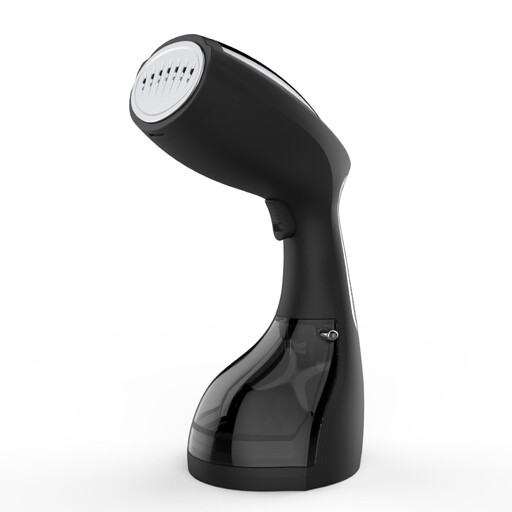 Image unavailable
SteamOne STRAVEL EUTAC140B 1400 W, black
Its handheld design is suited to occasional touch-ups on a hanging garment, at home or on the go.
Stated steam output: 24 g/min; water tank: 260 ml.
View on Joybuy
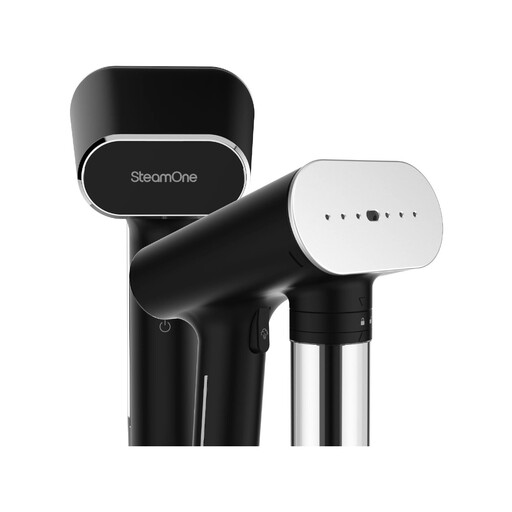 Image unavailable
SteamOne KARL 2 EUNS150BV2 2000 W, black
This handheld model is designed for quick touch-ups on hanging clothes, at home or when travelling.
Stated steam output: 33 g/min; water tank: 150 ml.
View on Joybuy
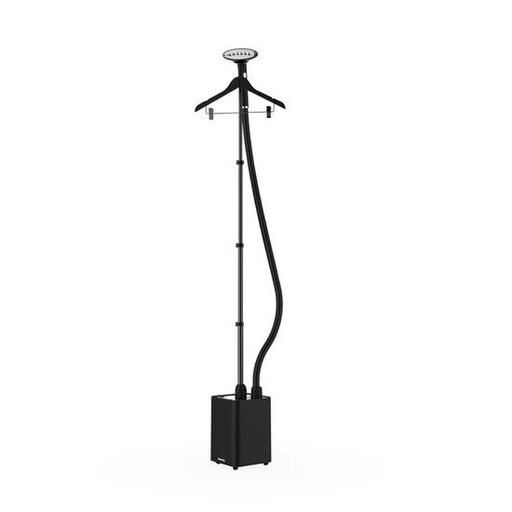 Image unavailable
SteamOne HENRI 2 EUJK300B 2000 W, black
The standing design and included hanger make it suitable for steaming hanging clothes at home.
Stated steam output: 42 g/min; water tank: 1.8 L.
View on Joybuy
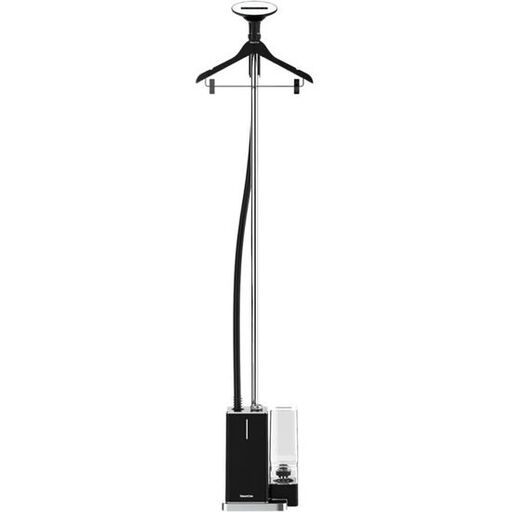 Image unavailable
SteamOne GEORGE 2 EUES200BV2 2300 W, black
Its standing design is suitable for steaming hanging clothes at home.
Stated steam output: 50 g/min; water tank: 2 L.
View on Joybuy
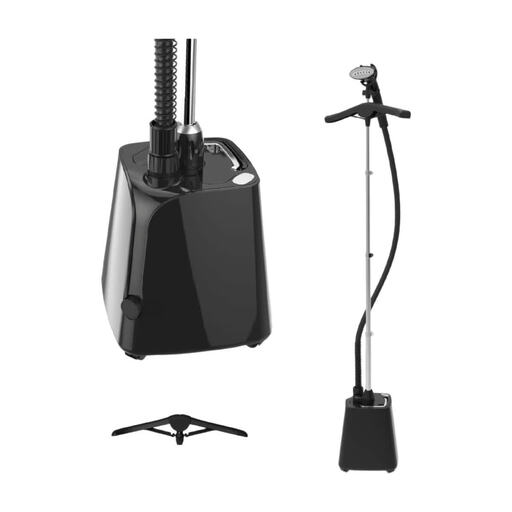 Image unavailable
SteamOne H18B 1800 W, black
Its standing design, with an included hanger, is made for steaming hanging clothes at home.
Stated steam output: 40 g/min; water tank: 1.8 L.
View on Joybuy
Frequently asked questions
Can a steamer replace my iron for sharp creases?
Generally, no. Que Choisir Ensemble says a steamer is best suited to touching up light creases and won’t create sharp creases or the finish you’d get with an iron or steam generator. If that finish matters to you, keep a traditional ironing option.
How can I prevent water and limescale marks?
Follow the instructions for your model. For Philips appliances covered by its recommendations, the manufacturer advises using distilled or demineralised water in hard-water areas, and advises against scented water and vinegar in the tank, among other things. Descaling instructions vary by model.
What should I do if an appliance bought from a professional seller in France isn’t as described?
Contact the professional seller to claim your statutory guarantee of conformity. The French Ministry of the Economy and Finance states that it covers new, second-hand and refurbished goods sold by a professional to a private individual. It is separate from any commercial warranty offered by the manufacturer.
Does an electric clothes steamer sold in France need to carry the CE mark?
The CE mark is required when an appliance falls under the relevant EU regulations. The Low Voltage Directive covers, among other things, equipment designed for a rated voltage of 50 to 1,000 V AC. The DGCCRF points out that the CE mark is not an independent certification and, by itself, does not verify that a particular model complies with the rules.


