
Livraison le jour même ou le lendemain

Qualité garantie

Débloquez vos offres de bienvenue: Livraison GRATUITE | Jusqu'à -80 % | 30 jours d'essai gratuits à JoyPlus
Téléchargez l'application
A clothes steamer can save you valuable time in the morning, at work or while travelling. It often means you can skip getting out the ironing board, and is particularly handy for shirts, dresses, jackets and fabrics that simply need freshening up. However, not every model is designed for the same uses.
Before placing your order, three common pitfalls are worth bearing in mind:
Measured in grams per minute, steam output refers to the amount of steam produced continuously. For a handheld steamer intended for one or two garments, an output of 18 to 25 g/min is generally suitable for everyday use. A steam generator iron usually offers higher pressure and steam output, making it better suited to longer sessions or thicker fabrics.
Power, measured in watts, mainly indicates the appliance’s heating capacity. It should therefore be considered alongside heat-up time and steam output. The BRAUN QuickStyle 3, for example, offers 1 100 W, heats up in 30 seconds and delivers a continuous output of 20 g/min. The BRAUN QuickStyle 5, meanwhile, claims 1 200 W, a heat-up time of 45 seconds and an output of 25 g/min.
A steamer with a removable water tank is easier to fill and empty. For occasional use, a small tank helps keep the appliance lightweight. If you plan to steam several garments one after another, a larger capacity will save you from having to stop and refill it.
As a general guide:
In areas with hard water, check the manufacturer’s recommendations regarding tap water, descaling and cleaning. Emptying the tank after each use helps prevent water from standing in the appliance and makes maintenance easier.
A portable clothes steamer or handheld steamer can easily be stored in a drawer or suitcase. A foldable model can be particularly useful for students, frequent travellers or anyone short on storage space.
For regular use, look in particular for:
Steam is extremely hot. Follow the instructions in the manual, place the garment on a stable hanger and never direct the jet towards a person, animal or electrical appliance. For delicate fabrics, always test the appliance on an inconspicuous area and follow the care label instructions.
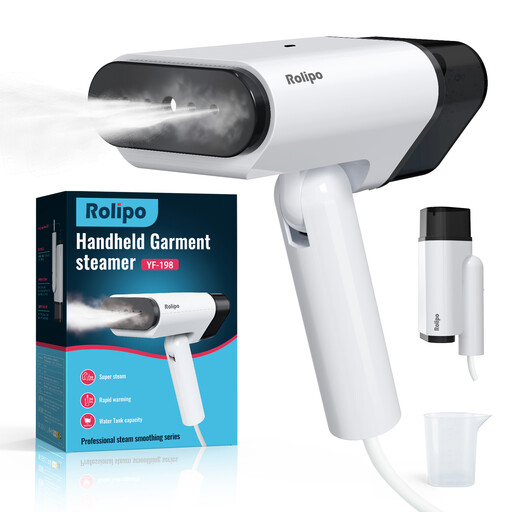
Why this choice suits this profile : Its foldable design and one-button control make it easy to use for the first time at home, in the office or in a suitcase.
The leak-proof tank stated in the product listing helps reduce the risk of spills, while the foldable design makes storage easier. However, check its capacity before buying, depending on how many garments you need to steam.
A foldable design, simple handling and a build suited to use at home, in the office or while travelling.
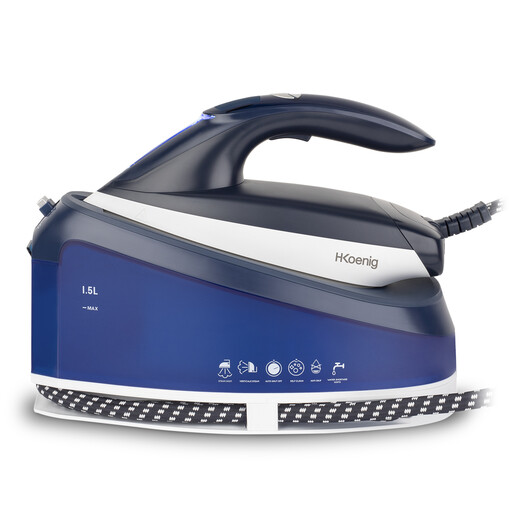
Why this choice suits this profile : This steam generator iron is designed for households that want to switch between ironing on a flat surface and steaming garments vertically on a hanger.
The listing states a pressure of 8 bar, an output of 120 g/min and a 1.5-litre tank. These concrete figures make it easier to compare the appliance with a compact clothes steamer.
An output of 2 600 W, a non-stick ceramic soleplate, vertical steam and an automatic shut-off feature, as stated.
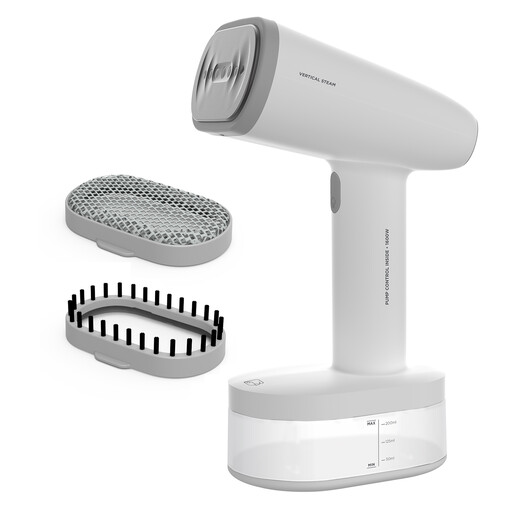
Why this choice suits this profile : Its 250 ml tank and stated output of 25 g/min make it suitable for several garments, as well as curtains and soft furnishings.
The listing mentions an anti-drip system, a self-cleaning function and a steam-lock feature. These features address the problems of water marks, deposits and tiredness during longer sessions.
A removable 250 ml tank, a ceramic soleplate, an anti-drip system and a stated cleaning function.
We have compiled a complete, real-time updated list of products that fully meet these strict selection criteria and European safety regulations.
A vertical steamer is used on a hanging garment. It is ideal for removing light creases, freshening up a jacket before going out or steaming a dress without setting up the ironing board. However, it is less effective when you need to create a sharp crease in trousers or tackle a heavily creased shirt.
A steam iron and a steam generator iron are generally used on a flat surface. They take a little longer to set up, but their soleplate and pressure are often better suited to traditional ironing. The right choice therefore depends primarily on your routine: quick touch-ups, travel, caring for several outfits or complete ironing.
It depends on the model’s instructions and the hardness of the water in your area. Some appliances accept tap water, while others recommend using treated water in areas with hard water. Never add perfume, essential oil or household cleaning products to the tank unless the manufacturer explicitly permits it.
A 70 to 100 ml tank may be enough for one outfit or a few touch-ups. For several shirts, dresses or pairs of trousers, it is better to choose a capacity of 150 to 250 ml. However, actual running time depends on how long the steam is used continuously and on the type of fabric.
Empty the tank after each use, follow the descaling procedure and allow the appliance to cool down before storing it. Clean the soleplate or head according to the instructions in the manual, without immersing the base, cord or plug. Storing it in a dry place and using a stable hanger also help ensure safer use.