
Livraison le jour même ou le lendemain

Qualité garantie

Débloquez vos offres de bienvenue: Livraison GRATUITE | Jusqu'à -80 % | 30 jours d'essai gratuits à JoyPlus
Téléchargez l'application
A clothes rail can relieve an overcrowded wardrobe, organise an entrance hall or make sorting laundry easier. However, not every model is designed for the same purpose. A lightweight rail may be enough for a few shirts, while a clothes rail on castors must remain perfectly stable if it is holding coats or several boxes.
Before you buy, three common pitfalls are worth bearing in mind: a stated capacity without details of the conditions of use, castors that are difficult to lock and dimensions that are incompatible with the room. Here are the criteria to examine when comparing different models in practical terms.
A maximum static load generally refers to the weight the furniture can support while remaining stationary, placed on a flat surface and loaded evenly. It does not necessarily tell you much about its stability when it is being moved. For a mobile clothes rail, check the following:
A sturdy clothes rail is about more than an impressive figure. The width of its base, the quality of the joints and the castors also play a decisive role.
A product specification may state a minimum width, while an extendable clothes rail will take up more room once extended. Take measurements while allowing for:
In a small bedroom, a compact model that is too deep can quickly get in the way. In a utility room, on the other hand, the lower rails can be used for hanging laundry or storing boxes.
A decorative clothes rail for an entrance hall will not serve the same purpose as a double rail intended for a family or a shop. Hooks, shelves and additional rails are useful, provided they are positioned correctly and suit your habits. Also think about the clothes you want to hang on it: shirts, dresses, coats, laundry to dry or accessories.
A metal clothes rail, particularly one made from steel, provides a structure suited to regular use. A painted or powder-coated finish makes it easier to maintain, but it is still best to protect the furniture from prolonged damp and sources of heat.
At home, stability mainly depends on the width of the base and how evenly the load is distributed. On a tall model, avoid grouping all the heavy clothing on one side. Rounded hooks are also useful for reducing snagging on coats, bags and hats.
Castors make it easy to move a clothes rail between the bedroom, utility room and entrance hall. Where possible, choose a model fitted with brakes on the castors, especially if you are placing it on a smooth floor. Before loading it, check that each wheel is securely attached and that the furniture is standing level.
When a telescopic rail is folded in, follow the instructions provided and keep your fingers away from the sliding area. This precaution is particularly important with an extendable clothes rail.
Compare the dimensions with your actual needs rather than relying solely on the product’s appearance. A height between 160 and 182 cm is generally suitable for hanging clothes, but long dresses may require more space beneath the rail.
If you are looking for a clothes rail for coats, prioritise a stable base and a capacity that is suitable for the weight of winter jackets. For lighter clothing, a single rail may be enough. To separate outfits or make use of the available height, a double clothes rail is a practical solution.
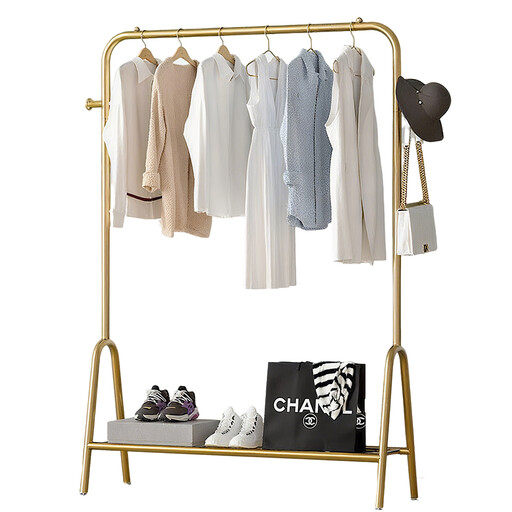
Why this choice suits this profile : Its single rail and 100 cm width make it a suitable first storage solution for a bedroom or covered balcony when space is limited.
The stated format helps you anticipate how much space it will take up, provided you check the clearance needed around the furniture before installation.
A single rail, floor-standing installation and a shelf mentioned in the product name to provide additional storage.
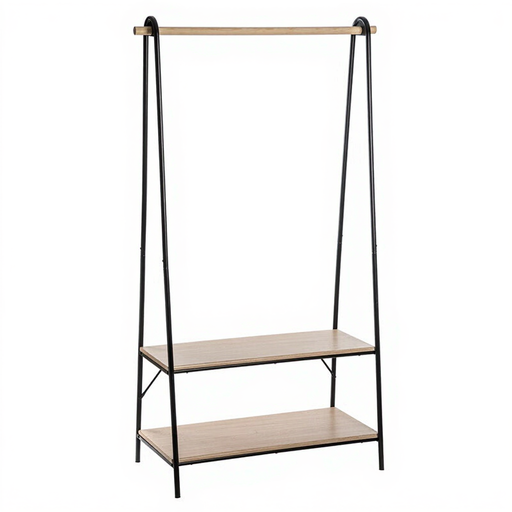
Why this choice suits this profile : The combination of steel, wood and two MDF shelves will appeal to anyone who wants to display their clothes while maintaining a neat look in a bedroom or dressing room.
The stated dimensions, 95.5 × 46.5 × 165 cm, help you anticipate the floor space required instead of relying solely on the photographs.
A 120.5 cm pine hanging rail, two shelves and a stated maximum load of 40 kg, to be distributed evenly.
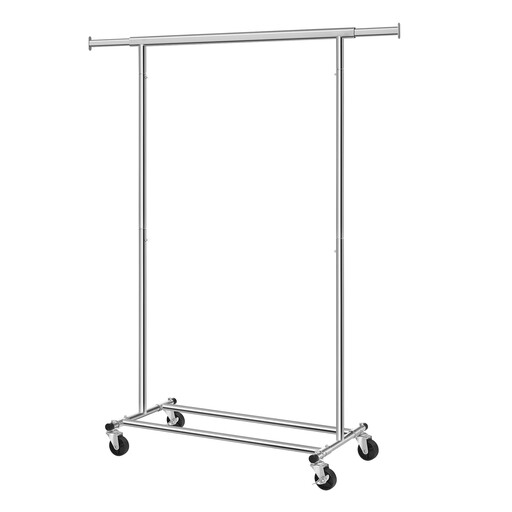
Why this choice suits this profile : This clothes rail on castors is designed for those who regularly move laundry, coats or boxes from one room to another.
Its four swivel castors, two of which can be locked, prevent the problem of mobile furniture that fails to stay in place.
A steel structure, an adjustable width of 92 to 132 cm, two lower rails and a stated maximum static load of 100 kg.
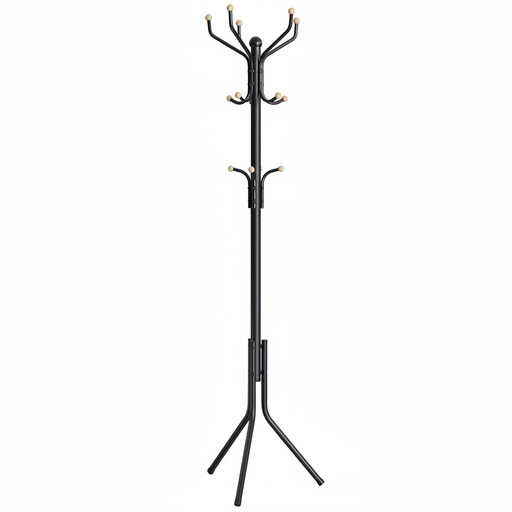
Why this choice suits this profile : Its many hooks are ideal for a hallway where several people can hang coats, hats and accessories without taking up an entire wall.
The product details specify a 49 × 49 cm base and recommend distributing the load to reduce the risk of tipping.
A steel structure, 12 hooks and a stated maximum static load of 36 kg.
We have brought together a complete, real-time updated selection of products that meet these demanding selection criteria and European safety standards.
To prevent stability problems, assemble the furniture on a clear floor and follow the instructions provided. Before using it:
For metal parts, a slightly damp cloth is generally all you need. Dry the surface afterwards, particularly if the clothes rail is in a utility room. Avoid exposing it to damp for long periods to reduce the risk of corrosion.
Place it on a level surface, distribute the clothes along the full length and activate the castor brakes. If the model is extendable, avoid extending it fully when the load is concentrated at one end.
Allow enough space for hangers and the longest garments. A height of around 160 cm is suitable for many coats, but measure the length of your clothes before choosing. Leave enough clearance to ensure they do not touch the floor.
In some cases, yes, particularly for clothes you wear regularly. However, it offers less protection from dust and light than a closed wardrobe. For long-term storage, supplement it with garment covers, boxes or shelves suited to the room.