
Livraison le jour même ou le lendemain

Qualité garantie

Débloquez vos offres de bienvenue: Livraison GRATUITE | Jusqu'à -80 % | 30 jours d'essai gratuits à JoyPlus
Téléchargez l'application
A clothes rail can sometimes declutter a bedroom, hallway or utility room in just a few minutes. However, some models quickly become unstable, take up too much space or struggle to support the weight of coats. Before placing your order, it is therefore worth separating genuinely useful features from marketing claims.
A high maximum load does not necessarily mean that each rail or shelf can support the same weight. Check the difference between the total load, the maximum load per hanging rail and the load for the shelves. Winter coats, leather jackets or several bags can place considerable pressure on a compact structure.
An extendable clothes rail can increase in width by several dozen centimetres. Although this flexibility is practical, it must be considered alongside the space actually available between a wall and a bed, in a hallway or in front of a washing machine. Also consider the depth, which is often crucial in a small room.
A clothes rail on wheels must remain stable both when it is moved and when it is loaded. Lockable castors are useful, but they cannot compensate for a base that is too narrow. For a portable wardrobe, also take the weight of the clothes and the anti-tip system into account, particularly if young children live at home.
Measure the intended area before choosing your model. For everyday use, check in particular:
A double clothes rail is suitable for well-stocked wardrobes or for separating short garments from longer pieces. An additional wardrobe with a cover offers better protection from dust, while an open structure provides quicker access for everyday use.
Steel or painted metal is generally suitable for heavy clothing, provided that the joints are tightened correctly. Check whether the technical specifications distinguish between the total static load and the maximum load per hanging rail or shelf. Always observe the stated limits and distribute clothes along the full length of the bar.
In a portable wardrobe, the metal tubes, plastic connectors and non-woven fabric each serve a different purpose. The cover protects against dust, but it does not turn the unit into completely airtight storage. You should also avoid moving a full wardrobe if the instructions advise against it.
Tenants often look for a solution that requires no drilling. Door hooks and adhesive hooks can hold accessories, scarves or lightweight jackets, but their grip depends on the surface, how the mounting area has been prepared and the weight being hung. For an hall unit with a coat rack or a wall-mounted rack, choose fixings suited to the type of wall: plasterboard, brick, concrete or wood.
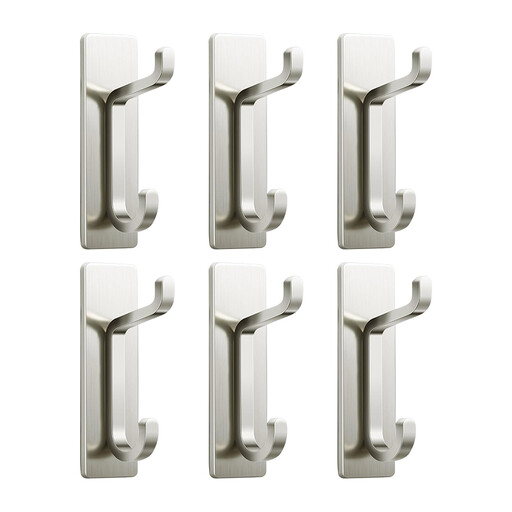
Why this choice suits this profile : These hooks are ideal for tenants and anyone who wants to organise a hallway without drilling into the wall. They can hold keys, hats, scarves and small accessories.
There is no need to buy a complete piece of furniture for a few accessories. No-drill installation reduces the work involved, but the surface must be prepared correctly and the actual load limit respected.
A set of six stainless-steel hooks for installation above or behind a door.
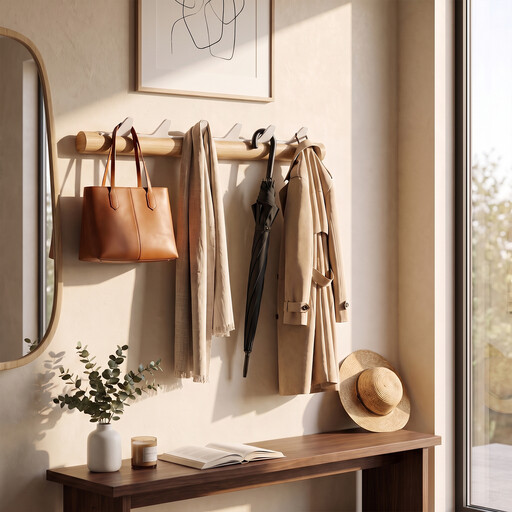
Why this choice suits this profile : This wooden and metal wall-mounted rack fits easily into a well-organised hallway. It is suitable for households looking for fixed storage for coats, bags and towels.
Wall mounting avoids the cumbersome legs of a floor-standing clothes rail. However, it requires suitable wall plugs and regular checks of the fixings.
Six hooks, rubberwood presented as FSC-certified, and aluminium-alloy hooks.
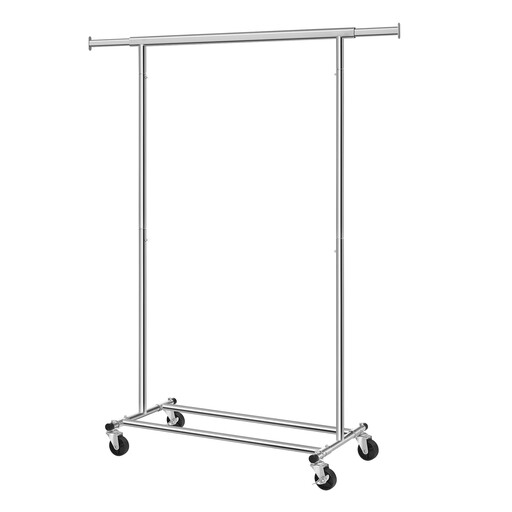
Why this choice suits this profile : This clothes rail on wheels is suitable for heavy garments, frequent house moves or a utility room where storage needs to be moved around.
The product details state a total static load of 100 kg and two lockable castors. It is still essential to distribute the weight and lock the rail when it is stationary.
Adjustable width from 92 to 132 cm, four swivel castors and two lower bars.
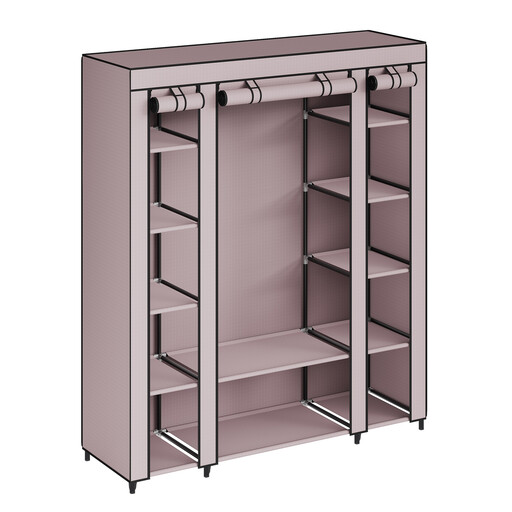
Why this choice suits this profile : This additional wardrobe is suitable for a sparsely furnished bedroom, a rented property or a room dedicated to laundry. It combines hanging space and shelves in a single structure.
Its dimensions are clearly stated: 150 × 45 × 175 cm. The stated load is 15 kg for the hanging rail and 5 kg per shelf; the anti-tip kit must be installed.
Twelve shelves, a non-woven fabric cover and tool-free assembly, as stated.
We have put together a complete, real-time updated list of products that fully meet these strict selection criteria and European safety regulations.
Before assembly, check the condition of the tubes, connectors and castors. Tighten the screws gradually, place heavy clothes towards the bottom where possible, and leave enough room to walk around the unit. For wall mounting, use wall plugs suited to the type of surface.
Distribute clothes along the full length of the hanging rails, place heavy items in the centre or on the lower bars, then engage the castor brakes. An uneven floor can also affect stability. Always observe the maximum load specified by the manufacturer.
When closed, the cover limits exposure to dust, but it does not guarantee complete protection against damp or odours. Air the room regularly and avoid storing clothes while they are still damp.
They may be suitable for lightweight or moderately heavy items, depending on their design and how they are fixed in place. Check the stated maximum load, verify the thickness of the door and do not exceed the specified limit. For several thick coats, a clothes rail or securely wall-mounted rack will generally be more suitable.