
Livraison le jour même ou le lendemain

Qualité garantie

Débloquez vos offres de bienvenue: Livraison GRATUITE | Jusqu'à -80 % | 30 jours d'essai gratuits à JoyPlus
Téléchargez l'application
A clothes rail can declutter a bedroom, organise a utility room or simplify your hallway. But a poorly chosen model can quickly become a nuisance: it takes up too much space, rolls badly or bends under the weight of coats.
Before buying, it is therefore worth looking beyond claims such as “large capacity” or “sturdy structure” and checking the features that will genuinely make a difference every day.
The maximum load shown on a product page generally refers to a static load, distributed across the structure and placed on a stable surface. It does not necessarily mean that the clothes rail will support the same weight when moved, loaded unevenly or placed on an irregular floor.
For thick coats, jackets or workwear, choose a structure whose stated capacity leaves a safety margin. Distribute clothes along the entire rail and avoid grouping heavy items on one side.
An extendable or telescopic clothes rail may look compact at its minimum setting, then take up considerably more width once extended. Measure the available space, taking doors, skirting boards, walkways and nearby drawers into account.
An excessively wide model can also be difficult to move through a corridor or lift. In a small home, space-saving clothes storage therefore depends not only on the folded dimensions, but also on the space required when the rail is in use.
A narrow base, castors without brakes or overloaded hooks can cause the unit to tip over. For a clothes rail with castors, check that the wheels swivel, have brakes and that the base is wide enough.
In a family hallway, a tall piece of furniture should be installed in accordance with the instructions. If an anti-tip kit is supplied, use it: it helps reduce risks caused by movement and unevenly distributed loads.
Start by taking three measurements:
An extendable clothes rail adapts to changing needs, while a telescopic clothes rail lets you adjust the width according to the number of garments. Models with two rails or an extendable upper rail provide more hanging space, but require a stable base.
Steel is often preferred for clothes rails designed to hold heavy garments. Tube thickness, the quality of the joints and the quality of the castors directly affect the stability of the entire unit. A painted or powder-coated finish makes maintenance easier, but it is still best to keep the clothes rail away from prolonged damp.
For regular use, also check:
Castors make it easier to move clothes between the bedroom, utility room and storage area. Brakes then keep the clothes rail securely in place. Lower rails can hold boxes, while a clothes rail with shelves provides space for shoes, bags or folded laundry.
In a hallway, an hallway unit with coat hooks and a bench can combine several functions. Check the maximum load for the hooks, shelves and seat separately.
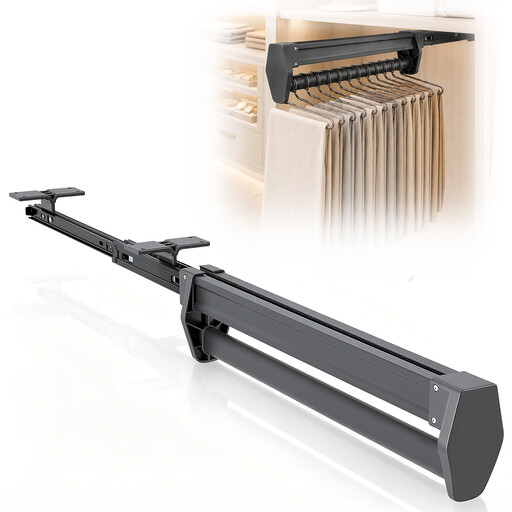
Why this choice suits this profile : Its telescopic design is ideal for a bedroom, wardrobe or small space where the width needs to be adjusted.
Its adjustable design lets you measure your space first, then set the width accordingly instead of buying a fixed rail that is too bulky.
Extendable steel rail, designed to fit inside a wardrobe or cupboard.
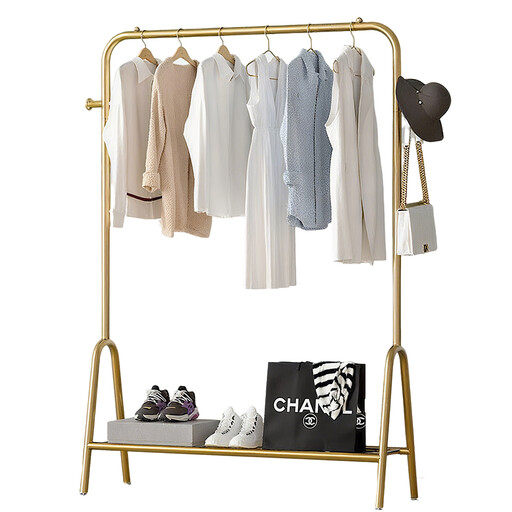
Why this choice suits this profile : Its freestanding design and gold finish make it a stylish choice for a bedroom or display area where looks matter just as much as storage.
The product details specify that this is a 100 cm single-bar clothes rail, making it suitable for a limited selection of garments rather than an overcrowded family wardrobe.
Freestanding structure and stated width of 100 cm, suitable for a targeted installation.
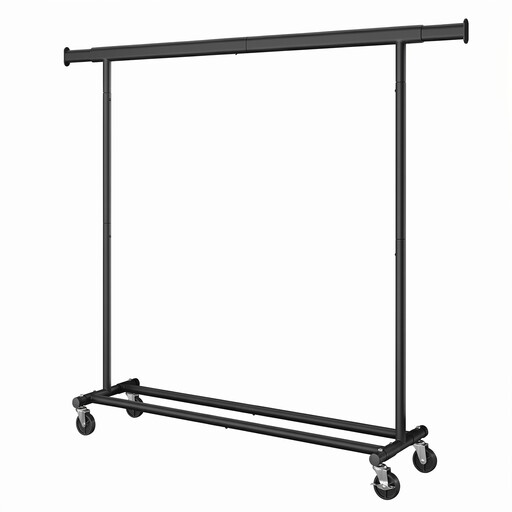
Why this choice suits this profile : With an adjustable width of 160 to 200 cm and a stated maximum static load of 150 kg, this model is designed for large quantities of clothing and heavy garments.
Its swivel wheels with locking mechanism reduce the risk of a rail that is difficult to move or unstable when loaded.
Steel frame, braked wheels, extendable upper rail and lower rails for boxes.
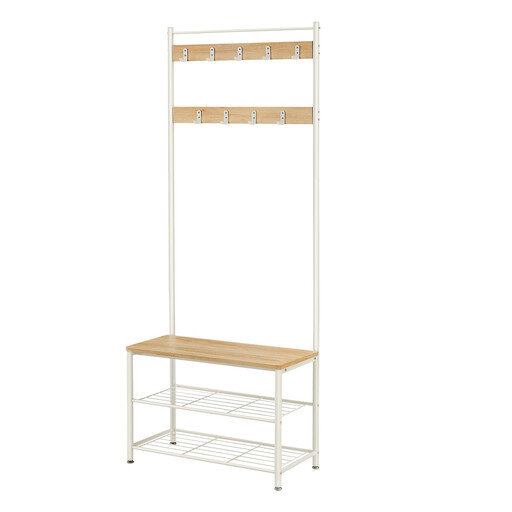
Why this choice suits this profile : This hallway unit combines hooks, a bench and shelves to organise coats, bags and shoes in a busy passageway.
The load limits are specified for each component: 3 kg per hook, 10 kg per shelf and 136 kg for the bench. The anti-tip kit must be secured to the wall.
9 hooks, a bench with shoe storage and adjustable feet, according to the product details.
We have put together a complete, real-time updated list of products that meet these strict selection criteria and European safety regulations.
Assemble the clothes rail on a level floor and tighten the connectors according to the instructions. For a model with castors, lock the wheels before hanging clothes on it. Place the heaviest items in the centre and avoid pulling sharply on the structure.
A soft, slightly damp cloth is generally all you need to clean the metal parts. Dry the surfaces afterwards and avoid exposing the clothes rail to water, a heat source or high humidity for extended periods. Before moving it, always check that clothes cannot catch in the wheels and that the load remains evenly balanced.
First check that the feet or castors are resting on a level surface. Tighten the connectors, engage any available brakes and distribute the clothes along the entire rail. For a tall hallway unit, install the supplied anti-tip device in accordance with the instructions.
Capacity depends on the model and how the weight is distributed. You must distinguish between the maximum load supported by the structure and the load supported by the hooks and shelves. Always follow the values shown on the product page and do not group heavy coats at one end.
Yes, provided that its width and depth do not obstruct movement around the room. Measure the space before buying and check the maximum width when the rail is extended. Castors make it easier to move, but they do not replace a stable base or locking the wheels during use.